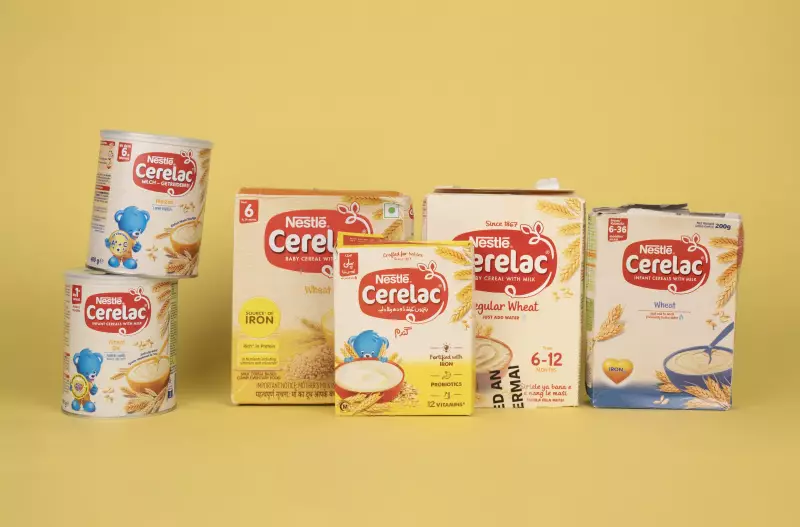
Global food giant Nestlé is under fire following serious allegations that it adds sugar to its Cerelac infant cereals marketed across Africa, while selling sugar-free versions in Europe. This practice, revealed in a recent investigation, directly contradicts World Health Organisation (WHO) guidelines designed to protect young children's health.
Double Standards in Baby Nutrition Exposed
The controversy erupted after the Swiss watchdog organisation, Public Eye, published a damning report on 18 November 2025. Their investigation found that Cerelac products sold in numerous African nations contain significant amounts of added sugar. In stark contrast, the same cereals sold to babies in Switzerland, Germany, and the United Kingdom contain no added sweeteners.
This discovery has ignited anger among health advocates. The WHO strictly advises against giving any added sugars to children under two years old. This policy aims to prevent early-onset obesity, dental cavities, and unhealthy sugar dependencies. By allegedly marketing sweetened cereals to African infants, Nestlé stands accused of violating these critical global health standards.
African Coalition Demands Action and Equality
The findings have mobilised a powerful response across the continent. A coalition of nineteen Africa-based civil society organisations has written a direct letter to Nestlé's CEO, Philipp Navratil. In their communication, they accuse the multinational corporation of applying "double standards" and demand an immediate recall of all sugary Cerelac products from African markets.
Their stance is rooted in a principle of equality. "If added sugar is not suitable for Swiss and European children, it is not suitable for children in Africa and beyond," the coalition's letter states. They powerfully added, "All babies have an equal right to healthy nutrition, regardless of their nationality or skin color."
Nestlé's Defence and Contradictory Evidence
Nestlé has forcefully denied the accusations. A company spokesperson told Al Jazeera that the Public Eye report contained "misleading and unfounded allegations." The spokesperson insisted, "We do not have double standards, our approach to nutrition is consistent across all countries." The company claims it offers both sugar-free and sweetened variants worldwide and is working to ensure all Cerelac lines have no added sugar by the end of 2025.
However, laboratory evidence appears to undermine this defence. Public Eye commissioned tests on nearly one hundred Cerelac products bought in twenty African countries. The results showed they contained added sugar, averaging close to six grams per serving. One product from Kenya, intended for babies from six months old, contained a shocking 7.5 grams of sugar—equivalent to nearly two sugar cubes.
A Critical Health Moment for Africa
This scandal emerges at a precarious time for public health in Africa. The continent is grappling with a dual burden of malnutrition and a sharp rise in childhood obesity. WHO figures indicate the number of overweight children under five has almost doubled since 1990. Health experts argue that introducing high levels of sugar to babies' diets exacerbates this growing crisis.
While Nestlé maintains that undernutrition is a severe concern in Africa and that it does not compromise on food safety, the civil society coalition remains unconvinced. Their letter delivers a blunt final judgement: "Let us be clear: By adding sugar to infant cereals, Nestlé is deliberately putting the health of African babies at risk for profit. This must end now." The global community now watches to see how Nestlé will respond to these grave and specific allegations.