Nigerian Doctor Exposes Soaring Cost of Snake Antivenom, Calls for Government Intervention
In a stark revelation that has ignited a nationwide conversation about healthcare accessibility, Dr. Chin Akano, the Chief Executive Officer of NEOMS Specialist Hospital and Diagnostic Centre in New Owerri, Imo State, has publicly decried the prohibitively high cost of snake antivenom in Nigeria. The medical practitioner's candid disclosure comes in the wake of the tragic death of fast-rising Abuja singer Ifunanya 'Nanyah' Nwangene, whose passing has brought renewed attention to the critical issue of snakebite treatment across the country.
Alarming Price Tag Discourages Hospital Stocking
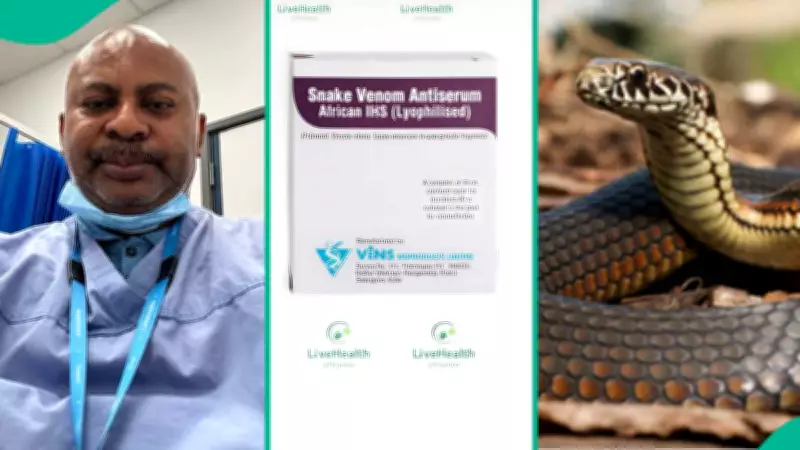
Dr. Akano took to social media platform Facebook on Monday, February 2, to share a photograph of a specific antivenom vial alongside its current market price. The doctor explained with palpable frustration that many healthcare facilities deliberately avoid stocking these life-saving medications due to their exorbitant cost and limited shelf life. A single vial of the Polyvalent Anti-snake Venom Vins Africa now retails for approximately N209,000, a figure that represents a slight reduction from its previous price of N219,300 but remains overwhelmingly unaffordable for most Nigerians.
"Can’t you see why some hospitals don’t stock the antivenom. About N209k for one and it may expire on you," Dr. Akano wrote in his viral post. "Government needs to do something about it. So to stock only five, the hospital would cough out N1 million. How much will they charge the patient? No wonder some also resort to buying the cheap ones that may be ineffective!!!"
Public Outcry and Diverse Reactions
The doctor's revelation has triggered an avalanche of responses from concerned citizens, healthcare advocates, and social commentators across Nigeria. Many have expressed outrage at what they perceive as systemic failure in the nation's healthcare infrastructure, while others have proposed alternative solutions to address the crisis.
Funmilayo Okunlola Oyeniran questioned the rationale behind hospitals not stocking the antivenom, stating: "Why can't they stock it? Giving excuses of it will expire without getting use of it is a flimsy excuse. They don't value our lives, they only value our pocket." She further suggested that government should subsidize the medication to enhance accessibility.
Adaeze Chidimma Okoh offered a more radical perspective, arguing: "Rabies and snake vaccines should be a free injection in government hospital. But what we have is a failed country that the leaders travel abroad for their hospital checkup."
Simon Amaufombaechila provided technical insight into the distribution challenges, noting: "Stocking and distribution of vaccines and immunological products require cold chain... and maintaining cold chain in Nigeria is very expensive... it rubs off on the price of these items... including all the ones that will expire on you."
Broader Implications for Healthcare Accessibility
The antivenom pricing crisis highlights deeper structural issues within Nigeria's healthcare system. Dr. Akano's intervention underscores how financial barriers directly impact clinical decision-making and patient outcomes. When hospitals cannot afford to maintain essential medications, patients face delayed treatment, increased mortality risks, and potential exposure to substandard alternatives.
Ernest Ibezim contextualized the issue within broader national priorities, remarking: "I understand you very clearly. It's expensive to save life in Nigeria but it's not expensive to renovate a conference center for 38 billion naira? Zero value for human life."
Deejaydcee Dispindaht suggested integrating traditional medicine approaches: "What happened in upgrading our traditional ways of healing such. 98% people in the village survived this without spending much. At least make each hospital they employ one good herbal healer."
Related Expert Insights on Snake Safety
In related developments, snake expert Dr. Mark Ofua has previously addressed common misconceptions about snake behavior and provided practical guidance for prevention. Dr. Ofua emphasized that snakes can inhabit residential spaces for extended periods without detection and shared key indicators of their presence:
- Observation of unusual fecal matter in living spaces
- Audible rustling sounds emanating from storage areas or cupboards
- Unexplained disappearance of small pets or rodents
- Visible shed skin in concealed corners of buildings
These expert recommendations complement the ongoing discussion about treatment accessibility by highlighting preventive measures that could reduce snakebite incidents nationwide.
The collective response to Dr. Akano's disclosure reflects growing public demand for healthcare reform, particularly regarding essential medication affordability. As Nigeria continues to grapple with this public health challenge, the conversation initiated by the New Owerri-based doctor serves as a crucial reminder of the urgent need for systemic intervention to protect vulnerable citizens from preventable tragedies.