The Federal Government of Nigeria, in collaboration with state administrations and international development partners, has significantly escalated its campaign to eliminate the barrier of unaffordable medical care across the nation. This renewed push was the central focus of discussions during the 2025 Universal Health Coverage (UHC) Day commemorations held in Abuja.
A Unified Front for Health Sector Reform
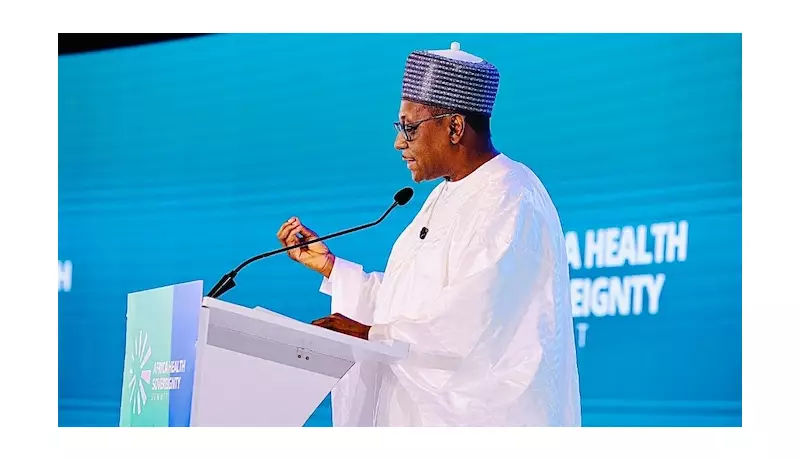
Professor Muhammad Ali Pate, the Coordinating Minister of Health and Social Welfare, served as the keynote voice for the federal agenda. He declared the Tinubu administration's unwavering commitment to a future where no Nigerian is compelled to choose between paying for healthcare and meeting other essential family needs. Professor Pate framed health not just as a basic human right but as a pivotal foundation for national productivity, security, and economic expansion.
He detailed Nigeria's proactive steps through the Nigerian Health Sector Renewal Investment Initiative (NHSRII), which was inaugurated in December 2023. This bold initiative is designed to streamline efforts, bringing federal, state, and partner activities under a cohesive "one-plan framework." The goal is to minimize fragmentation in the health system and enhance overall accountability for results.
Global Challenges and Local Realities
Representing the states, Dr. Oyebanjo Filani, Chairman of the Commissioners of Health Forum, provided context for Nigeria's UHC journey. He linked the national struggle to a wider global scenario, which is being strained by evolving patterns in donor financing. Dr. Filani pointed out that while international donor contributions constitute approximately 8 to 12 percent of Nigeria's total health financing, they often support critical, life-saving interventions that have historically suffered from domestic underfunding. This dynamic makes managing the transition towards greater domestic investment a particularly delicate task.
The international perspective was strongly represented. Dr. Oluwatosin Kolade of the United Nations Population Fund (UNFPA) reinforced that UHC is a non-negotiable human right essential for health, dignity, and empowerment. He stressed the urgency of Nigeria's progress, especially for women, children, and other vulnerable groups, and reaffirmed UNFPA's collaborative support.
The Stubborn Barrier of Out-of-Pocket Spending
A stark warning came from the World Health Organization (WHO). In a message delivered by its Nigeria Representative, Dr. Pavel Ursu, the WHO Regional Director for Africa, Dr. Mohammed Janabi, identified unaffordable health costs as one of Africa's most persistent obstacles to UHC. The organization highlighted that direct out-of-pocket payments by individuals continue to be the dominant method of financing healthcare in many African nations.
The WHO disclosed a alarming statistic: in 2022 alone, over 423 million people in Africa endured significant financial hardship due to health expenses, with countless millions pushed into deeper poverty as a result. Despite this grim picture, the organization acknowledged encouraging improvements in service coverage for maternal and child health, infectious diseases, and non-communicable diseases between 2015 and 2022. These gains demonstrate the potential impact of sustained political will. However, progress is inconsistent, disproportionately affecting women, children, the elderly, and rural communities.
In conclusion, stakeholders at the Abuja event issued a unified call to action. They emphasized that achieving Universal Health Coverage and breaking the cycle of poverty exacerbated by medical bills requires sustained political commitment, increased domestic financial investment, and unwavering public accountability. The collective resolve displayed at the summit signals a critical phase in Nigeria's quest for a healthier, more equitable future for all its citizens.