A shocking investigation into Primary Healthcare Centres (PHCs) across Ogun State has exposed a severe breach of national guidelines and a tragic waste of the Basic Health Care Provision Fund (BHCPF). Despite receiving millions in dedicated healthcare funding, these facilities remain abandoned, under-equipped, and understaffed, pushing vulnerable rural residents into the arms of unregulated private clinics.
Abandoned Facilities and Perilous Journeys
The investigation, which covered Ogun West and Ogun East senatorial districts, found PHCs in a state of utter neglect. In border communities like Iponron in Ipokia Local Council, residents face life-threatening journeys to access basic care. Olorunwa Tapa, a resident, must travel an hour on terrible roads to the PHC in Tube for antenatal care, as her community's health centre, commissioned in 2009, stands empty and overrun by weeds.
This story is repeated in Obanigbe, where the sole PHC is rusting amidst debris, and in the Ohunbe Ward of Yewa North. Here, the communities of Asa, Ibeku, and Agbon Ojodu rely on a single PHC in Agbon Ojodu. While the Asa PHC was recently renovated as a constituency project by Senator Solomon Olamilekan Adeola, it remained locked and non-operational months after completion.
The Agbon Ojodu PHC, now bearing the burden of three communities, lacks potable water and functional toilets, forcing patients to use the surrounding bush. Crucially, checks revealed that non-functional PHCs in Asa and Ibeku are not even listed on the NPHCDA's official website.
Funding Gaps and a Flawed Policy
The financial picture reveals stark contradictions. The Ogun State Primary Health Care Development Board received substantial allocations—N15 billion in 2023, N24.8 billion in 2024, and N35.9 billion in 2025—but spent only a fraction: N390 million in 2023 and N416 million in 2024.
Meanwhile, BHCPF funds from the federal government, designed to make healthcare accessible, are failing to reach many facilities. Ogun State received N458 million in 2023, N580 million in 2024, and N377 million in the first half of 2025, distributed among 227 BHCPF-accredited facilities. However, the "one PHC per ward" funding model leaves many centres without support.
Public health specialist Dr. Joyce Foluke Olaniyi-George criticises this policy, stating it is insufficient for states with large land masses and difficult terrain like Ogun. She advocates for a radius-based model to ensure no community is left behind. This funding gap directly forces patients to seek costly alternatives.
Private Clinics and the Auxiliary Nurse Crisis
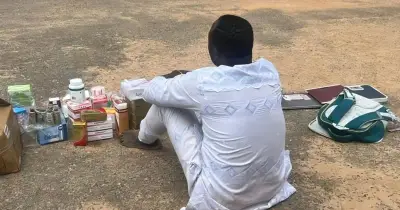
With public PHCs dysfunctional, private clinics have filled the vacuum, often employing unqualified auxiliary nurses. Visits to six private clinics in Oja Odan, Ibeku, Odogbolu, and Iponron exposed a widespread, illegal practice.
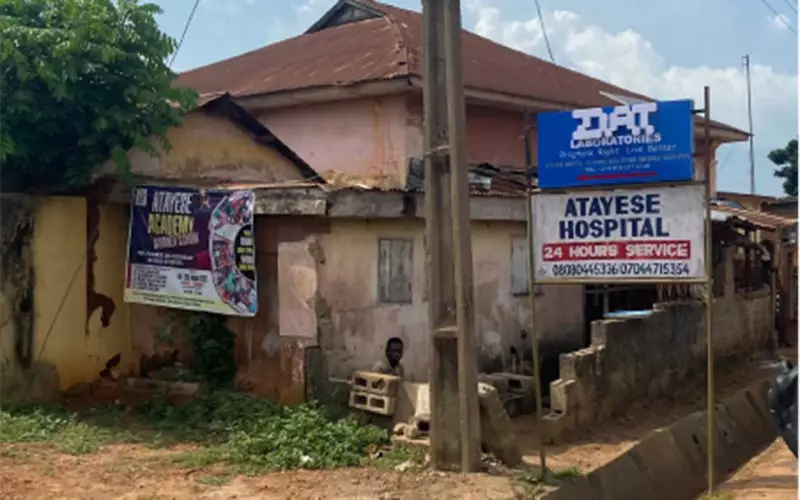
At Graceland Clinic in Iponron, a teenager studying for her WASSCE was identified as a "trainee nurse." The founder, Agboola Samuel Oluwole, admitted his clinic runs largely on auxiliary nurses. Similarly, Adeolu Olaniyi Olusodo, Medical Director of Ateyese Hospital in Odogbolu, acknowledged using "assistant nurses."
This practice is explicitly prohibited by the Nursing and Midwifery Council of Nigeria (NMCN) and the National Association of Nigerian Nurses and Midwives (NANNM). Section 20 of the Nursing and Midwifery Act criminalises practising as a nurse without a license. Despite a 2016 ban by the Ogun State government, the trade in auxiliary nursing persists, often run as an informal apprenticeship where trainees pay fees.
Medical doctor Tella Quadri links the practice to the high cost of employing registered nurses. The consequences are dire, with cases linking auxiliary nurses to patient deaths, including that of musician Mohbad.
Human Cost and Official Response
The human toll is measurable. Ogun State records the highest under-five mortality rate in the South-West at 60 deaths per 1,000 live births, and the highest child mortality rate. Dr. Olaniyi-George explains that delays in reaching care during labour can lead to fatal complications like hemorrhage, fetal asphyxia, and maternal injuries like fistula.
When confronted, the State Commissioner for Health, Dr. Tomi Coker, claimed some abandoned PHCs were built by communities without government approval. She stated the ministry is renovating over seven PHCs in Ipokia LGA and has a team monitoring and shutting down clinics employing auxiliary nurses. She urged the public to report such clinics, vowing, "We will shut them down because that is how they kill people."
However, the evidence on the ground in communities like Ibeku, Iponron, and Obanigbe tells a story of continued abandonment, policy failure, and a healthcare system that forces its poorest citizens to gamble with their lives.