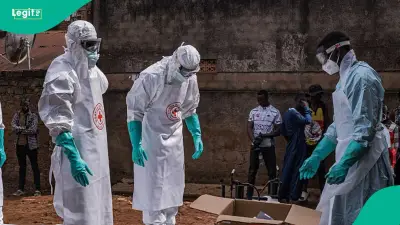
The year 2025 has marked a period of significant transformation within Nigeria's health sector under the administration of President Bola Ahmed Tinubu. A series of strategic reforms and substantial investments are beginning to yield measurable improvements, from primary healthcare centres to specialised treatment facilities, reshaping the nation's medical landscape.
Substantial Investments and Infrastructure Upgrades
A cornerstone of the administration's progress is the significant financial commitment to health. Under the Renewed Hope Health Agenda, N68 billion has been approved, released, and transferred to the National Primary Health Care Development Agency (NPHCDA) specifically for vaccine procurement. Furthermore, the government has settled outstanding liabilities worth N500 billion, freeing up crucial fiscal space for current health spending.
The federal government's health budget itself has seen a dramatic 60 percent increase over the past two years, signalling health as a top-tier priority. This funding is translating into tangible infrastructure. In 2025 alone, 2,125 primary healthcare facilities have been revamped, with their quality scores jumping from 42% to 70%. Service integration in these centres has also risen to 72%.
Perhaps most notably, the nation has witnessed the inauguration of three state-of-the-art oncology centres in Katsina, Enugu, and Edo, equipped with advanced diagnostic and radiotherapy technology. These centres are part of a broader effort to curb medical tourism, which the Central Bank of Nigeria reports has dropped by 52 percent since 2023.
Expanding Access and Improving Key Health Indicators
The impact of these investments is becoming evident in public health outcomes and access to care. There has been a 17 percent reduction in maternal mortality within the MAMII local government areas, a key target region. Public sentiment regarding the health sector is reportedly shifting from pessimism towards optimism.
Access to health insurance has expanded remarkably. Coverage has grown from 3 percent to over 11 percent in the past year, meaning more than 21.1 million Nigerians are now enrolled through Basic Health Care Provision Fund (BHCPF) channels. The BHCPF allocation, which was N131 billion in 2024, is projected to reach N298 billion in 2026, enabling expansion from 8,309 to 13,521 benefiting primary health centres.
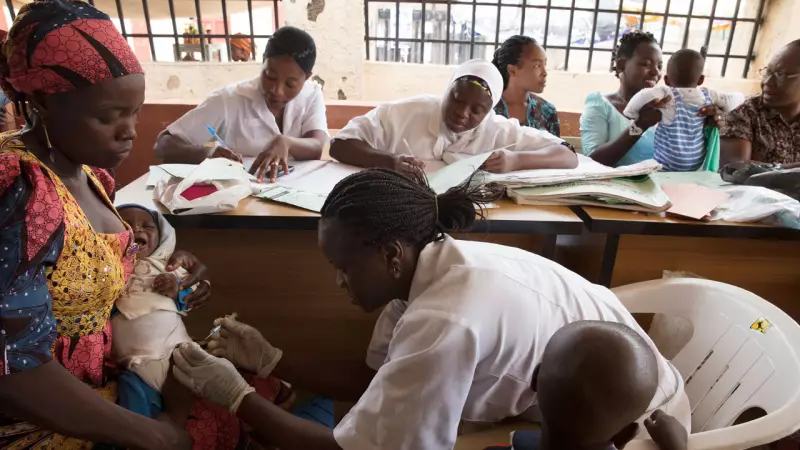
Hospital utilisation rates tell a compelling story: nationwide visits surged from 10 million in Q2 2024 to 45 million in Q2 2025. Vaccination drives have been massively scaled up, with 25 million measles doses and 22 million yellow fever doses administered. Nigeria successfully rolled out Africa's first Mpox vaccine and has immunised 5 million children with the pentavalent vaccine. A critical achievement is the administration of the HPV vaccine to 14 million girls aged 9–14, protecting them from cervical cancer.
Workforce, Emergency Care, and Global Partnerships
Recognising that infrastructure alone is insufficient, the administration has focused on the health workforce. Over 60,000 health workers have been trained nationwide, improving care quality. The government is also addressing long-standing labour issues, processing a new hazard allowance and paying over N10 billion in arrears from the 2025 Medical Residency Training Fund. The recent suspension of the strike by the Nigerian Association of Resident Doctors (NARD) is attributed to progress on these fronts.
The National Emergency Medical Service and Ambulance System (NEMSAS) has expanded its onboarded states from 8 to 31. It has provided emergency support to 31,870 pregnant women and 14,832 road traffic accident victims. In 166 out of 172 priority LGAs, community emergency transport systems are now functional, tackling the critical "second delay" in accessing emergency obstetric care.
On the global stage, Nigeria is transitioning from a primary beneficiary to a committed donor. The country made the highest African contribution to the Global Fund at the recent G20 and contributed $54 million to the StopTB Partnership. A strategic MoU with Brazil, supervised by Coordinating Minister of Health Prof. Muhammad Ali Pate, aims to boost local pharmaceutical manufacturing, backed by a $1 billion financing facility from AFREXIMBANK.
The convergence of increased funding, infrastructure renewal, workforce development, and strategic partnerships under the Tinubu administration suggests a foundational shift. While challenges remain, the data from 2025 indicates that the pursuit of improved health outcomes and greater medical self-reliance is moving from ambition into measurable reality.