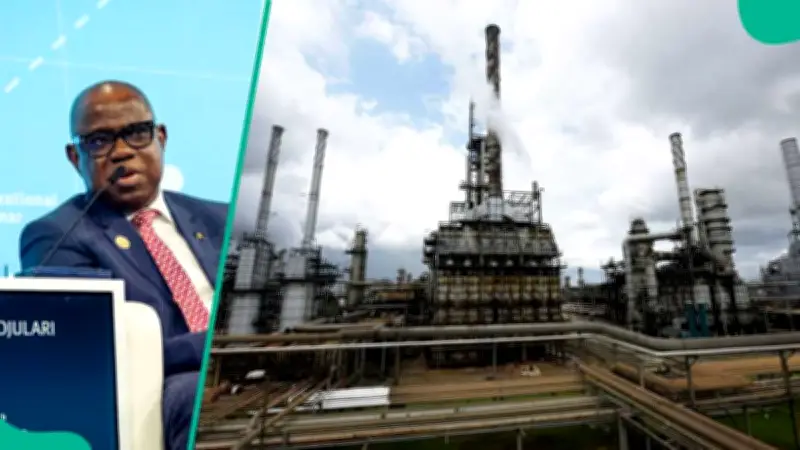
The Nigerian National Petroleum Company Limited (NNPC Ltd) has initiated preliminary technical assessments of the Port Harcourt and Warri refineries while evaluating potential technical and financial partners to complete, operate, and optimise the facilities. This move comes as petrol prices reach between N1,400 and N1,500 per litre in some locations, with diesel climbing above N2,000 per litre.
Marketers Urge Faster Refinery Restart
Joseph Obele, National Public Relations Officer of the Petroleum Products Retail Outlets Owners Association of Nigeria, has called on the Federal Government and NNPC to accelerate the restart of production at both refineries. According to Obele, the rising cost of petrol and diesel is putting significant pressure on consumers, and increased domestic refining could reduce Nigeria's reliance on imported petroleum products.
Obele argued that boosting local refining capacity would help cushion consumers from the impact of rising international crude oil prices. He emphasised that the current fuel prices are unsustainable for many Nigerians and that the government must act swiftly to restore the refineries to working condition.

NNPC's Commitment to Commercial Viability
Responding to the concerns, a senior NNPC official stated that the company is working to ensure any partnership reached for the refineries would be commercially sustainable. The official said, "NNPC Ltd recognises public interest in fuel prices and the operational status of its refineries. The company remains committed to restoring the refineries to sustainable and commercially viable operations."
The official added, "To this end, NNPC Ltd is evaluating technical and financial partnership options for the completion, operation and long-term optimisation of the facilities." This statement underscores the company's focus on ensuring that any deal struck will be beneficial in the long run, rather than just a short-term fix.
Sanjiang Partnership Under Evaluation
NNPC signed a Memorandum of Understanding with Sanjiang Chemical Company Limited on April 30, 2026, as part of efforts to secure technical expertise and investment. The engagement covers possible technical, operational, and investment opportunities involving the refineries and associated petrochemical projects.
"The parties have since undertaken preliminary technical assessment of Warri Refinery and Petrochemical Plant and the Port Harcourt Refinery," the official said. NNPC had earlier disclosed that its agreement with Sanjiang and Xinganchen (Fuzhou) Industrial Park Operation and Management Company Limited was designed to explore a potential technical equity partnership.
The proposed arrangement covers the completion and operation of the two refineries as well as possible refinery expansion, petrochemical development, and gas-based industrial projects. However, NNPC's latest position indicates that negotiations have yet to produce a definitive commercial agreement.
Final Agreements Still Pending
"Discussions and evaluations remain ongoing, and any definitive arrangements will be subject to satisfactory due diligence, commercial viability and all applicable approvals," the senior official said. This suggests that while progress is being made, a final deal is not yet in place.
NNPC said further information would be released once negotiations reach a significant milestone. A successful restart of the Port Harcourt and Warri facilities would add government-owned refining capacity to Nigeria's domestic market at a time when consumers and marketers are increasingly concerned about the impact of elevated crude oil and petroleum product prices.
The development comes amid renewed pressure from petroleum marketers for the Federal Government to accelerate efforts to restore domestic refining capacity. The two refineries have reportedly consumed more than $2.4 billion in public funds over the years without delivering significant refined fuel output, making the current assessment a critical step toward resolving Nigeria's refining challenges.