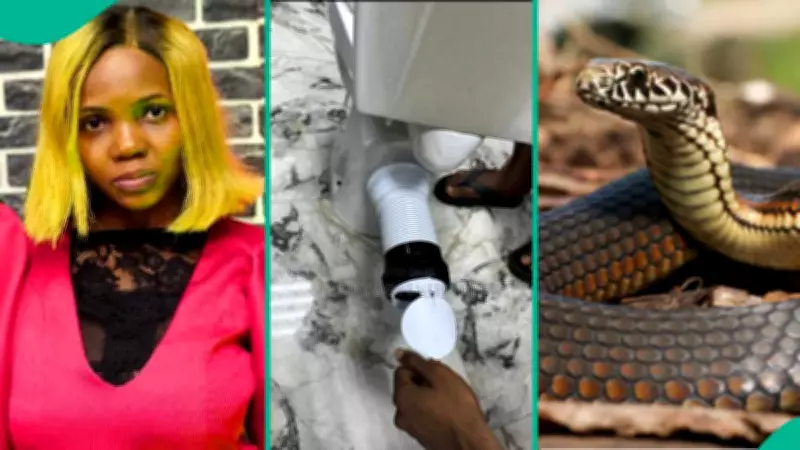
In response to growing fears about snake invasions in Nigerian homes, a medical laboratory scientist has publicly recommended a specific type of valve that can prevent reptiles from entering through toilet systems. This advice comes at a critical time when many Nigerians are experiencing heightened anxiety following the tragic death of fast-rising singer Ifunanya 'Nanyah' Nwangene, who died from a snakebite in her Abuja residence on January 31.
Laboratory Scientist's Practical Solution
Obidi Nora, a qualified medical laboratory scientist, has taken to social media to demonstrate and recommend a 4-inch non-return valve with a plastic lock-up mechanism. According to her professional assessment, this particular valve design allows for the free flow of drainage while effectively preventing waste from returning back through the system. More importantly, she emphasizes that this installation creates a physical barrier that snakes and other reptiles cannot penetrate when trying to access residential toilets.
Why This Recommendation Matters Now
The timing of this recommendation is particularly significant as investigations into recent snake incidents in Abuja have revealed that many reptiles are finding their way into homes specifically through toilet systems. Nora explained that her advice became necessary after it was established that snakes typically use sewage pathways as entry points into residential buildings in the Abuja area. Her Facebook post specifically addressed this concern, stating that proper attention to sewage areas through valve installation could significantly reduce the risk of snake invasions.
"Since it has been established that most snakes in Abuja homes come in through the toilet, it's advisable for everyone to pay attention to the sewage area by installing the 4-inch non-return valve," Nora wrote in her detailed recommendation. "This plastic valve with a lock-up mechanism allows free flow of drainage and makes it unable to return back. In that case, snakes and other reptiles won't be able to find their way through to your WC."
Public Reaction to the Safety Advice
The medical scientist's recommendation has sparked widespread reactions across social media platforms, with many Nigerians sharing their personal experiences and heightened fears about snake encounters in their homes. Numerous netizens have expressed how the recent incidents have affected their daily routines and sense of security within their own residences.
Personal Stories of Fear and Caution
Several social media users have shared compelling accounts of how snake fears have altered their behavior. Nkiru Okoye described how every small sound now triggers panic, saying "every post is talking about snake, my body was doing me somehow, if leather shift my eyes go open." Another user, Okwu Finix, admitted that staying inside their room has become frightening, noting "I no enjoy sleep last night any small sound nah to jump up point torch."
Other reactions include:
- T-i King Tok-wealth Innocent Pigak shared a humorous yet telling story about mistaking a USB cord for a snake, describing how they "attacked my black USB cord yesterday erhhh, I kept hitting it hard and screaming"
- Scholar Ugochi Edwin revealed they now carefully check their toilet before use since seeing a rat there, stating "na so I dey close am, if I wan use, I dey fess knock make anything way de there no say the original owner wan use am"
- Leo Tony Blair recounted a frightening experience in Abuja where a friend discovered a snake in the toilet at midnight, causing everyone to panic
- Elizabeth Osojie Gold admitted "Since yesterday I haven't slept" while actively searching for and blocking holes around their compound
Broader Context of Snake Safety Concerns
The valve recommendation emerges within a larger conversation about snake safety and healthcare preparedness in Nigeria. Health influencer Aproko Doctor has previously commented on Nanyah's death, highlighting what he sees as deeper systemic issues within Nigeria's healthcare infrastructure. According to his analysis, while snake bites occur in many parts of the world, deaths like Nanyah's are preventable when hospitals are properly equipped with necessary antivenom and emergency response capabilities.
This combination of practical prevention advice from a medical professional and broader healthcare discussions reflects the multifaceted approach needed to address snake safety concerns in Nigerian communities. The laboratory scientist's valve recommendation provides homeowners with a tangible, preventive measure they can implement immediately, while ongoing conversations about healthcare preparedness address the response side of potential snake encounters.
As fear continues to grip many households, especially in the Abuja region, such practical safety recommendations from qualified professionals offer both immediate solutions and peace of mind to concerned residents looking to protect their homes from unexpected reptile invasions.