57-Year Marriage Dissolved to Shield Wife from Medical Debt in US Healthcare System
A poignant story shared by a Nigerian user on the social media platform X has brought attention to the harsh realities of the American healthcare system, revealing how it forced a loving couple to end their marriage after nearly six decades together.
Heartbreaking Decision Driven by Financial Necessity
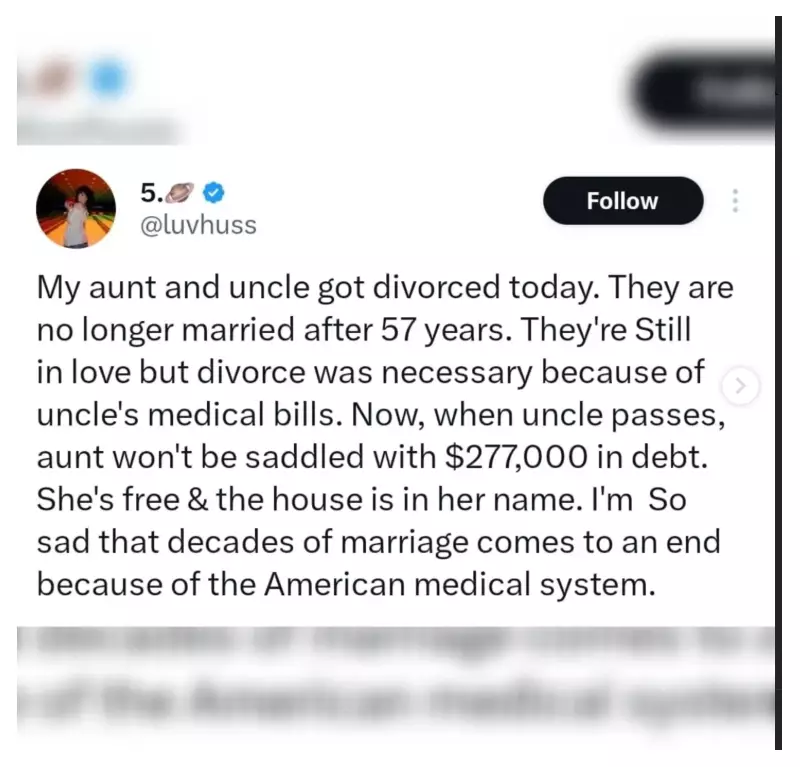
According to the detailed post, the user's aunt and uncle officially divorced after 57 years of marriage, not due to any loss of affection but as a strategic legal maneuver to protect the wife from overwhelming medical debt. The couple remains deeply in love, but faced with the uncle's escalating medical bills—reportedly reaching approximately $277,000—they made the difficult choice to separate legally.
This decision ensures that when the uncle eventually passes away, the aunt will not be burdened with his substantial medical debts, allowing her to maintain financial stability and security in her later years.
Legal and Financial Safeguards Implemented
As part of this protective measure, the couple's house has been legally transferred into the aunt's name, providing her with a secure asset free from potential claims by creditors. This move underscores the lengths to which families must go to navigate the complexities of healthcare costs in the United States, where medical expenses can quickly spiral into unmanageable debt.
The user expressed profound sadness over the situation, stating, "I'm so sad that decades of marriage comes to an end because of the American medical system." This sentiment resonates with many who face similar challenges, highlighting systemic issues in healthcare affordability and access.
Broader Implications for Families and Healthcare Policy
This story sheds light on a growing concern among families, both in Nigeria and globally, regarding the financial strains imposed by medical care. It raises important questions about:
- The impact of high healthcare costs on personal relationships and family structures.
- The need for more robust financial protection mechanisms for elderly couples.
- Potential reforms in healthcare policies to prevent such heartbreaking scenarios.
While the couple's love endures, their legal separation serves as a stark reminder of the economic pressures that can force difficult decisions in the face of illness and aging. This narrative not only touches on personal loss but also calls for a broader discussion on improving healthcare systems to support families in times of need.