Former Kaduna Governor El-Rufai Faces 10 Corruption and Money Laundering Charges
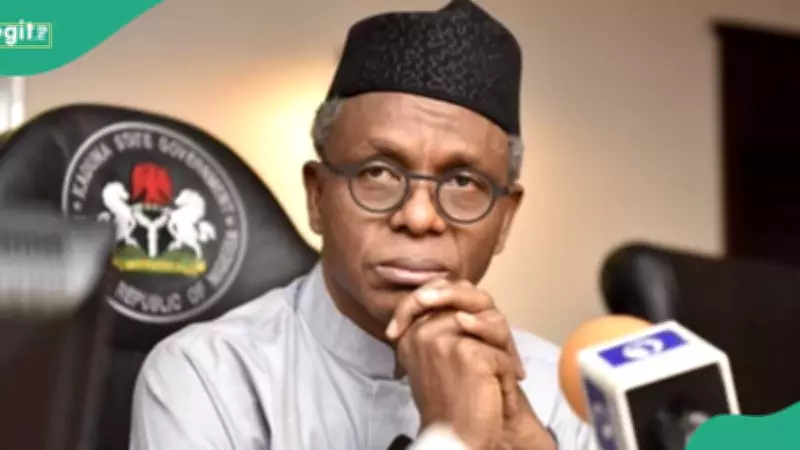
The former Governor of Kaduna State, Nasir El-Rufai, has been formally charged with ten separate counts of corruption and money laundering by the Independent Corrupt Practices and Other Related Offences Commission (ICPC). The charges were filed at the Federal High Court in Kaduna on Tuesday, March 24, 2026, marking a significant development in Nigeria's ongoing anti-corruption efforts.
Details of the Corruption Allegations
According to court documents obtained by Premium Times, the ICPC has accused El-Rufai of multiple violations of Nigeria's anti-money laundering legislation. The most substantial allegations involve an inflated severance payment scheme and a series of suspicious dollar-denominated deposits into his personal bank account over several years.
The commission specifically alleges that El-Rufai received severance allowances totaling N579.7 million (approximately N289.8 million in September 2020 and another N289.8 million in January 2023) that exceeded his legitimate entitlement of N20,013,245.00. The ICPC has characterized these excessive payments as representing 300% of El-Rufai's annual basic salary and labeled them as proceeds of unlawful activities, specifically corruption.
Fraudulent Dollar Deposits Timeline
The money laundering charges detail a pattern of dollar deposits into El-Rufai's Guaranty Trust Bank domiciliary account (number: 0023824985) from various individuals over multiple years:
- Between September 2017 and March 2023, El-Rufai allegedly received $320,800 in multiple transactions from Joel Adoga at locations in Kaduna and Abuja.
- In May 2022, he reportedly received $155,800 from Peter Akagu Jones, who is currently at large.
- Also in May 2022, he allegedly received $305,300 from Ajayi Ayodele, who is also at large.
- In April 2016, he received $5,000 from Umar Farouq at Asokoro, Abuja.
- In June 2016, he received another $5,000 from Umar Saleh at Asokoro, Abuja.
- In December 2016, he received $4,000 from Umar Farouk Saleh in Kaduna.
- In October 2017, he received $10,000 from Umar Farouq in Kaduna.
The total amount of these alleged fraudulent dollar deposits amounts to $817,900. Additionally, the ICPC has charged El-Rufai and Joel Adoga with conspiracy to disguise the origin of $10,000 that was deposited into El-Rufai's account in July 2019 at Wuse, Abuja.
Legal Proceedings and Court Developments
The Federal High Court in Kaduna has adjourned El-Rufai's bail hearing to Tuesday, March 31, 2026. The former governor's legal team has cited constitutional rights and the need for adequate preparation time for his defense in their bail application. Court proceedings included detailed legal arguments from both prosecution and defense counsel before the adjournment was granted.
In a related development, Department of State Services (DSS) operatives denied access to Asiya, one of El-Rufai's wives, at the main entrance of the Federal High Court. Both of El-Rufai's wives were reportedly redirected to use the back entrance after being denied access at the front gate by security personnel.
Legal Framework and Potential Consequences
The ICPC has charged El-Rufai with offences contrary to Section 18(2)(d) and punishable under Section 18(3) of the Money Laundering (Prevention and Prohibition) Act, 2022. This legislation represents Nigeria's comprehensive framework for combating money laundering activities and carries significant penalties for violations.
The case against the former governor represents one of the highest-profile corruption prosecutions in recent Nigerian history and is being closely watched by anti-corruption advocates, political observers, and the general public. The outcome could have significant implications for Nigeria's political landscape and anti-corruption enforcement efforts.