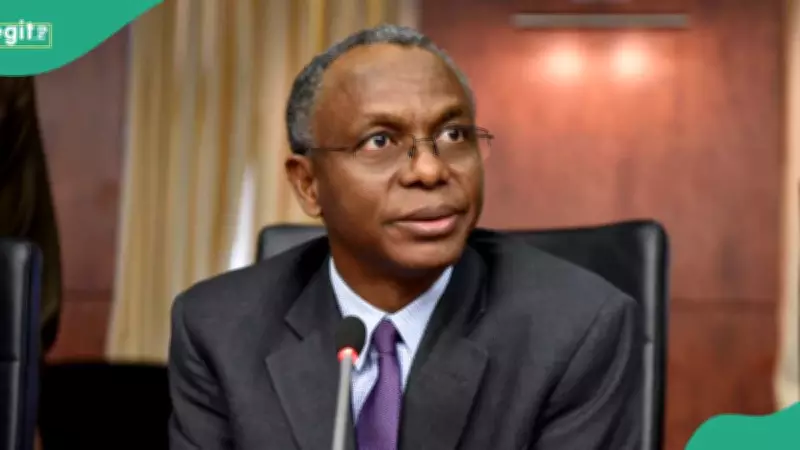
Ex-Kaduna Governor El-Rufai's ICPC Custody Statements Unveiled Amid Legal Clash
Fresh details have surfaced regarding what former Kaduna State Governor, Nasir El-Rufai, communicated to investigators from the Independent Corrupt Practices and Other Related Offences Commission (ICPC) while in custody. El-Rufai, detained since 19 February 2026 after prior holding by the Economic and Financial Crimes Commission (EFCC), reportedly declined to address allegations presented to him, insisting he would only respond in a court of law.
El-Rufai's Written Statements and Allegations of Political Motives
According to documents filed by the ICPC in opposition to his N1 billion fundamental rights enforcement suit, El-Rufai described the investigation and detention as politically motivated. In written statements dated 19 and 20 February, he asserted, "I do not believe these investigations amount to law enforcement. This is political persecution, which only a judge can decide upon." The former governor invoked his right to remain silent during interrogation, stating he acted on legal counsel's advice.
ICPC's Attempted Arrest and Home Search Operations
The ICPC's counter-affidavit reveals that the commission, with support from the State Security Service (SSS), attempted to arrest El-Rufai at Nnamdi Azikiwe International Airport on 5 February upon his return from Egypt, but the effort was unsuccessful. After serving an invitation, he was detained by the EFCC before the scheduled appearance and transferred to ICPC custody on 19 February. On the same day, ICPC operatives executed a search warrant at his Asokoro, Abuja residence, claiming recovery of sensitive security documents and electronic equipment allegedly capable of tapping conversations.
However, his son, Mohammed El-Rufai, a member of the House of Representatives, dismissed this claim, asserting that only old phones, laptops, and flash drives were recovered from the house.
Background of the ICPC Investigation and Legal Actions
The ICPC stated its probe originates from a petition filed in June 2024 by Nus’ab Chambers, alleging diversion of state funds, loan mismanagement, and procurement violations during El-Rufai's tenure as governor. Instead of addressing these allegations, El-Rufai reportedly used part of his statement to outline his educational and professional background.
El-Rufai has filed a suit at the Federal High Court in Abuja against the EFCC, ICPC, SSS, and the Attorney General of the Federation, challenging his arrest and detention. He seeks a court declaration that the agencies' actions are unlawful, N1 billion in damages, and restraints on freezing his bank accounts or seizing his property. The former governor, who recently defected from the All Progressives Congress (APC) to the African Democratic Congress (ADC), maintains the investigation is politically driven rather than a genuine anti-corruption effort.
El-Rufai's Broader Criticisms on Human Rights and Governance
In related developments, El-Rufai has condemned the continued unlawful detention of Nigerians, warning it violates human rights and erodes public trust in government. Speaking at the 23rd Annual Trust Dialogue, he called on the justice system to protect citizens rather than instil fear, cautioning that misuse of state power by security agencies weakens democratic institutions.