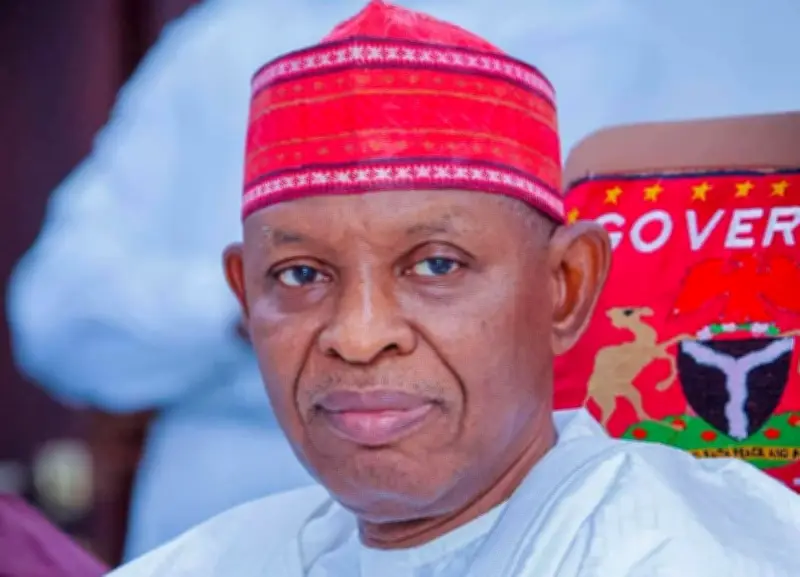
Kano State Governor Abba Yusuf has issued a blunt ultimatum to officials of the state's Public Complaints and Anti-Corruption Commission (PCACC): perform your duties effectively or resign. Speaking at the Government House on Thursday during the launch of 150 truckloads of subsidised fertiliser for farmers across the state's 44 local government areas, Governor Yusuf expressed dissatisfaction with the agency's recent performance, noting a sharp decline in its enforcement operations and public visibility since the departure of former chairman Muhuyi Magaji.
Governor Demands Immediate Return to Aggressive Enforcement
Governor Yusuf stated that the agency has lost its "fighting spirit" and urged the new chairman, Sa'idu Yahaya, whom he appointed in August 2025, to step aside if he cannot meet expectations. "The fighting momentum is no longer there like what we used to hear and see," Mr Yusuf said. "You have sworn with the Quran to discharge your responsibility; if you are afraid to fight, then you have to resign." The governor emphasised that combating corruption requires resilience and warned officials to prepare for inevitable backlash, including blackmail and public disdain. "I am calling on the chairman of the state anti-corruption agency to tighten his belt because fighting corruption is not an easy task," he added. "You must be ready to face the consequences: blackmail, people despising you, and hating you. But that will not harm you as long as you are truthful and have a sincerity of purpose."
Governor Seeks Federal Anti-Graft Bodies' Intervention in Fertiliser Distribution
In what appeared to be a vote of no confidence in the current PCACC leadership, Governor Yusuf specifically requested the intervention of the Economic and Financial Crimes Commission (EFCC) and the Independent Corrupt Practices and Other Related Offences Commission (ICPC) to monitor the fertiliser distribution. According to a statement on Friday by the governor's media aide, Sanusi Bature, this step aims to ensure transparency and accountability, eliminate diversion and hoarding, and guarantee that genuine farmers benefit. The governor urged the 44 local government chairmen to conduct the distribution with honesty and fairness, warning that anyone caught diverting fertiliser or undermining the programme would face legal consequences. He noted that the intervention would reduce farming costs, boost agricultural productivity, and strengthen food security.
Former Chairman Muhuyi Magaji's Legacy of High-Profile Investigations
The PCACC under Mr Magaji, who has now been appointed to lead the state's narcotic war, was one of Nigeria's most proactive and debated sub-national anti-graft agencies. Mr Magaji, a lawyer and activist, was first appointed in 2016 by former Governor Abdullahi Ganduje. He built a reputation for aggressively pursuing financial crimes, public sector fraud, and market hoarding. His investigations often targeted powerful political, traditional, and administrative figures, placing the agency at the intersection of anti-corruption enforcement and political warfare. High-profile cases included a 2019 probe into the Kano Emirate Council under Emir Lamido Sanusi over alleged misappropriation of approximately ₦3.4 billion spent on luxury cars, unauthorised internet data bills, and questionable contracts. This probe led to a rift between the state government and the emir, resulting in the balkanisation of the emirate and Mr Sanusi's dethronement in 2020.
Political Backlash and Suspension
In mid-2021, the agency investigated alleged diversion of Internally Generated Revenue (IGR) and inflation of state contracts, linking financial anomalies to companies associated with members of Governor Ganduje's immediate family. This investigation triggered immediate political backlash. Within weeks, Mr Magaji was suspended by the State House of Assembly on allegations of "misconduct," specifically his refusal to accept a direct posting of an accountant from the state's Accountant-General's office. He contested the suspension as a political hit job aimed at halting the investigation. In 2020, the commission also probed former Governor Rabiu Kwankwaso over alleged diversion of over ₦6.8 billion in state pension funds during his administration, focusing on housing projects and properties allocated under questionable terms.
Grassroots Anti-Corruption Efforts During Crises
Beyond high-ranking politicians, the commission targeted economic sabotage at the grassroots level. During the COVID-19 pandemic and periods of hyperinflation, the anti-corruption agency routinely raided major warehouses and markets in Kano, seizing goods from traders accused of hoarding essential food items like sugar, rice, and flour to artificially inflate prices. Traders were forced to sell at regulated rates. Mr Magaji's aggressive style made him a folk hero to citizens frustrated by elite corruption but also drew criticism from detractors who accused the agency of being "selective" and operating as a political weapon to settle scores with rivals. Governor Yusuf's recent remarks underscore his demand for a return to such high-standard enforcement strategies, including high-profile arrests and transparency, warning that he will not tolerate regression in the state's anti-graft campaign.
When contacted for comment, PCACC chairman Sa'idu Yahaya could not be reached, as calls to his phone went unanswered on Friday.