Lagos Governor Babajide Sanwo-Olu and Minister of Works David Umahi have firmly dismissed social media claims that the Lagos-Calabar Coastal Highway project caused flooding in parts of the state, describing the allegations as false and misleading.
Officials Reject Viral Flooding Claims
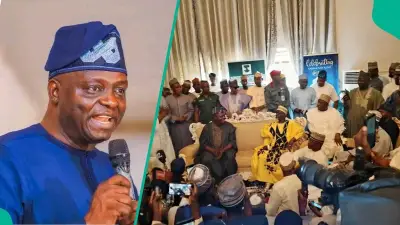
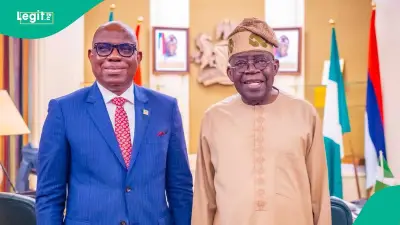
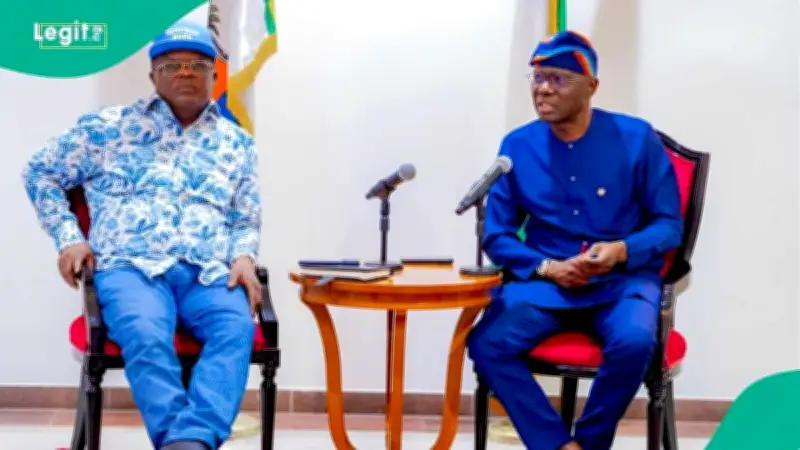
Both officials made their positions clear when Umahi led members of the National Assembly on a courtesy visit to the governor. The visit was ordered by President Bola Tinubu following the spread of reports online alleging that construction of the Coastal Highway had triggered flooding in Lagos communities.
As shared by the Lagos state government in a Facebook post on Tuesday, July 7, Umahi stated that flooding had been recorded across multiple states and had been predicted in at least 22 states, making it inaccurate to isolate the highway as a cause. He explained that the road was deliberately elevated to withstand ocean surges and protect the corridor from flooding for the next 20 to 30 years. He added that the areas now experiencing flooding were naturally swampy long before construction commenced, and that buildings erected below approved flood levels would remain vulnerable regardless of the highway.
"We were concerned about the negative narrative on social media claiming that the Coastal Highway caused flooding in Lagos. The President directed us to come with members of the National Assembly to assess the situation ourselves," Umahi said.
Geography vs. Infrastructure: The Real Cause of Lagos Flooding
On his part, Sanwo-Olu argued that seasonal flooding in Lagos is a consequence of the state's geography rather than any infrastructure project. He noted that Lagos occupies less than 0.4 per cent of Nigeria's landmass, with roughly one-third of the state covered by water, while a rapidly growing population continues to strain land and infrastructure.
"Lagos is a coastal city. When people say Lagos has flooded, without mincing words, we will always experience some level of flooding. We only pray that it will not be severe. These are natural occurrences associated with coastal environments across the world," the governor stated.
Sanwo-Olu also pointed to blocked drainage channels, largely caused by indiscriminate waste disposal, as a major driver of urban flooding. He referenced the state government's earlier ban on Styrofoam as part of its environmental efforts and disclosed that additional regulations would soon follow.
Maintenance Plans for the Coastal Highway
On the maintenance of the Coastal Highway, the governor revealed that Lagos had signed an agreement with a mechanised street-cleaning company to deploy six-lane sweeping machines along the highway daily. He added that the state had commenced a clean-up of the Lagos-Badagry Expressway and would enforce zero tolerance against activities that damage roads and drainage systems.
Umahi confirmed that both the Federal Government and Lagos State would work together to construct additional drainage channels and service lanes along both sides of the highway. He noted that some structures would need to be removed to accommodate this infrastructure, with stakeholder engagements already scheduled.
Flood Disrupts Electricity in Parts of Lagos
Earlier, Legit.ng reported that heavy rainfall disrupted electricity supply in parts of Lagos after floodwaters damaged equipment at the Oworo 132/33kV Transmission Station, affecting several communities served by Ikeja Electric. Ikeja Electric said two power transformers and several 33kV feeders were damaged, leaving areas including Ladilak, Bariga, Oworo, Pedro, Alapere, Agboyi, Araba, and Gbagada without power.