BudgIT Report Uncovers Massive Fraud in Government Projects Across Nigeria
A comprehensive new report from BudgIT, a leading civic technology organization, has exposed widespread fraud and misappropriation in government-funded projects across Nigeria. The damning findings reveal that N8.61 billion was diverted through 92 fraudulent projects implemented across multiple states, highlighting the country's ongoing struggle with corruption in public spending.
Systemic Failures in Project Implementation
Published through BudgIT's monitoring platform @TrackaNG, the report examined 2,760 government-funded projects implemented across 28 states during the 2024 and 2025 fiscal years. The analysis found that while 1,438 projects were completed and 660 remain ongoing, 471 projects were not completed, 99 were abandoned, and 92 were fraudulently delivered.
The fraudulent projects exhibited various patterns of abuse including diversion of funds, relocation to undisclosed sites, payments for projects already executed in previous budget cycles, partial delivery, and poor-quality execution. These findings underscore the widening gap between budgetary promises and the actual realities experienced by Nigerian citizens.
Geographical Distribution of Fraudulent Projects
The geographical spread of the fraud reveals concerning patterns across several states. Imo State recorded the highest share at 17.43 percent, followed by Lagos State (12.73 percent), Kwara State (11.76 percent), Abia State (10.67 percent), and Ogun State (8.33 percent). Together, these five states accounted for 57.1 percent of all fraudulent projects, representing N8.61 billion out of N15.07 billion disbursed for the examined projects.
Critical Infrastructure Projects Abandoned
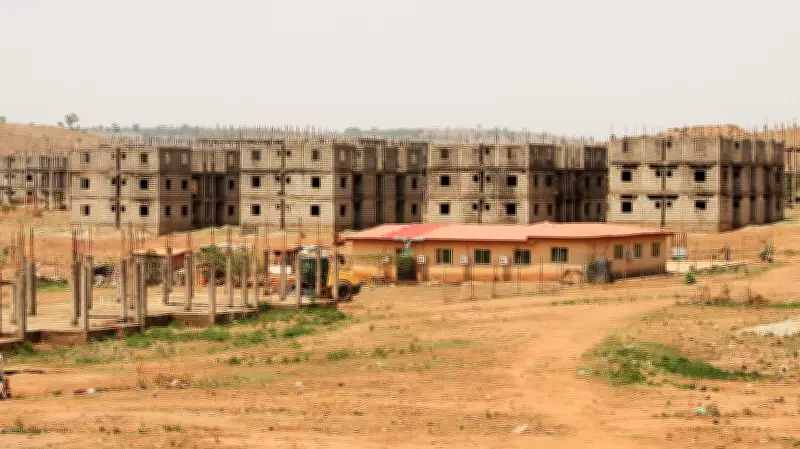
Equally troubling is the report's revelation about dam-related projects worth N432 million across 13 states. None of the 16 dams tracked was completed: four were abandoned, six progressed slowly, and six never commenced despite funds being allocated. In the healthcare sector, 47 revitalised primary healthcare centres monitored across 25 states showed mixed outcomes, with some improved while others were completely abandoned.
Beyond the statistics lies a deeper tragedy. Primary healthcare centres meant to serve vulnerable populations remain dilapidated, water and sanitation projects have failed to deliver safe water to rural communities, and in intervention zones including oil-producing regions, some projects reportedly cannot even be traced despite full funding.
Systemic Governance Failures
BudgIT's revelations are not isolated incidents. Over the years, Nigeria's financial environment has witnessed the proliferation of illegal fund managers and Ponzi schemes. The 2017 report of the Nigeria Electronic Fraud Forum revealed that Nigerians lost N11.9 billion to the Mavrodi Mundial Moneybox (MMM) scheme. These recurring patterns point to systemic governance failures that transcend sectors.
This situation constitutes more than administrative oversight; it represents a governance crisis. Each abandoned classroom robs children of educational opportunities, each failed health facility increases preventable mortality risks, and each dry borehole pushes citizens back to unsafe water sources. The impacts are felt not only in wasted funds but also in diminished human dignity and quality of life.
Root Causes of Project Failures
The proliferation of fraudulent, abandoned, and non-performing projects reflects systemic weaknesses in procurement processes, supervision, and enforcement. Weak monitoring mechanisms, opaque documentation, and the near absence of sanctions for erring contractors have created fertile ground for abuse. At the core of the problem lies a chronic failure of accountability, with oversight mechanisms remaining weak and reactive.
The politicisation of budgeting compounds the crisis, as projects are inserted into appropriation bills as instruments of patronage rather than development priorities. Many lack feasibility studies, technical designs, or alignment with strategic needs. Some are duplicated across agencies while others lack any realistic pathway to completion.
Procurement Irregularities and Monitoring Failures
Procurement irregularities further deepen the rot, with contracts inflated, bidding processes manipulated, and projects awarded to firms lacking technical capacity. When projects stall, consequences are rare, allowing contractors to reappear in subsequent procurement cycles and perpetuating a system where failure carries no penalty.
Monitoring and evaluation systems remain largely paper-based and easily manipulated, with Ministries, Departments, and Agencies routinely reporting progress that bears little resemblance to realities on project sites. Without real-time verification and community-based monitoring, ghost projects continue to flourish.
Severe Consequences for National Development
The consequences of these failures are severe and far-reaching. Abandoned dams undermine irrigation and food security, uncompleted water schemes expose communities to drought and disease, and wasted capital deepens fiscal deficits while eroding public trust. Ultimately, fraudulent projects rob citizens of infrastructure essential for economic growth and social stability.
Pathway to Reform and Accountability
Reversing this trend demands decisive reform. Procurement processes must be digitised and transparent, with full disclosure of bids, costs, and contractor histories. Non-performing contractors should be blacklisted and compelled to refund mobilisation fees, while performance bonds must be strictly enforced.
Oversight institutions require empowerment and independence, with audit findings triggering automatic investigations and prosecutions. Legislators must prioritise preventive supervision through routine site inspections rather than post-facto probes. Transparency is indispensable, with real-time public tracking of projects supported by civil society and host communities making it harder for phantom projects to thrive.
Nigeria cannot afford to treat abandoned projects as routine administrative lapses. They represent stolen opportunities for food security, water access, flood control, and rural livelihoods. The fight against fraudulent projects is ultimately a test of governance. Without accountability, public budgets remain ceremonial documents; with accountability, they become instruments of national progress.
Civil Society's Role and Government Responsibility
Civil society organisations such as BudgIT have demonstrated that citizen-driven accountability can illuminate the dark corners of public finance. Government must now match this vigilance with decisive action, as transparency without consequences will not restore public trust.
BudgIT's report should serve as both a warning and an opportunity: a warning that systemic leakages continue to erode development, and an opportunity for authorities to demonstrate that accountability is not an abstract ideal but a practical commitment to the Nigerian people. The organization, founded in 2011, has grown into one of Africa's leading civic-tech organisations, deploying data and digital tools to track public spending and strengthen democratic accountability.