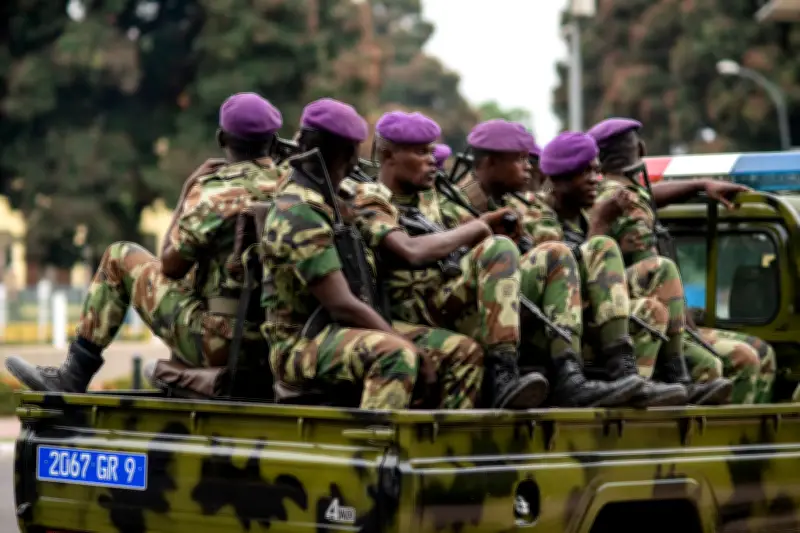
The United States has imposed sanctions on two senior commanders of armed groups operating in the eastern Democratic Republic of the Congo (DRC), citing their involvement in violence, human rights abuses, and threats to regional stability. In a statement issued on Monday, United States State Department spokesperson Thomas Pigott announced that the sanctions target leaders of the Democratic Forces for the Liberation of Rwanda (FDLR) and the Rwanda-backed March 23 Movement (M23), both of which had previously been designated by the United States.
Sanctions Target FDLR and M23 Commanders
The United States designated Gustave Kubwayo, a commander of an FDLR intelligence and special operations unit. According to the statement, the FDLR has been responsible for ethnic violence against civilians, the recruitment and use of child soldiers, sexual violence, and cross-border attacks that continue to pose security threats to Rwanda. Also sanctioned was John Imani Nzenze, the chief of intelligence for the M23 rebel group. The United States accused the M23 of carrying out killings, serious human rights violations, and attacks on civilians in eastern DRC.
Broader Efforts for Regional Stability
Pigott said the sanctions form part of Washington's broader efforts to address threats to peace, security, and economic prosperity in the conflict-affected region. “The Trump Administration is firmly committed to ensuring all parties uphold their commitments under the historic Washington Accords for Peace and Prosperity and Doha Framework,” the statement said, adding that the United States would continue to use all available tools to support lasting stability in the region.
The sanctions were imposed under the authority of Executive Order 13413, as amended, which provides the legal framework for targeting individuals and entities contributing to instability in the Democratic Republic of the Congo. Eastern DRC has experienced years of armed conflict involving numerous rebel groups, resulting in widespread displacement, humanitarian crises, and strained relations among countries in the Great Lakes region.