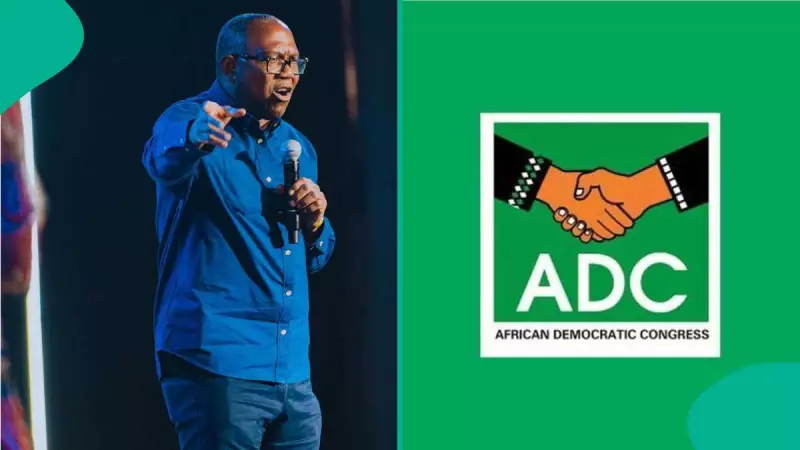
Nigerian political discourse has been ignited by a statement from Peter Obi, the 2023 presidential candidate of the Labour Party, who recently joined the African Democratic Congress (ADC) to pursue his 2027 presidential ambition. The controversy stems from a viral social media video where Obi declared he owns no house in the nation's capital, Abuja, and has no plans to acquire one.
Obi's Statement and the Immediate Backlash
In the trending video, Obi, a former governor of Anambra State, explained his position by suggesting that accumulating more wealth often leads to more personal headaches. This remark, made public on January 18, 2026, was swiftly met with a wave of criticism from many Nigerians who perceived it as a disingenuous political maneuver ahead of the next general elections.
Critics argue that the statement seems at odds with Obi's known status as a billionaire with significant investments. They contend that his comments are a calculated attempt to appeal to voters by projecting an image of frugality and detachment from the elite political class often associated with property ownership in Abuja.
Nigerians React: A Nation Divided
The public reaction has highlighted a deep divide in political perception. On one side, supporters of Obi, often referred to as 'Obidients,' have defended his statement as consistent with his long-standing advocacy for prudent management of resources. They see it as a reflection of his personal discipline and a critique of the opulence common among Nigeria's political elite.
Conversely, sceptics have launched a multifaceted critique. Social media user Seun Akinsanya accused Obi of taking Nigerians for granted, urging him to campaign openly without pretense. Shamsudeen Ayinde questioned the logic, stating that being a billionaire and acting stingy does not inherently make one a good administrator.
More detailed allegations emerged from commentators like GWG, who claimed that while Obi might not have properties registered in his personal name in Abuja or Lagos, they exist under his company's name, managed by his younger brother. This, they argue, is a technical truth that obscures the factual reality of his asset ownership. Similarly, Adejare Stephen stated that the claim does not align with widely reported public records of Obi's investments.
Another user, TheOmoAbake, shifted the focus, alleging that Obi owns a house in the United Kingdom and criticized his supporters for what they termed idolatry.
Broader Political Context and Implications
This incident does not exist in a vacuum. It occurs within the highly charged atmosphere of Nigeria's political cycle, with the 2027 presidential election already shaping national conversations. Obi's move from the Labour Party to the ADC adds another layer of strategic calculation to his public pronouncements.
The debate taps into broader themes of transparency, wealth, and political image-making in Nigerian politics. It forces a conversation about what voters should expect from their leaders: perceived personal austerity or straightforward disclosure about their holdings, whether personal or corporate.
Furthermore, the report references a separate but related controversy where broadcaster Oriyomi Hamzat reacted to comments Obi made about the Olubadan of Ibadan, accusing him of disrespect. This shows how Obi's statements frequently become multi-front news events, analyzed for both their content and their potential to stir regional or ethnic sentiments.
As the political landscape continues to evolve, statements like Obi's on property ownership are likely to remain a focal point. They serve as a litmus test for public trust and a battleground for defining the narrative around a candidate's integrity and motives. The coming months will reveal whether this particular claim becomes a lasting liability or a reinforced pillar of Peter Obi's political identity.