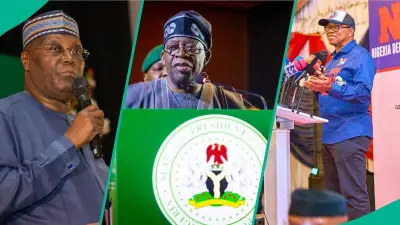
President Tinubu Issues Resignation Directive for Political Appointees Ahead of 2027 Elections
In a significant move ahead of Nigeria's 2027 general elections, President Bola Ahmed Tinubu has issued a formal directive requiring all political appointees within his administration who intend to contest elective offices to resign from their current positions. The deadline for compliance has been set for Tuesday, March 31, 2026, according to an official statement released by the Office of the Secretary to the Government of the Federation.
Legal Basis and Electoral Timeline
The presidential directive is firmly grounded in Section 88(1) of the Electoral Act 2026 and aligns with the official timetable released by the Independent National Electoral Commission for party primaries preceding the 2027 elections. President Tinubu emphasized that this measure is essential for maintaining credible electoral processes and strengthening Nigeria's democratic institutions, urging all affected officials to adhere strictly to the requirement.
Nigeria's next general elections are scheduled for January 16, 2027, when voters will elect the president, vice president, senators, representatives, governors, and state assembly members across the nation. The primaries for both the governing and leading opposition parties in Africa's most populous country are expected to occur later in 2026, creating a tight timeline for political aspirants currently holding government appointments.
Comprehensive List of Affected Officials
The presidency has identified twelve distinct categories of political appointees who fall under this resignation mandate. These include:
- Ministers of the Federal Republic
- Ministers of State serving in various portfolios
- Special Advisers to the President
- Senior Special Assistants to the President
- Special Assistants to the President
- Personal Assistants to the President
- All Directors-General of federal agencies
- Chief Executive Officers of Federal Government Parastatals
- Chief Executive Officers of Government Agencies
- Chief Executive Officers of Government Commissions
- Chief Executive Officers of Government-owned Companies
- Other Political Appointees serving directly under the President
Ministerial Resignations and State-Level Implications
Reports indicate that several ministers within President Tinubu's cabinet are already considering resignation to pursue various offices in the 2027 elections. According to sources familiar with the matter, at least four members of the Federal Executive Council are positioning themselves for state-level contests, particularly in states where incumbent governors will complete their constitutionally permitted two terms in 2027.
Those linked to potential resignation include Adebayo Adelabu, Muhammad Ali Pate, Yusuf Maitama Tuggar, and Nkeiruka Onyejeocha. The Independent National Electoral Commission has scheduled party primaries between April 22 and May 20, 2026, creating a narrow window for political appointees to transition from government service to electoral campaigning.
Lagos State Officials Follow Federal Lead
The resignation directive has also triggered similar actions at the state level, with six commissioners, special advisers, and senior aides in the Lagos State government announcing plans to resign in order to pursue political positions. These officials, all aspiring under the All Progressives Congress platform, intend to contest for seats in the House of Representatives and Lagos State House of Assembly in their respective constituencies.
The Lagos State primaries are scheduled between April 23 and May 30, 2026, following closely behind the federal timeline. This development demonstrates how President Tinubu's directive is creating ripple effects throughout Nigeria's political landscape, ensuring that appointees at both federal and state levels must choose between their current positions and future electoral ambitions.
Administrative Changes and New Appointments
Concurrent with these political developments, President Tinubu has announced nine fresh appointments to the management of the Nigerian Electricity Management Services Agency. These appointments were confirmed in a statement by Bayo Onanuga, the president's special adviser on information and strategy, indicating that administrative restructuring continues alongside electoral preparations.
The resignation order represents a significant step toward ensuring a level playing field in Nigeria's upcoming elections, preventing incumbent advantage for political appointees while they simultaneously hold government positions. As the March 31, 2026 deadline approaches, political observers will be monitoring how many officials choose to resign and which electoral contests they enter, potentially reshaping Nigeria's political landscape in the lead-up to the 2027 general elections.