
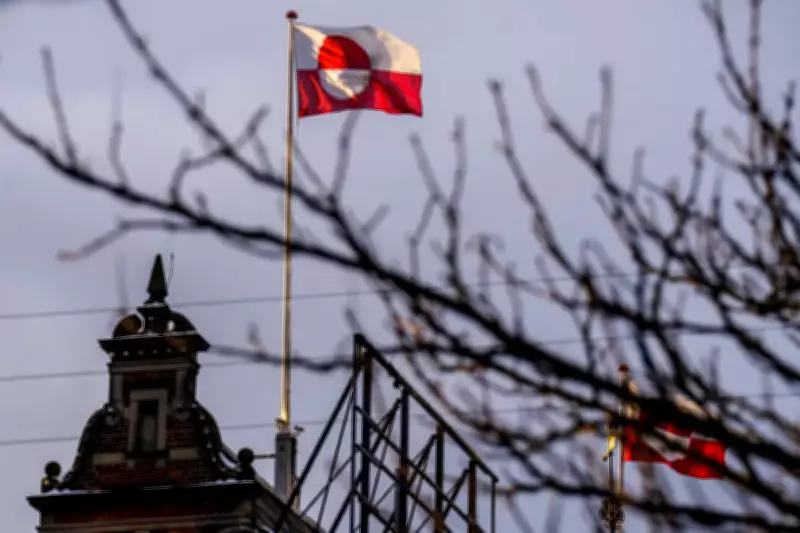
Canada and France Establish Diplomatic Presence in Greenland's Capital
In a significant diplomatic development, Canada and France officially opened consulates in Nuuk, the capital of Greenland, on Friday, February 6. This move represents a strong show of international support for the Danish autonomous territory, particularly in response to expressed interests from the United States regarding control over the strategic Arctic island.
Background of US Interest in Greenland
Since returning to the White House last year, US President Donald Trump has repeatedly emphasized Washington's need to control Greenland for security reasons, citing the island's strategic location and mineral wealth. However, last month appeared to mark a shift in his approach, with Trump announcing he had reached a framework agreement with NATO Secretary General Mark Rutte to secure greater American influence without taking direct control.
A joint working group involving the United States, Denmark, and Greenland has since been established to address Washington's security concerns in the Arctic region. While details of these discussions remain confidential, both Denmark and Greenland have consistently maintained that sovereignty and territorial integrity are non-negotiable principles, even as they acknowledge shared security interests with the United States.
International Response and Diplomatic Significance
Political scientist Jeppe Strandsbjerg from the University of Greenland described the consulate openings as a victory for Greenlanders, highlighting the strong appreciation for international support following Trump's remarks. French President Emmanuel Macron had announced France's intention to open a consulate during his visit to Nuuk in June, where he expressed European solidarity with Greenland and criticized any ambitions that might undermine its status.
The newly appointed French consul, Jean-Noel Poirier, brings extensive diplomatic experience, having previously served as France's ambassador to Vietnam. Canada had announced its plans to open a consulate in Greenland in late 2024, aiming to strengthen cooperation and engagement with the territory.
Broader Strategic Implications
According to Ulrik Pram Gad, an Arctic expert at the Danish Institute of International Studies, this diplomatic development sends a clear message that concerns over Greenland extend beyond bilateral issues between the US and Denmark. He emphasized that European allies and Canada are standing together as partners and friends of Greenland, demonstrating unified international concern.
Security and defence analyst Christine Nissen of the Europa think tank noted that this move is part of a broader strategy to frame Arctic issues as European and global concerns rather than merely Danish matters. The opening of these consulates also represents recognition of Greenland's growing autonomy under its 2009 Self-Government Act.
Greenland's Evolving Diplomatic Landscape
Analysts suggest that the presence of additional diplomatic missions will enable Greenland to build direct relationships with other nations and gain valuable experience that could prove useful if the territory eventually pursues full independence. By expanding its diplomatic and economic ties, Greenland can reduce its reliance on Denmark and diversify external relationships across trade, investment, and political spheres.
Greenland has maintained diplomatic relations with several international entities over the years:
- Established ties with the European Union in 1992
- Formalized relations with the United States in 2014
- Developed diplomatic connections with Iceland since 2017
Iceland opened a consulate in Nuuk in 2013, while the United States reopened its diplomatic mission in 2020 after previously operating one between 1940 and 1953. The European Commission further strengthened its presence by opening an office in Nuuk in 2024.
This expansion of diplomatic representation in Greenland reflects the growing international attention on Arctic affairs and the strategic importance of Greenland's position in global geopolitics.




