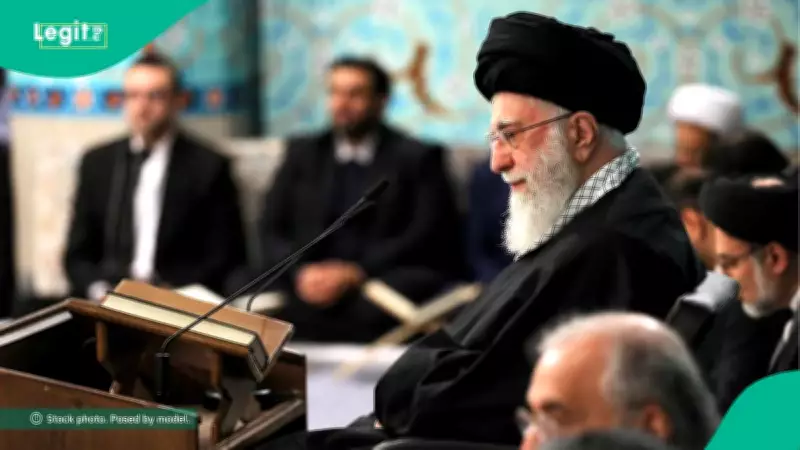
Iran Establishes Interim Leadership Council Following Supreme Leader's Death
Iran has officially activated its constitutional succession mechanism in response to the passing of Supreme Leader Ali Khamenei. The nation has announced a new interim leadership arrangement designed to maintain governance continuity while the process of selecting a permanent successor unfolds.
Constitutional Succession Process Initiated
Following the death of Supreme Leader Ali Khamenei, Iranian authorities have implemented the country's established constitutional framework for leadership transition. This process involves the formation of a temporary governing body that will assume the responsibilities typically held by the supreme leader until a permanent replacement is elected.
The leadership council, as mandated by Iran's constitution, will oversee the nation's affairs during this transitional period. This interim arrangement ensures that governmental functions continue without interruption while the formal selection process for a new supreme leader proceeds through proper institutional channels.
Composition of the Interim Leadership Council
Religious scholar Alireza Arafi, a prominent member of Iran's Guardian Council, has been appointed to join the temporary leadership body. Arafi will serve alongside President Masoud Pezeshkian and Chief Justice Gholam-Hossein Mohseni-Ejei, forming a three-member council that will collectively exercise the powers and responsibilities of the supreme leader during this interim period.
The Guardian Council, of which Arafi is a member, plays a crucial role in Iran's political system, overseeing elections and legislation to ensure compatibility with Islamic principles and the constitution. Arafi's appointment brings religious authority and constitutional expertise to the interim leadership structure.
Next Steps in Leadership Transition
Under Iran's constitutional provisions, the temporary leadership council will maintain governance until the Assembly of Experts convenes to elect a new supreme leader. The Assembly of Experts, composed of Islamic scholars elected by the public, holds the exclusive constitutional authority to appoint, supervise, and potentially dismiss the supreme leader.
This carefully structured succession process reflects Iran's unique political system, which blends religious authority with republican institutions. The interim arrangement provides stability during what could otherwise be a period of uncertainty following the death of a leader who held the position for decades.
The activation of this constitutional mechanism demonstrates Iran's institutional preparedness for leadership transitions, ensuring that governance continues according to established legal and religious frameworks even during periods of significant change at the highest levels of authority.