
Iran Delivers 48-Hour Ultimatum to Gulf States Amid U.S.-Israeli Conflict
In a dramatic escalation of the ongoing U.S.-Israeli conflict with Iran, Tehran has issued a stark 48-hour ultimatum to Gulf monarchies, forcing them into a binary choice with catastrophic consequences. The ultimatum, delivered through intelligence back channels on March 8, 2026, demands that Saudi Arabia, the United Arab Emirates, Kuwait, and Qatar immediately cease allowing American military forces to use their territory for strikes against Iran.
The Ultimatum's Terms and Immediate Implications
The message delivered to Gulf leaders was brutally simple: "Stop allowing American military forces to use your territory for strikes against Iran. Shut down the bases, deny overflight permissions, end the logistical support, or accept that your oil infrastructure becomes a permanent military target that Iran will destroy systematically until nothing remains." This ultimatum presents Gulf states with two equally disastrous options, each carrying profound implications for regional stability and global energy markets.
Option One: Choosing America and Facing Economic Collapse
If Gulf states choose to maintain their alliance with the United States and continue hosting American military operations, Iran has threatened to systematically destroy their oil infrastructure. This would begin with precision strikes on critical facilities, potentially reducing Saudi Arabia's oil production from 10 million barrels per day to functionally zero over three months.
The economic consequences would be devastating:
- Saudi Arabia, where oil revenue constitutes 87% of government income, would face immediate inability to pay public sector salaries or fund social programs
- The UAE would see its entire economic foundation collapse, with real estate markets, tourism sectors, and financial services industries relocating from what would become a war zone
- Kuwait and Qatar would face similar economic devastation, with political instability likely following economic collapse in these rentier states
Option Two: Choosing Oil and Losing American Protection
The alternative requires Gulf states to eject American military forces within 30 days, thereby preserving their oil infrastructure from Iranian attacks. However, this choice comes with its own severe consequences:
- Permanent loss of American military presence and security guarantees in the region
- Iran would become the de facto regional hegemon by default
- Gulf monarchies would effectively become Iranian client states without a single shot being fired at them
- America would lose sixty years of strategic positioning and alliance infrastructure in the Middle East
Strategic Brilliance of the 48-Hour Deadline
The ultimatum's 48-hour timeframe represents a masterstroke of strategic coercion. This brief window prevents Gulf states from employing their traditional diplomatic tactics of delay, hedging, and ambiguity. Each country must make its decision in isolation, without time for multilateral coordination or negotiation.
Furthermore, the timeline prevents American intervention from changing the strategic equation. Forty-eight hours provides insufficient time for the United States to deploy new defensive systems, negotiate enhanced security guarantees, or restructure its regional military posture to protect vulnerable oil infrastructure.
Impossibility of Defending Oil Infrastructure
The ultimatum's effectiveness stems from the physical impossibility of defending Gulf oil infrastructure against determined Iranian attacks. Consider the scale of the challenge:
Saudi Arabia's Ghawar oil field alone spans 280 square kilometers with over 800 individual wellheads. The Abqaiq processing facility handles seven million barrels daily, while the Ras Tanura export terminal loads six million barrels onto tankers each day. These facilities, along with Shaybah, Saf Aniyah, and Manifa fields, present hundreds of critical points of failure spread across vast geographical areas.
American missile defense systems, such as Patriot batteries with approximately 20-kilometer coverage radii, cannot protect such dispersed and numerous targets. When Iran can launch fifty missiles simultaneously at fifty different targets, the mathematical reality of defense becomes impossible.
Regional Reactions and Broader Context
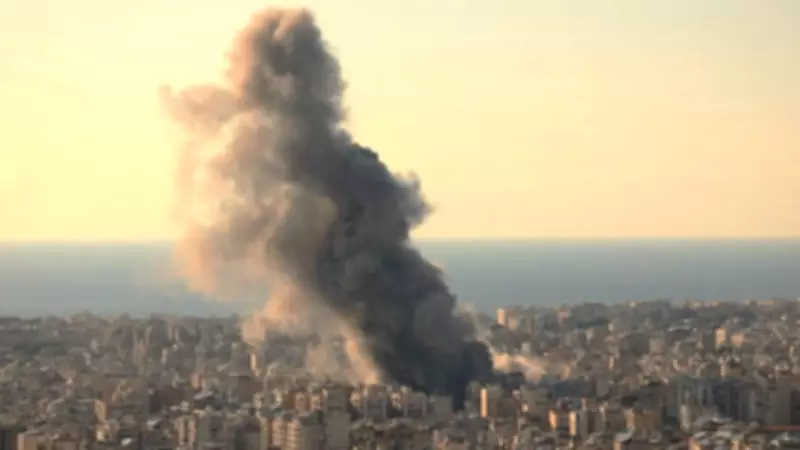
The ultimatum arrives amid escalating tensions between Hezbollah and Israel, with recent Israeli airstrikes hitting Beirut's southern suburbs. The broader U.S.-Israeli conflict with Iran has created a regional crisis that now threatens to fundamentally reshape Middle Eastern geopolitics.
Observers note that Gulf monarchies have survived for decades by maintaining relations with both America and Iran, buying weapons from the West while maintaining dialogue with Tehran. This strategy of calculated ambiguity has now been rendered obsolete by Iran's binary ultimatum.
Spiritual and Philosophical Perspectives
Some commentators have framed the crisis in spiritual terms, suggesting that "the earth is getting to a dangerous point encircled by rays emanating from the pressure of the Light which now has the world under its firm grip." They argue that current conflicts represent a purification process with both earthly consequences and spiritual causes, pointing to what they describe as "the awakening of all that is dead or slumbering in every human being."
These perspectives suggest that the regional crisis reflects broader spiritual dynamics, with nations experiencing clashes of radiations and the scale tilting toward what they characterize as evil forces. The commentary emphasizes that "the Justice of the Lord is baring its fangs" and that reversal requires seeking higher knowledge of divine governance.
Conclusion: A Defining Moment for the Middle East
As the 48-hour deadline approaches, Gulf states face what may be the most consequential decision in their modern history. The ultimatum forces them to choose between economic survival through oil preservation and strategic survival through American protection. Whichever path they choose will redefine the Middle East for the next fifty years, determining regional hegemony, global energy security, and the future of American influence in the region.
The crisis represents more than just a military confrontation; it embodies the collapse of decades of diplomatic balancing acts and the emergence of new power dynamics in a region undergoing profound transformation. The decisions made in the next forty-eight hours will echo through global politics, economics, and security arrangements for generations to come.




