
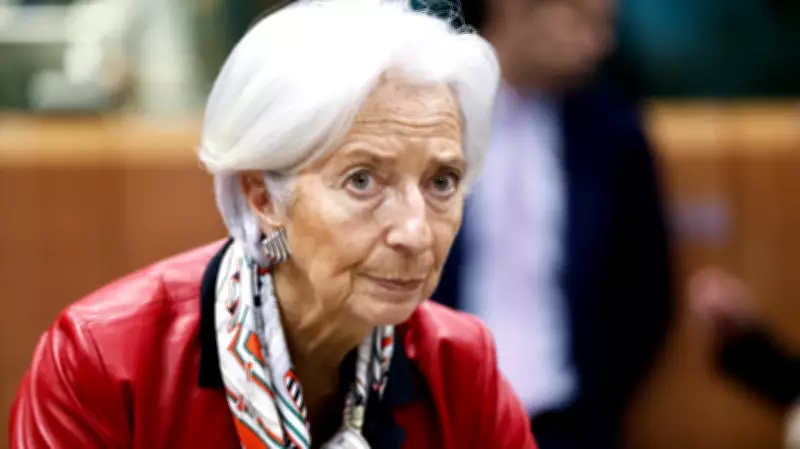
Christine Lagarde, President of the European Central Bank (ECB) and former Managing Director of the International Monetary Fund (IMF), has called on monetary authorities worldwide to safeguard the independence of their central banks. She warned that mounting political pressure now threatens institutions once considered firmly insulated from government interference.
Lagarde spoke on Thursday at a conference of francophone central bankers in Cambodia, attended by participants from the Middle East, West Africa, and other developing regions. “The question is no longer simply how to guarantee independence,” she said. “It is how to protect it when it is put to the test.”
Her remarks come amid growing concerns over political interference in monetary policy, particularly in the United States, where President Donald Trump has repeatedly pressured the Federal Reserve to cut interest rates. Trump had earlier initiated a criminal investigation into former Federal Reserve Chairman Jerome Powell, although the probe was later dropped. He has also continued to criticise the Fed over its monetary policy decisions.
In Europe, ECB Executive Board member Isabel Schnabel recently warned that central banks were facing a “quiet erosion” of their independence, partly driven by rising government debt levels that could pressure monetary authorities to keep interest rates artificially low.
Against this backdrop, Lagarde told the gathering that advanced economies now faced challenges long familiar to central banks in developing countries. “Many of the central banks represented here today have long operated under structurally more challenging conditions,” she said. “We have more to learn from your experience than the other way around. You have long practised the work that has now become the task of all.”
Her comments resonate strongly in Nigeria and other West African economies, where central banks have historically operated under fiscal pressures, currency instability, and recurring political influence over monetary decisions.
Lagarde cited the oil shock and stagflation crises of the 1970s as evidence that central bank independence was critical to economic stability, noting that countries with weaker monetary autonomy experienced higher inflation. “This evidence underscored the need to shield monetary policy decisions from the electoral cycle,” she said.
She, however, stressed that independence did not imply complete detachment from government. “To best serve the public interest, a central bank must be close enough to the state but independent enough to resist the pressures of the moment,” Lagarde said.
She also warned that declining public trust in institutions posed an additional threat to central banks, arguing that weakened credibility could undermine their ability to respond effectively during periods of economic stress. “It is precisely when monetary policy decisions are politically fraught and economically costly that credibility is most needed,” she added.
Lagarde's intervention adds to the growing global debate over the role and autonomy of central banks as governments grapple with elevated borrowing costs, inflationary pressures, and slowing economic growth, while monetary authorities resist calls for premature easing of interest rates.




