
President Tinubu's UK State Visit Excludes Conservative Leader Badenoch Amid Diplomatic Tensions
President Bola Tinubu's two-day state visit to the United Kingdom, which commenced on Wednesday, March 18, 2026, notably excluded a formal meeting with Kemi Badenoch, the leader of the Conservative Party. This omission breaks from customary protocol where visiting heads of state typically engage with opposition leaders during official visits.
Diplomatic Engagements and Royal Protocol
On the first day of the visit, President Tinubu met with King Charles III and Queen Camilla at Windsor Castle. The Nigerian delegation, which included First Lady Oluremi Tinubu, participated in dialogues with national and international interfaith organizations at Vicars' Hall in Windsor. These discussions aimed to address the crisis surrounding allegations of Christian genocide in Nigeria, which has garnered global attention.
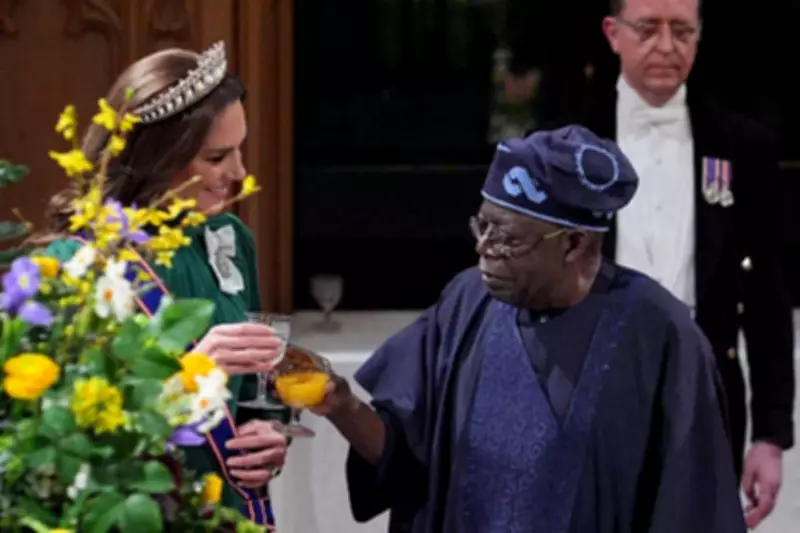
The visit featured a state banquet where both President Tinubu and King Charles delivered speeches. In a notable gesture of cultural sensitivity, King Charles adjusted the traditional schedule by dropping the formal lunch to respect Ramadan, allowing President Tinubu, who is Muslim, to observe fasting. A state banquet was held later in the evening instead.
Controversy Surrounding Kemi Badenoch
Kemi Badenoch, who has Nigerian heritage, has publicly criticized Nigeria, referring to it as a nation with corrupt politicians and accusing Nigerian police of robbing her. She has suggested that she no longer identifies with her ancestral roots. These comments have drawn rebukes from Nigerian leaders, including Vice-President Kashim Shettima.
Despite attending the same state banquet honoring President Tinubu, Badenoch was not formally introduced to him during the event. This contrasts with her previous actions during former U.S. President Donald Trump's state visit to the UK, where she shared a photo with him. Her absence from Tinubu's itinerary has sparked discussions about diplomatic tensions.
Strengthening Bilateral Relations
President Tinubu's visit, the first Nigerian state visit to the UK in 37 years since General Ibrahim Babangida's visit in 1989, focused on transforming the long-standing relationship into a modern economic alliance. The trip aimed at strengthening bilateral ties in areas including immigration, security, education, healthcare, and cultural exchanges.
During his speech at the state banquet, President Tinubu highlighted the significant contributions of the Nigerian diaspora in the UK, particularly within the National Health Service where Nigerian-trained doctors represent one of the largest groups of international medical professionals. He acknowledged Nigeria's complex terrorism challenges rooted in the Sahel region and emphasized the essential partnership with the United Kingdom in safeguarding regional stability.
Major Investment Agreements
Ahead of the visit, the British Commission in Lagos announced that both countries had finalized a series of major investment agreements expected to generate hundreds of new jobs. The agreements involve fintech companies, banks, and creative industries planning to expand their service operations across Britain.
President Tinubu witnessed the signing of a £746 million deal between Britain and Nigeria to revamp the Lagos port in Apapa and Tincan Island. Additionally, Nigeria's Minister of Education, Tunji Alausa, disclosed progress toward a major academic partnership with Coventry University to establish a Nigerian campus in Alaro City, Lagos. This initiative will allow students to earn fully accredited UK degrees at significantly lower costs without leaving Nigeria.
Human Rights Concerns and Domestic Criticism
The Socio-Economic Rights and Accountability Project (SERAP) urged King Charles III to raise concerns about serious human rights violations and the shrinking civic space in Nigeria during the state visit. The organization called for the withdrawal of Strategic Lawsuits Against Public Participation (SLAPP) suits against journalists, activists, and civil society organizations.
President Tinubu was accompanied by a large delegation including governors from Lagos, Katsina, Zamfara, Enugu, Akwa Ibom, and Plateau states, as well as top federal officials. This has drawn criticism from some citizens who view it as an unnecessary drain on public resources, especially following reports of bandit attacks in Katsina State that killed at least 15 people while the state governor was in the UK.
Cultural Exchange and Historical Significance
During their time at Windsor Castle, the Nigerian delegation viewed items from the Royal Collection including a Yoruba throne, sculptures, paintings, and a manuscript by Nigerian writer Sir Ben Okri. Gifts were exchanged symbolizing cultural ties between both nations.
This visit marks the first time a Muslim president has visited the British royals in almost a century. The last similar occasion was in 1928 when King George V hosted King Amanullah Khan of Afghanistan during Ramadan, though there are no records indicating whether the Afghan king observed fasting during that visit.
Despite the controversy surrounding the exclusion of Kemi Badenoch and concerns about human rights and domestic governance, President Tinubu's state visit represents a significant diplomatic effort to strengthen Nigeria-UK relations and secure economic partnerships for mutual benefit.




