
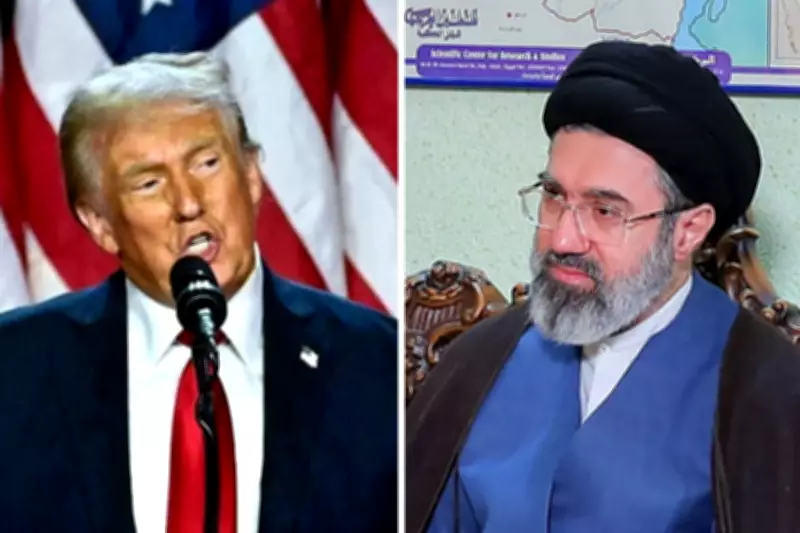
Trump Announces 'Regime Change' in Iran Amid Ongoing Conflict
President Donald Trump has publicly declared that the United States and Israel have successfully achieved what he terms "regime change" in Iran, following a series of targeted strikes that have decimated multiple layers of the country's leadership. Trump made these remarks while speaking to reporters aboard Air Force One on Sunday, March 29, 2026, emphasizing that the conflict is progressing "ahead of schedule."
Details of the Leadership Shift and Trump's Assessment
According to Trump, the initial regime, which he described as "really bad, really evil," has been completely destroyed, with all its members dead. A second appointed regime has also been eliminated. He stated that the U.S. is now engaging with a "completely different set of people" who are reasonable, suggesting that this constitutes a fundamental change in Iran's governance.
Regarding Mojtaba Khamenei, the new Supreme Leader and son of the former leader Ali Khamenei—who was killed in an airstrike on February 28—Trump noted that Khamenei may be alive but is seriously wounded. Khamenei's appointment marks Iran's third supreme leader since the 1979 Islamic Revolution, following the recent upheavals.
Implications for Diplomacy and Global Oil Markets
Trump expressed optimism about reaching a deal with Tehran "pretty soon," citing the new leadership's reasonableness. He highlighted immediate economic concessions, including Iran's agreement to allow the passage of oil tankers through the Strait of Hormuz, a critical waterway that had been shut down since the conflict began. This closure had driven global oil prices soaring, but Trump announced relief is imminent.
"They gave us, I think, out of a sign of respect, 20 boats of oil, big, big boats of oil going through the Hormuz Strait," Trump said, adding that shipments would commence the following morning and continue over the next few days. This move is seen as a potential step toward stabilizing oil markets and easing tensions.
Broader Context of the Conflict
The US-Israel strikes on Iran, which initiated the conflict, have led to significant geopolitical shifts. Tehran's closure of the Strait of Hormuz, through which approximately 20 percent of the world's oil and gas transits, had exacerbated global economic concerns. Trump's claims of regime change and impending deals suggest a strategic pivot in U.S. foreign policy, aiming to reshape relations with Iran through military and diplomatic means.
As the situation evolves, international observers are closely monitoring developments, particularly the veracity of Trump's assertions and the potential for a lasting agreement. The president's statements underscore a bold narrative of success in the ongoing war, with implications for regional stability and global energy security.




