
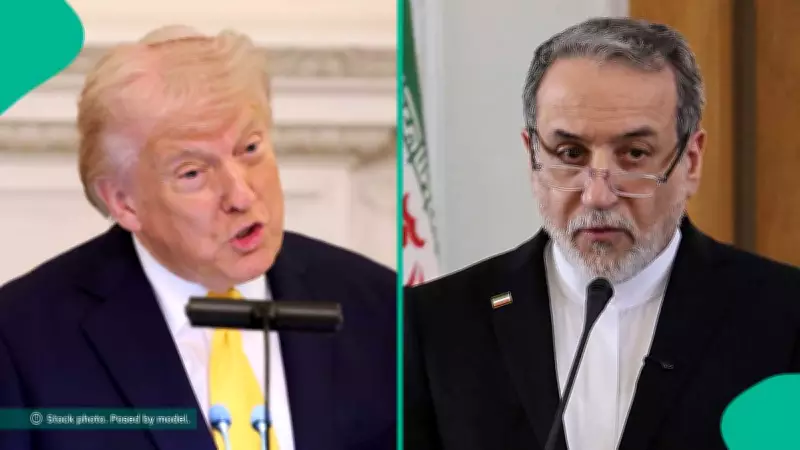
Trump Expresses Optimism on Iran Agreement During Ongoing Talks
United States President Donald Trump has publicly stated he is "pretty sure" that Washington will reach a formal agreement with Iran, following what he characterized as productive direct and indirect diplomatic discussions between the two nations. Speaking to reporters while aboard Air Force One, Trump emphasized that negotiations with Tehran were advancing positively and asserted that the United States had already accomplished what he termed regime change within the country.
Diplomatic Progress Amid Military Pressure
President Trump confirmed that US forces executed additional strikes on Iranian targets, describing these developments as a "big day." He clarified that diplomatic channels were functioning concurrently with military actions, stating, "We are negotiating with them directly and indirectly. We have emissaries." According to Trump, Iran has consented to permit up to twenty oil tankers to transit through the Strait of Hormuz as a gesture of goodwill toward Washington. He added, "I think we'll make a deal with them, pretty sure. But it is possible we won't."
The president further contended that leadership structures in Tehran had been significantly weakened. "But we've had regime change," he declared, alleging that multiple layers of leadership had been eliminated and replaced by what he described as a different negotiating group. These remarks underscore the complex interplay between diplomacy and military strategy in US-Iran relations.
Troop Deployments and Regional Escalation Concerns
Trump's comments coincided with the United States reinforcing its military presence in the Middle East. The US Central Command verified the arrival of the USS Tripoli in the region, carrying more than 3,500 sailors and Marines. Additional forces are also en route, including a Marine Expeditionary Unit from California and the 82nd Airborne Division, which is anticipated to arrive as part of rapid response preparations. These deployments have raised questions about potential escalation in the already tense region.
Iran's Warnings and Economic Threats
In a separate development, Iran declared readiness for a prolonged conflict that could cripple the global economy as hostilities in the Middle East intensified and critical trade routes came under threat. This warning followed attacks on commercial shipping and fresh signals from Tehran that vessels linked to the United States and its allies would be considered legitimate targets. The statement emerged as Iran tightened control over the Strait of Hormuz, a vital corridor handling a major share of the world's oil and liquefied natural gas exports.
This stance contrasts sharply with remarks from President Trump, who told Axios that the conflict would conclude soon because American forces had limited remaining targets inside Iran. The divergence in perspectives highlights the ongoing volatility in US-Iran relations.
Incident in Saudi Arabia
Amid the US-Iran tensions, a military projectile struck a residential compound used by a maintenance and cleaning company in Al-Kharj, Saudi Arabia. Saudi authorities confirmed on Sunday that two individuals were killed and twelve others sustained injuries in the incident. According to the Saudi Gazette, the Saudi Civil Defence reported that the projectile hit the residential site, causing damage to the facility. Emergency response teams arrived promptly after the incident and executed standard rescue and safety procedures.
The situation remains fluid as diplomatic efforts and military actions continue to shape the dynamics between the United States and Iran, with implications for regional stability and global economic security.




