
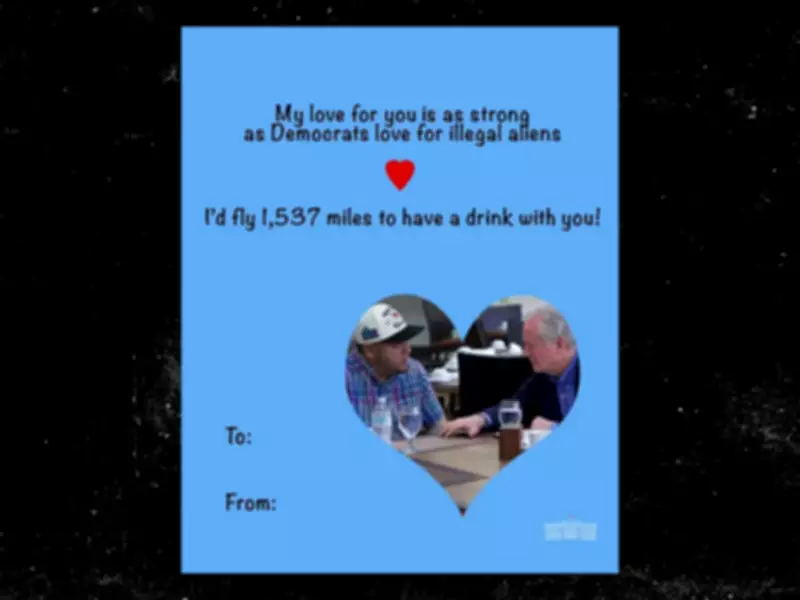
White House Sparks Controversy with Valentine's Day Cards Featuring Maduro and Greenland
The White House has stirred significant debate by releasing a series of Valentine's Day cards that include politically charged imagery, notably featuring Venezuelan President Nicolás Maduro depicted as captured and references to Greenland. This move has drawn criticism from various quarters, with observers questioning the appropriateness of blending holiday sentiments with international political statements.
Details of the Controversial Cards
The Valentine's Day cards, shared by the White House, showcase creative designs that incorporate elements of U.S. foreign policy. One card prominently displays an image of Nicolás Maduro, the Venezuelan leader, in a manner suggesting custody or capture, accompanied by playful yet pointed text. Another card references Greenland, a territory that has been a subject of geopolitical interest in recent years, adding to the provocative nature of the collection.
These cards are part of an annual tradition where the White House releases themed greetings for holidays, but this year's edition has taken a notably political turn. The inclusion of Maduro, who has faced sanctions and diplomatic pressure from the United States over allegations of authoritarianism and human rights abuses, is seen as a direct commentary on ongoing tensions between the two nations.
Reactions and Implications
The release has elicited mixed reactions, with some praising the White House for its bold messaging, while others condemn it as inappropriate and potentially inflammatory. Critics argue that using Valentine's Day, a holiday associated with love and affection, to highlight contentious political issues undermines the spirit of the occasion and could escalate diplomatic rifts.
Supporters, however, view the cards as a clever way to communicate U.S. stances on global matters, leveraging popular culture to engage the public. The reference to Greenland, which has been discussed in contexts of territorial claims and climate change, adds another layer of complexity, hinting at broader strategic interests.
This incident raises questions about the role of government communications in shaping public perception and international relations. As social media amplifies such messages, the impact of these cards extends beyond mere holiday greetings, potentially influencing diplomatic discourse and public opinion.
Broader Context and Analysis
The White House's decision to feature Maduro and Greenland in Valentine's Day cards aligns with a trend of using symbolic gestures to convey political messages. In recent years, U.S. administrations have increasingly employed cultural and social platforms to address foreign policy, blending entertainment with statecraft.
Experts note that while such tactics can be effective in capturing attention, they also risk trivializing serious issues or offending allies and adversaries alike. The case of Maduro, in particular, touches on sensitive topics like sovereignty and intervention, making the cards a focal point for debate on U.S. foreign policy approaches.
As the controversy unfolds, it underscores the evolving nature of political communication in the digital age, where even holiday cards can become tools for geopolitical signaling. The White House has not issued further comments on the matter, leaving room for ongoing speculation and analysis.




