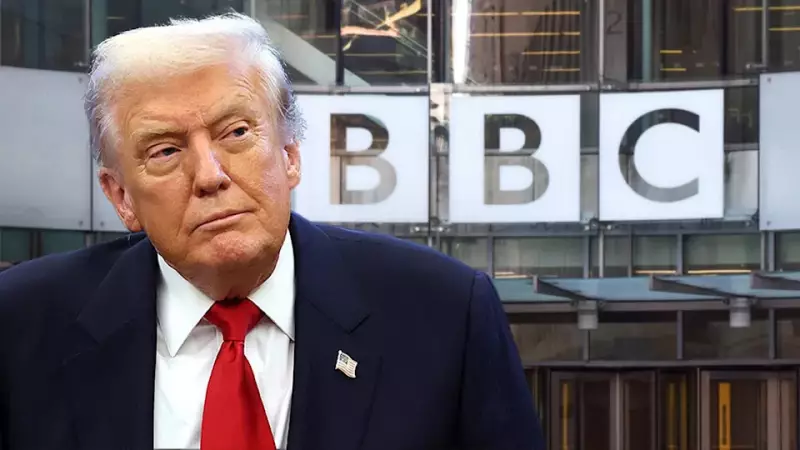
The British Broadcasting Corporation (BBC) has formally initiated a legal move to have a massive $10 billion lawsuit filed by former U.S. President Donald Trump thrown out of a federal court in Florida. Court documents reveal the broadcaster's plan to challenge the suit's very foundation.
The Core of the Legal Dispute
Former President Trump initiated this high-stakes legal battle in December, targeting the BBC over its editing of a speech he delivered on January 6, 2021. The lawsuit, filed in a U.S. District Court in Miami, demands a staggering $5 billion in damages for alleged defamation and another $5 billion for what it calls unfair trade practices.
The controversy stems from a BBC documentary titled "Trump: A Second Chance?" which aired shortly before the 2024 U.S. presidential election. The film edited together three separate quotes from two different sections of Trump's lengthy January 6 address, creating the impression of a single, continuous statement where he urged supporters to "fight like hell." Crucially, the edit omitted a part where Trump called for a peaceful demonstration.
BBC's Defence and Key Arguments
While the BBC has apologized for the editing approach, it firmly rejects the accusation of defamation. The fallout from the documentary was significant internally, leading to the resignations of the BBC's top executive and its head of news.
According to papers filed on Monday, the BBC's legal team will present a motion to dismiss the entire case on March 17. Their primary arguments are twofold:
- Lack of Jurisdiction: The BBC contends the Florida court has no authority over the case because the documentary was not created, produced, or broadcast from Florida. They also dispute Trump's claim that it was available in the U.S. on the streaming service BritBox.
- Failure to State a Claim: The broadcaster argues that Trump has not plausibly alleged that the BBC acted with the necessary "actual malice" required in defamation cases involving public figures.
Attorney Charles Tobin, representing the BBC, made pointed arguments against the claim of damages. He noted that Trump won re-election by a commanding margin, including carrying Florida by a 13-point spread, which was better than his 2016 and 2020 performances. Tobin also stated the documentary could not have harmed Trump's reputation because it aired after he was already indicted by a federal grand jury for alleged efforts to overturn the 2020 election.
Legal Maneuvering and Potential Timeline
The BBC is seeking to pause the costly and intrusive discovery phase—where parties exchange documents and information—until the court rules on their dismissal motion. Tobin warned that subjecting the BBC to "unbounded merits-based discovery" would impose considerable and unnecessary burdens if the motion is granted.
Should the lawsuit survive the dismissal attempt, the legal proceedings could stretch for years, with a potential trial date proposed for 2027. In a statement, the BBC affirmed its position: "As we have made clear previously, we will be defending this case," adding that it would not comment further on ongoing proceedings.
This case sets the stage for a protracted legal fight focusing on media editing practices, jurisdictional boundaries, and the high bar for defamation claims against global media entities by prominent political figures.