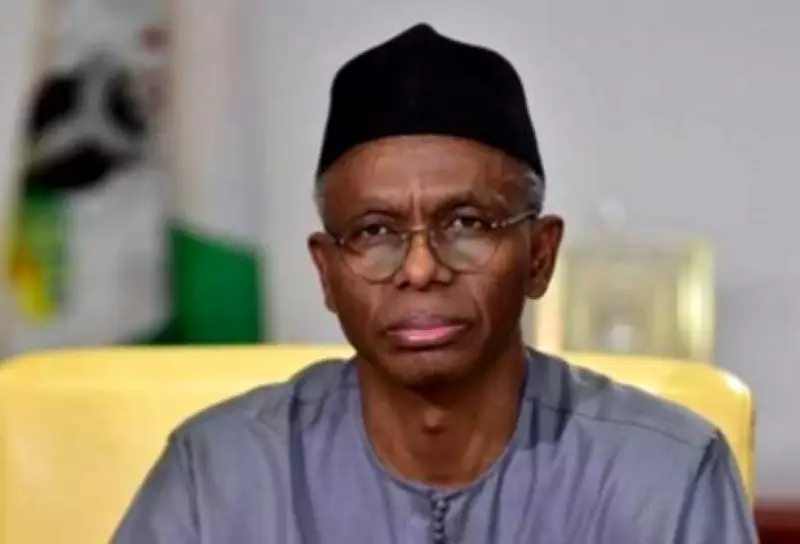
Coalition Demands Immediate Action on El-Rufai Detention as Remand Period Expires
The Coalition Political Action Committee (COPAC), under the leadership of Aminu Datti-Ahmed, has issued a stern warning to the Federal Government regarding the continued detention of former Kaduna State governor Nasir El-Rufai. The group insists that authorities must either release El-Rufai immediately or file formal charges against him in court, emphasizing that holding him beyond the approved 14-day remand period constitutes a clear violation of the Nigerian Constitution.
Expired Court Order Sparks Constitutional Debate
This urgent call follows escalating national debate over El-Rufai's detention status after the 14-day remand order previously obtained by investigators officially expired. According to COPAC's detailed statement, the court order was granted specifically to allow investigators to complete their work within a strictly defined timeframe. With that period now concluded, legal authorities face a critical decision point: either proceed with formal charges through proper judicial channels or release the former governor without further delay.
"This situation transcends any single individual," the group declared. "This is fundamentally about ensuring the law remains a level playing field for all citizens. The rule of law must never deteriorate into a selective weapon deployed against those who fall out of favor with current power structures."
Constitutional and International Legal Obligations
COPAC emphasized that the 14-day remand order served a specific, limited purpose and should not be interpreted as permission for indefinite detention or political manipulation. Datti-Ahmed specifically referenced Section 35 of the Nigerian Constitution, which guarantees liberty for every citizen and明确规定 investigative detention must be temporary. The Constitution requires that within a reasonable time, authorities must either bring formal charges before a competent court or release the detainee unconditionally.
"The Federal Government now faces only two constitutionally permissible options," the coalition stated. "File formal charges before a competent court of law or release the detainee immediately. Any action outside these narrow parameters would represent an illegal and unconstitutional use of state power, constituting a direct violation of El-Rufai's fundamental constitutional rights."
Broader Implications for Democracy and Opposition Politics
Beyond the immediate legal concerns, Datti-Ahmed warned that this situation raises serious questions about the potential misuse of state institutions in political disputes. He cautioned that Nigeria faces significant democratic risks if investigative powers are deployed against political actors in ways that raise legitimate concerns about selectivity, timing, and underlying motives.
The group also called upon prominent opposition figures—including Atiku Abubakar, Peter Obi, Aminu Tambuwal, Rotimi Amaechi, and Rabiu Kwankwaso—to publicly address what COPAC describes as systematic attempts to intimidate opposition politicians through legal mechanisms. According to the coalition, silence from opposition leaders at this critical juncture could prove dangerous for long-term democratic accountability and institutional integrity.
International Human Rights Dimensions
COPAC further highlighted that prolonged detention without formal charges conflicts with Nigeria's binding obligations under international human rights laws. Specifically, the group referenced the International Covenant on Civil and Political Rights and the African Charter on Human and Peoples' Rights, both of which explicitly prohibit arbitrary arrest and detention. These international instruments, to which Nigeria is a signatory, establish clear standards that domestic authorities must uphold.
Reaffirming its unwavering position, COPAC concluded with a powerful statement: "If the government possesses credible evidence, it should promptly file charges through proper legal channels. If it lacks such evidence, it must release the detainee without hesitation. The law is not optional. The Constitution is not merely a suggestion. Nigeria is a constitutional democracy, not a police state."