Trump Demands Release of AG's Communications with Cohen Over Testimony Pressure Claims
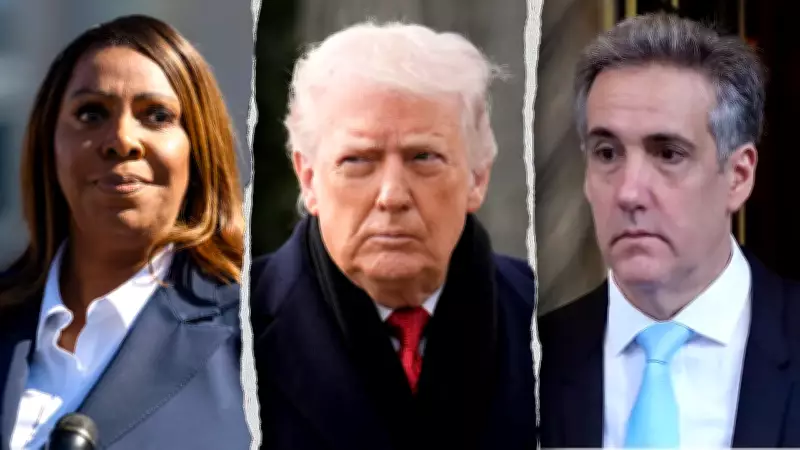
In a significant legal development, attorneys representing former President Donald Trump have formally demanded that the office of New York Attorney General Letitia James release all communications with Michael Cohen, Trump's former personal lawyer. This demand follows explosive claims made by Cohen that he was pressured to provide testimony against Trump during investigations.
Legal Filing Details Extensive Document Request
Trump's legal team submitted a comprehensive 25-page court filing requesting the release of all records involving Cohen and the New York Attorney General's Office. The requested materials include interview transcripts, detailed notes, email correspondence, formal letters, and any audio or video recordings. This legal maneuver comes just weeks before Trump's attorneys are expected to submit their brief to the New York State Court of Appeals.
The appellate court is currently considering an effort by Attorney General James's office to reinstate a substantial civil fraud penalty against Trump that had been previously dismissed. Trump's lawyers have argued that Cohen's testimony played a central and critical role in the original case brought by James against Trump, his family members, and his business operations.
Cohen's Allegations of Coercion
The legal demand directly responds to a January post published by Cohen on the Substack platform, where he made serious allegations against prosecutors. Cohen claimed he felt "compelled and coerced" to provide testimony that would support legal cases against the former president. He specifically alleged that both the attorney general's office and the Manhattan district attorney's office pushed him to deliver statements that would help secure legal action against Trump.
During Trump's earlier civil fraud trial, Cohen testified that he collaborated with former Trump Organization chief financial officer Allen Weisselberg to artificially inflate the value of Trump's assets on financial statements. This testimony formed a crucial part of the prosecution's case against the former president.
Defense Arguments and Preservation Request
Trump's attorneys have presented multiple arguments supporting their document request. They contend that communications between Cohen and investigators would have been essential for proper cross-examination during the trial. The defense team further claims that prosecutors failed to provide these materials despite repeated requests from Trump's legal representatives.
According to the court filing, the defense contacted the attorney general's office shortly after Cohen's Substack post to request the documents but has not yet received them. The lawyers have also alleged that James's office has not confirmed whether such records exist or whether appropriate steps have been taken to ensure their preservation throughout the litigation process.
In addition to demanding the release of existing communications, Trump's legal team has requested that the court order James's office to preserve all records related to Cohen until the complete resolution of the litigation. This preservation request aims to ensure that no potentially relevant materials are lost or destroyed during ongoing legal proceedings.
Broader Legal Context and Financial Penalties
The current legal battle occurs within a broader context of ongoing litigation between Trump and New York authorities. Attorney General James's office is actively asking the New York State Court of Appeals to reinstate a significant financial penalty against Trump that previously exceeded $500 million when accounting for interest. An appellate court had earlier ruled that this fine was excessive and violated constitutional limits on penalties.
As of now, officials from the attorney general's office have not publicly responded to the latest request from Trump's legal team. The timing of this document demand is particularly significant as it precedes the submission of Trump's appellate brief, suggesting strategic positioning by the defense as they prepare their arguments against the reinstatement of the civil fraud penalty.
The outcome of this document request could have substantial implications for both the specific case and broader legal strategies employed in investigations involving high-profile political figures. The allegations of prosecutorial pressure, if substantiated by released communications, could potentially influence judicial perceptions of the original case's integrity and the appropriateness of the sought penalties.