
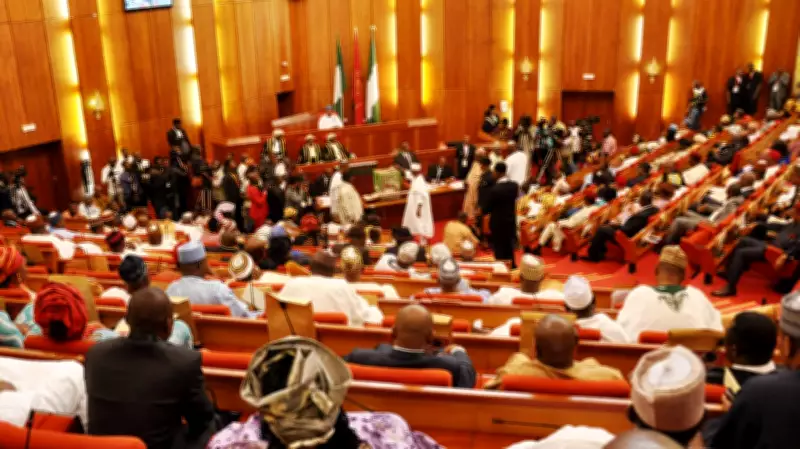
Nigeria is once again entering a familiar season: the season of campaigns, promises, political calculations, and renewed appeals for the people's trust. Billboards rise along highways, political slogans echo across media platforms, and candidates present themselves as the answer to the nation's many challenges. But beyond the spectacle of campaign rallies and political messaging lies a deeper question Nigerians must ask themselves: what kind of leadership does the country truly need right now?
It is worth asking honestly, because the cost of getting it wrong again is not abstract. It is the lives that will be lost due to bad roads and a dysfunctional healthcare system. It is the graduate selling on the roadside because there are no jobs. It is the doctor who trained at the University of Lagos and now works night shifts in a Birmingham hospital, sending remittances home to a country whose health system could not keep her. These are not statistics. They are consequences of leadership choices—choices made by people we elected, choices enabled by a political culture we have all, in different ways, participated in building.
The Cycle of Elections and Unchanged Realities
For many Nigerians, elections often feel like a cycle that repeats itself. New slogans emerge, new alliances form, and familiar faces return with fresh promises. Yet the everyday realities for many citizens remain stubbornly unchanged. In moments like this, the conversation about leadership must go beyond personalities and political parties. It must focus on the qualities that truly matter.
Leadership in Nigeria has never been just about occupying an office. Nigeria's democratic journey since the 1999 transition has shown that democracy is not only about holding elections; it is also about building systems that allow progress to continue regardless of who occupies office. It is about understanding the weight of responsibility that comes with guiding a nation of more than two hundred million people—each with hopes, struggles, and expectations for a better future. Choosing leaders in such a moment cannot simply be about popularity or party loyalty. It must be about the character, competence, and courage required to move a nation forward.
The Shrinking of Political Imagination
One of the tragedies of Nigerian governance is the shrinking of the political imagination. Too often, what passes for vision is simply a calculation about the next election. Policies are designed to generate applause now, not results in ten years. Infrastructure projects are announced near polling seasons. Reforms are delayed whenever they might cost votes. The countries that have genuinely transformed did so because leaders dared to think in decades, not terms. They built roads knowing they would not cut the ribbon. They reformed education knowing the graduates would vote for someone else. That kind of leadership asks something uncomfortable of a politician: the willingness to do good work that someone else will get credit for.
Nigeria's challenges across different sectors are not four-year problems; they are generational ones. They cannot be solved within short political timelines. They demand continuity, strategic planning, and leadership that is willing to look beyond immediate political gain. They require leaders who understand that the true measure of their tenure will not be visible on inauguration day, but in the systems they leave behind.
Institutional Over Personal Ambition
Nigeria needs leaders whose legacy ambition is institutional, not personal. Leaders who understand that the greatest thing they can leave behind is not a landmark or a nickname, but a system that works, one that will hold the next person in office accountable just as it held them. Governance should not be a popularity contest. Real leadership often demands decisions that are painful in the short term and vindicating only in hindsight. Tackling entrenched corruption means confronting people with powerful friends. Reforming a bloated civil service means making enemies of those who benefit from its inefficiency. Telling Nigerians the truth about how hard the road ahead will be requires more courage than any campaign rally.
Nigeria does not need leaders who are brave in their speeches and timid in their offices. It needs leaders willing to absorb political cost in service of national gain—people who, when faced with the choice between what is convenient and what is right, choose right, even if it costs them the next headline cycle. History, as it turns out, is a more honest judge than the morning papers. The leaders we remember with genuine respect are rarely the most comfortable ones. They are the ones who made the hard call when it mattered.
The Role of Empathy in Leadership
Empathy in leadership is not weakness. It is a strength that allows leaders to craft policies rooted in real needs rather than distant assumptions. Leaders who are genuinely connected to the daily realities of citizens are more likely to prioritise differently and design solutions that make a meaningful difference. This is not about staged market visits or calculated moments of relatability for the cameras. It is about the private conviction, held deeply and carried into the office every morning, that the people you serve are not abstractions. They are specific human beings with specific burdens, and your actual job is to make those burdens lighter.
Preparing for the Future
Perhaps the most important responsibility of leadership is preparing the nation for the future. Nigeria's greatest asset is its people, particularly its young population, whose potential remains largely untapped. Investing in education, innovation, entrepreneurship, and human capital must move from campaign rhetoric to national priority. A country that neglects the development of its people ultimately limits its own possibilities.
It would be dishonest to end here without turning the mirror around. Leadership does not descend from nowhere. It is grown in the soil of a political culture, and that culture is shaped by what citizens choose to reward and what they choose to tolerate. When we vote ethnicity over evidence, we get leaders who govern for their tribe. When we sell our votes for a bag of rice, we get leaders who see us as a transaction. When we applaud the man with the biggest convoy and the loudest entrance rather than the one with the quietest record of actually delivering, we train our political class to invest in spectacle rather than service.
The Responsibility of Citizens
Democracy places a powerful and sometimes uncomfortable responsibility in the hands of ordinary people. The leaders a nation produces are often a reflection of the standards its citizens demand. If those standards are low, politics will find its level there. If they are raised, politics will eventually follow. The graduate on the roadside and the doctor in Birmingham deserve leaders worthy of their resilience. They also deserve a civic culture that makes such leaders possible. Building that culture is slow work. It does not happen in one election cycle. But it starts with a decision, made by millions of individual Nigerians, that the old standard is no longer acceptable.
The question before Nigeria this season is not simply who will win. It is what kind of leadership Nigerians are finally willing to insist upon. Because in the end, Nigeria does not simply need new leaders. It needs leaders who are prepared to lead differently. It needs a new standard of leadership. And the time to insist on that standard is now.
Adewara is a fellow of the Lateef Jakande Leadership Academy.




