
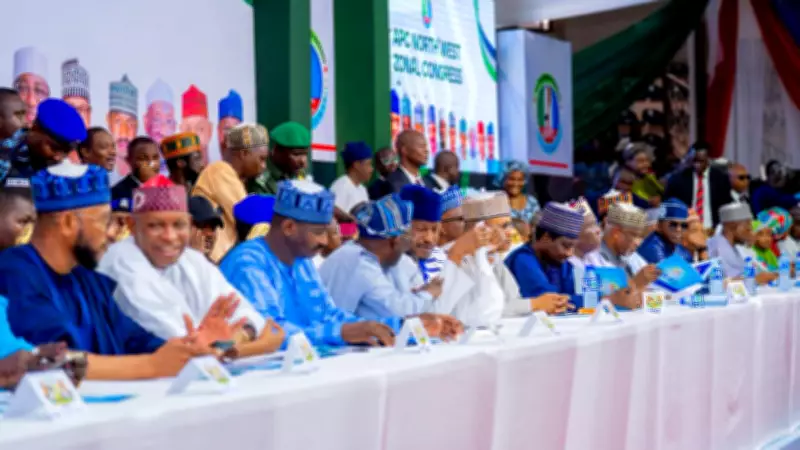
As political parties in Nigeria gear up for shadow polls in line with the timetable announced by the Independent National Electoral Commission (INEC), almost all second-term governors are scheming to remain relevant after the 2027 elections, either by endorsing their preferred successors or cornering the senatorial tickets of their zones, ONYEDIKA AGBEDO writes.
By May 29, 2027, 10 state governors will complete their constitutionally allowed second terms and vacate the government houses where they have administered their states for eight years. These include Governors AbdulRahman AbdulRazaq of Kwara State, Abdullahi Sule of Nasarawa State, Ahmadu Fintiri of Adamawa State, Babajide Sanwo-Olu of Lagos State, and Babagana Zulum of Borno State. Others are Governors Bala Mohammed of Bauchi State, Dapo Abiodun of Ogun State, Mai Mala Buni of Yobe State, Muhammadu Inuwa Yahaya of Gombe State, and Seyi Makinde of Oyo State.
Some of these governors have answered the question of what next after May 29, 2027, by picking nomination forms from their parties to represent their senatorial districts in the Senate. However, some appear too distracted to forge a plan, having been embroiled in internal party crises for months, if not years. Governor Sanwo-Olu of Lagos State, for instance, seems resigned to playing to the tune of power brokers as a political strategy. He has already endorsed his deputy, Obafemi Hamzat, as his successor, aligning with the position of the Governance Advisory Council (GAC), a powerful APC caucus in the state. He has not indicated any political ambition post-2027, at least for now.
Unlike Sanwo-Olu, Governors Sule of Nasarawa, Fintiri of Adamawa, Zulum of Borno, Buni of Yobe, Abiodun of Ogun, Mohammed of Bauchi, Yahaya of Gombe, and AbdulRazaq of Kwara are aiming to join former governors like Godswill Akpabio, Orji Uzor Kalu, Danjuma Goje, Abdulaziz Yari, Aliyu Wamakko, Gbenga Daniel, Adamu Aliero, Abubakar Bello, Seriake Dickson, Ibrahim Hassan Dankwambo, and Simon Lalong in the Senate, if Nigerians grant them the mandate.
The governors of Adamawa and Yobe may have smooth paths to the Senate, with incumbent lawmakers stepping aside in their favor. In Adamawa North, Senator Amos Yohanna withdrew from the race to back Governor Fintiri, a decision announced at a stakeholders' event in Mubi where the governor received his N20 million nomination forms. "My resolve to support Governor Fintiri is guided by personal conviction and loyalty to our people," Yohanna said, adding that stakeholders jointly encouraged the governor to contest the seat. In Yobe, Senator Musa Mustapha, representing Yobe East, has withdrawn from seeking a second term and declared support for Governor Buni to contest the seat in 2027. Mustapha also withdrew from the APC governorship ticket race, pledging loyalty to party leaders' succession plan. He said the decision followed a meeting of the Yobe APC Critical Stakeholders' Forum on April 23, 2026, convened by Buni and the Minister of Police Affairs, Ibrahim Gaidam. He added: "To exercise the spirit of integrity and responsibility, I hereby formally withdraw from the contest for the APC governorship ticket. Additionally, to make it explicitly clear, I am not contesting the senatorial ticket; rather, I will fully support our leader, His Excellency, Governor Mai Mala Buni, to contest the senatorial seat."
In Borno, Governor Zulum has secured his nomination forms to represent the Central District. However, indications suggest he may face resistance, as some party interests reportedly support incumbent Senator Kaka Shehu Lawan (SAN) for a second term. This is also the case with Governor AbdulRazaq of Kwara State, who has obtained endorsement from some APC stakeholders for the Kwara Central senatorial ticket. But in a recent interview with The Guardian, a top APC chieftain in the state, Alhaji Toyin Olosasa, hinted that it may be difficult for the governor to extend his political relevance beyond 2027. "The truth may be bitter, but it remains the truth. The governor's rating is at its lowest ebb across Kwara State. It has become so bad that some people are beginning to call for the return of the Saraki political structure," he said.
In Ogun, Governor Abiodun and incumbent Senator Gbenga Daniel are locked in a battle for the APC ticket for Ogun East Senatorial District. Party leaders and key stakeholders in the district had endorsed Abiodun after a recent meeting in Abeokuta, but Daniel prefers an open, keen contest and has picked nomination forms. This move has left the party in a web of intrigues and power play ahead of the primaries. In Nasarawa State, former Secretary to the State Government (SSG), Timothy Anjide, led a high-powered delegation to submit Governor Abdullahi Sule's nomination forms for the Nasarawa North senatorial race under the APC. Speaking to journalists, Anjide explained that the governor's decision was driven by overwhelming calls from stakeholders and residents. However, Sule faces a bigger battle in ensuring the success of his preferred successor. He has endorsed Senator Ahmed Aliyu-Wadada as his preferred candidate to succeed him as governor, describing the lawmaker as embodying the Muje Maha spirit. But the decision angered a section of his party, including former governor Umaru Tanko Al-Makura, who stated he was neither consulted nor informed. Former Inspector General of Police Mohammed Adamu, also seeking the APC ticket, rejected the endorsement, insisting on a transparent primary. Additionally, the Nasarawa State Transparency, Accountability and Good Governance Group (NS-TA&G2) urged the governor to reconsider and seek amicable resolution. Although the governor defended his action as a result of wide consultations, how well he manages the crisis remains to be seen.
In Gombe State, Governor Yahaya has joined the contest for the Gombe North Senatorial seat on the APC platform. He was presented with the nomination form during the party's expanded stakeholders' meeting last Wednesday. However, he has been in a running battle with Senator Danjuma Goje, a former two-term governor who currently represents Gombe Central, over control of the party's structure. Party members fear the crisis could affect candidates' chances at the polls, including the two political heavyweights.
Governor Seyi Makinde of Oyo State tops the list of governors who seem to be charting a defined direction amid the countdown to 2027, despite internal party crises. His party, the People's Democratic Party (PDP), has remained in crisis even after the Supreme Court delivered its verdict on a case that created a sharp division among influential leaders. The internal schism dates back to the aftermath of the 2023 general election, when unresolved grievances over zoning, leadership control, and presidential ambition fractured the party. The crisis was triggered by the refusal to enforce the resignation of former national chairman Iyorchia Ayu after the PDP presidential ticket was zoned to the North. That decision alienated FCT Minister and former Rivers State governor Nyesom Wike and his allies. Wike argued that the party violated its own zoning principle by allowing both the presidential candidate and national chairman to emerge from the same region. The dispute birthed the G5 Governors, a rebellious body, and set the stage for a prolonged power struggle. Wike had an upper hand, having allegedly funded the party's structure almost single-handedly when he governed Rivers State. While Makinde later emerged as a rallying point for governors seeking to reclaim party control from the Wike bloc, the fault lines deepened. On April 30, 2026, the Supreme Court nullified the party's national convention held in Ibadan, Oyo State, on November 15-16, 2025, by the Makinde camp. In a three-two split decision, the court ruled the convention illegal, conducted in defiance of a Federal High Court order. Since that judgment, the two factions have not reached a truce. Last Tuesday, the Makinde-backed faction, which had elected Taminu Turaki (SAN) as national chairman at the nullified convention, ratified a 13-member Caretaker Committee headed by Turaki, a move the Wike faction criticized as an attempt to establish illegitimate leadership structures. Meanwhile, following several court judgments, INEC still recognizes the Wike-backed National Working Committee (NWC), leaving Makinde and his allies on shaky ground. Nonetheless, the camp has been hobnobbing with other opposition parties, especially the African Democratic Congress (ADC). With the INEC deadline for party primaries fast approaching, it is unclear whether the PDP platform will be available for Makinde and his supporters or if they will join another party for their 2027 ambitions.
One of his strong allies, Governor Mohammed of Bauchi, saw the writing on the wall and resigned from the PDP last Saturday. He immediately defected to the Allied People's Movement (APM), leaving Makinde as the last governor standing on the PDP platform. Mohammed said he left with all his structures from ward to state level. He was received into the APM by its National Chairman, Yusuf Mamman Dantalle, at a ceremony in Bauchi. He premised his defection on the failure to resolve the protracted PDP crises, adding that "the Supreme Court judgment has fundamentally altered the landscape and our expectations. Consequently, and after extensive consultation, we have taken a firm and strategic decision to join the APM. Let me be clear here, this decision is guided by one overriding objective: to secure victory in both the state and country to serve our people with purpose and integrity. The APM offers us a viable platform to organize effectively, mobilize our supporters, and present a coherent and credible alternative to the people. We have carried out due diligence and it is not infected by any legal virus that will serve as an impediment, unless it is manufactured after we have joined." A former senator, he reportedly plans to return to the Senate on the APM ticket. Time will tell whether he will succeed, and likewise for his colleagues.




