The post-primary season of the ruling All Progressives Congress (APC) has evolved into a defining political moment, exposing widening cracks within a party struggling to balance authority, inclusiveness, discipline, and cohesion ahead of the 2027 general election. Across several states, from disputed delegate selections to controversial consensus arrangements and allegations of imposed candidacies, the exercise has triggered political aftershocks that raise a difficult national question: Is the APC truly consolidating its strength for another electoral victory or quietly drifting towards fragmentation beneath the surface of official unity?
Surface Strength vs. Underlying Tensions
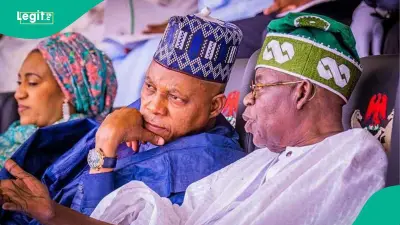
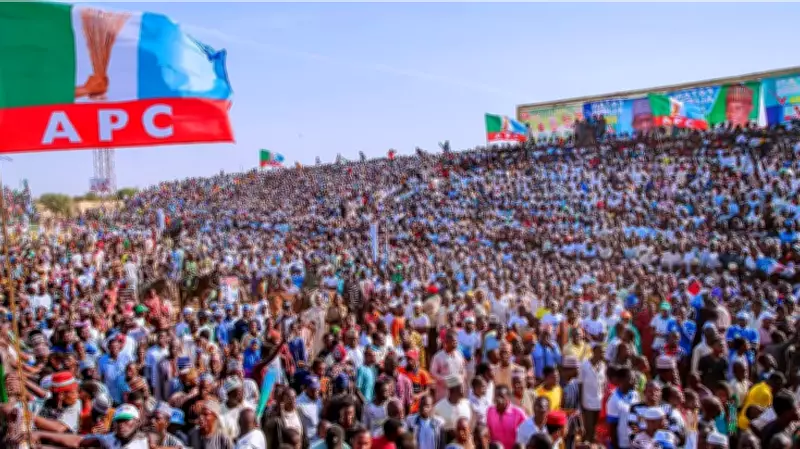
On the surface, the ruling party still appears formidable. The APC boasts 31 of the 36 state governors and an overwhelming majority at the National Assembly, remaining Nigeria's dominant political platform with expansive grassroots structures and enormous political influence. Party leaders continue to project confidence that the primaries were largely peaceful, orderly, and reflective of internal consensus-building efforts designed to preserve stability ahead of the elections. President Bola Ahmed Tinubu, though reportedly displeased with the fallout, has repeatedly pledged commitment to democratic ideals and internal party discipline.
APC National Chairman, Nentawe Yilwatda, has assured party members that the leadership remains committed to reconciliation and inclusion. Speaking after meeting with President Tinubu, he noted that disappointments were inevitable after competitive contests, stressing that the party would initiate an “early healing process” to maintain cohesion. “We have our internal conflict resolution mechanism that has prevailed over a period. We have the Presidential Conflict Resolution Committee; we have the Party Conflict Resolution Committee, and the party itself has been working to ensure that we reduce crisis as much as we can,” he added.
Growing Resentment and Allegations
Yet beneath these assurances lies a growing wave of resentment. Aggrieved aspirants, serving lawmakers, and grassroots mobilisers openly questioned the transparency and credibility of the processes. Allegations of manipulated membership lists, exclusion from voting venues, last-minute substitutions, and elite-driven consensus arrangements became recurring complaints. For many, the controversy goes beyond losing elections; it stems from the belief that internal democracy is being weakened by excessive interference from governors and influential stakeholders.
The geographical spread of grievances makes the situation particularly delicate. From the South East to the North-Central, South-South, parts of the North-West, North East, and sections of the South-West, the complaints form a pattern of dissatisfaction capable of hardening into organised resistance if not carefully managed.
Factors Behind Aspirant Withdrawals
One major reason for withdrawals was pressure from governors to respect consensus arrangements. Aspirants were persuaded to step aside in favour of candidates backed by dominant political blocs across Yobe, Kogi, Ondo, Rivers, Kaduna, Kano, Nasarawa, Edo, Delta, Plateau, Imo, Lagos, Ogun, Oyo, Cross River, Kwara, Kebbi, Sokoto, and Ekiti states. Another factor was fear of disqualification during screening, with complaints emerging from Rivers, Ondo, Ogun, Lagos, and Osun that clearance processes were used to pave the way for preferred candidates. Political negotiations and promises of future compensation also contributed, as did financial realities linked to direct primaries, which required extensive mobilisation and resources. In one North East state, House of Representatives aspirants were allegedly made to pay at least N150 million to facilitate selection by party officials.
Open Threats and Warnings
Post-primary tensions triggered open threats from aggrieved aspirants. In Yobe State, governorship aspirants rejected the emergence of Alhaji Baba Malam Wali anointed by Governor Mai Mala Buni, insisting on direct primaries. In Kaduna State, a coalition issued a 48-hour ultimatum demanding cancellation of primaries over alleged imposition. In Ondo East/West Federal Constituency, aspirants rejected the endorsement of a consensus candidate. In Kogi East, Senator Jibrin Isa Echocho accused party stakeholders of manipulation, warning of anti-party activities and protest votes. The withdrawal of Rivers State Governor Siminalayi Fubara from the APC governorship contest also generated significant attention, widely interpreted as a tactical pause in a complex power equation.
Mechanisms Fueling Division
Ironically, mechanisms introduced to preserve unity—consensus arrangements, leadership endorsements, and screening exercises—are now accused of fueling division. Critics argue these have become instruments for narrowing participation and concentrating decision-making power within a small circle. The tension has revived debates about internal democracy within Nigerian political parties. As the ruling party, the APC faces greater scrutiny because its internal conduct shapes public perception of Nigeria's wider democratic environment.
Opposition parties see this as an opportunity. The African Democratic Congress (ADC) views the crisis as evidence supporting criticisms against the APC. ADC National Publicity Secretary, Malam Bolaji Abdullahi, said, “We are enjoying tremendously the chaos in APC because the trap they thought they were setting up for us, they have been caught in that same trap.” He noted that aspects of the Electoral Act and reliance on direct primaries were initially seen as tools to weaken opposition but are now generating internal rebellion.
Legal and Procedural Concerns
Lawyer Ekene Aninze argued that the party shot itself in the foot by pushing through disputed consensus and shoddy direct primaries, setting itself up for endless litigation. He noted that APC failed to announce senatorial primary results for almost 48 hours, stripping electoral committees of the power to declare results. “The implication of this manipulation is dangerous for the party itself. APC may have unknowingly handed even weak contenders a legal window to drag the party to court,” he wrote on X.
Party Officials Acknowledge Dissatisfaction
A senior party official, speaking anonymously, acknowledged widespread dissatisfaction. “Certainly there is a lot of grumbling everywhere. People are feeling it is not an election but an imposition. What the people want is not what is given to them.” The source blamed excessive interference by governors and warned that failure to address grievances could weaken the APC's electoral outlook. “If something is not done to redeem the situation, the prospects of the party in 2027 are actually darkened. I know the opposition will capitalise on this to poach those who are now grumbling.”
The Road Ahead
For the APC leadership, the challenge now extends beyond defending the legitimacy of the primaries. The more urgent responsibility is preventing disappointment from transforming into large-scale defections, voter apathy, or organised internal resistance. Despite the tension, the ruling party still possesses formidable advantages: incumbency, national spread, financial strength, and deeply established electoral networks. But Nigeria's political history demonstrates that dominant parties are often weakened less by opposition pressure than by unresolved internal contradictions.
The coming months will test the party's reconciliation mechanisms more than its campaign machinery. Through negotiations, consultations, and strategic concessions, the APC leadership must reassure aggrieved aspirants that they remain valued stakeholders. Ultimately, the APC stands at a defining political crossroads. It may emerge stronger if promises of reconciliation and democratic inclusion are genuinely implemented. But if the growing resentment is ignored, the post-primary season may be remembered not as a period of consolidation, but as the beginning of a slow internal disintegration ahead of the 2027 elections.