
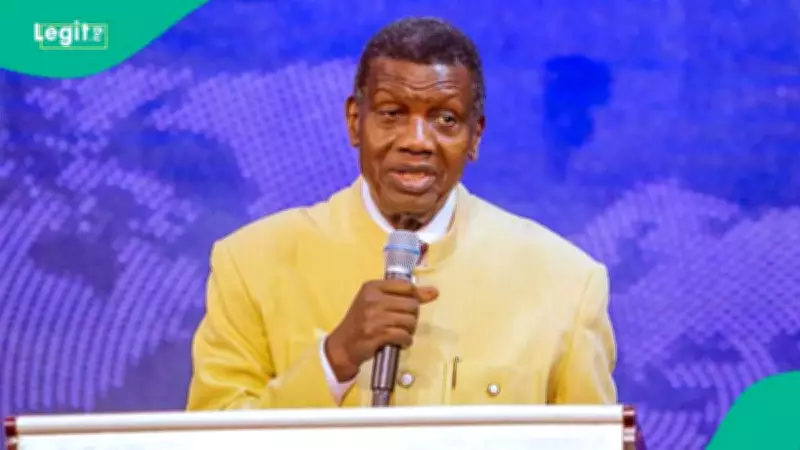
Pastor Enoch Adejare Adeboye, the General Overseer of the Redeemed Christian Church of God (RCCG), has finally addressed his involvement in past civic protests. Speaking in Mowe, Ogun State, the respected cleric explained that his actions were carried out based on directives from the Christian Association of Nigeria (CAN).
CAN's Directive Behind Protests
According to reports from Vanguard and PM News, Pastor Adeboye clarified that he participated in peaceful protests because the then-chairman of CAN instructed all Christians to do so. He stated, "That was because the then chairman of CAN asked all Christians to go out for a peaceful protest. If he talks tomorrow and asks me to march, I will." The 84-year-old church leader emphasized that his public engagements are guided by the umbrella Christian body on matters affecting the faith community.
A Call for Unity Among Christians
Pastor Adeboye urged members of RCCG to refrain from engaging in criticism or political disputes involving fellow Christians. He assured them of his unwavering support and protection, saying, "I will not allow any outsider to dictate to me how to deal with my own children. Even if you make a mistake, I will not allow an outsider to tell me what to do with my own children. I will defend you against anybody, any blogger or whatever who may say anything against you." He further advised, "If anybody is criticising any of us, don't join them. Don't allow them to use you for politics."
Background on Adeboye's Leadership
The RCCG leader, who formerly served as a Mathematics professor at the University of Lagos, has been a prominent figure in Nigeria's religious landscape. His recent remarks come amid ongoing discussions about the role of the church in national affairs.
In related news, Pastor Adeboye previously addressed speculation about removing First Lady Remi Tinubu as a pastor in the church. He clarified that her ordination as an Assistant Pastor occurred over a decade ago, before her husband's presidential ambition, and followed proper church guidelines. He insisted that no breach of doctrine warranted disciplinary action and that external pressure would not influence the church's decisions.




