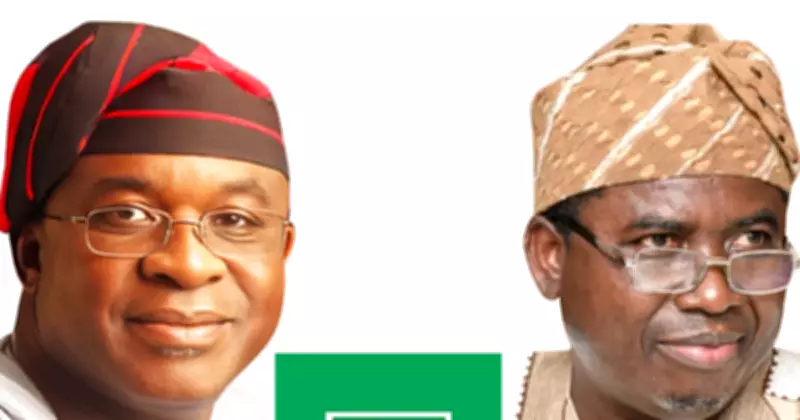
ADC Demands Immediate Resignation of INEC Chairman Over Alleged Partisanship
On April 2nd, 2026, the African Democratic Congress (ADC) escalated its confrontation with Nigeria's electoral body during a high-profile world press conference held at the Yaradua Centre in Lagos. The opposition party issued a forceful demand for the immediate resignation of Independent National Electoral Commission (INEC) chairman Professor Joash Amupitan, leveling serious accusations of institutional partisanship and electoral manipulation.
Accusations of Engineering a One-Party State
ADC leadership, led by former Senate President David Mark who serves as the party's national chairman, presented a detailed case alleging that INEC has become "irredeemably partisan" and is actively collaborating with the ruling All Progressives Congress (APC) to engineer a one-party state in Nigeria. This dramatic accusation comes amid INEC's recent decision to suspend recognition of the ADC's executive leadership, a move the party describes as politically motivated and legally questionable.
"There's a clear agenda to make President Tinubu the only option for Nigerians, despite the challenges of deepening poverty and worsening insecurity," declared David Mark during the emotionally charged press conference. "These crises didn't just happen spontaneously. They are direct consequences of the Tinubu government's failures. They know Nigerians would vote them out in a free and fair election; that's why they're doing anything to hang on to power by hook or crook."
Legal and Constitutional Disputes
The press conference revealed intricate details of the ongoing legal battle surrounding ADC's leadership. David Mark emphasized that INEC was fully aware that Honourable Nafiu Bala Gombe had resigned his position as Deputy Chairman of ADC, making him legally incapable of instituting court actions demanding recognition as acting chairman following Ralph Nwosu's resignation. This context, according to ADC leadership, makes INEC's decision to cease recognition of the David Mark-led executive particularly suspect.
The party's National Publicity Secretary, Mallam Bolaji Abdullahi, confirmed that despite INEC's controversial decision, ADC would proceed with its national congress scheduled for April 12th. This determination signals the party's refusal to back down in what they characterize as a fundamental struggle for Nigeria's democratic future.
Broad Opposition Support and Legal Criticism
The press conference demonstrated ADC's growing coalition strength, with attendance from numerous political heavyweights including former Vice President Atiku Abubakar, former Anambra governor Peter Obi, former Rivers governor Rotimi Amaechi, and former Kano governor Rabiu Musa Kwakwanso. Their collective presence underscored ADC's position as Nigeria's leading opposition force as the country approaches the 2027 general elections.
Legal experts have joined the chorus of criticism against INEC's actions. Constitutional lawyer Festus Ogun has described the commission's decision as "legally wrongful," while renowned human rights lawyer Professor Chidi Odinkalu criticized INEC for what he called "over-interpreting" the Court of Appeal's decision. Odinkalu argued that INEC's interpretation doesn't align with the actual court ruling and suggested there might be political pressure behind the scenes.
Historical Context and Future Implications
This confrontation represents a significant escalation in Nigeria's political landscape, with ADC positioning itself as the primary bulwark against what it describes as "an emerging dictatorship." David Mark emphasized that coalition leaders didn't join ADC by chance but after thorough due diligence and fulfillment of all constitutional requirements.
"The coalition leaders came together under ADC to rescue Nigeria from an emerging dictatorship," Mark stated. "Nafiu Gombe and his lawyers have become willing tools in the hands of APC, and INEC's actions confirm it has become irredeemably partisan. Professor Amupitan must be sacked immediately."
The situation continues to develop as legal proceedings unfold and political tensions rise ahead of the 2027 elections, with ADC vowing to continue its fight for what it calls "genuine democracy" in Nigeria.