Opposition Parties Condemn INEC Actions as Democratic Threat
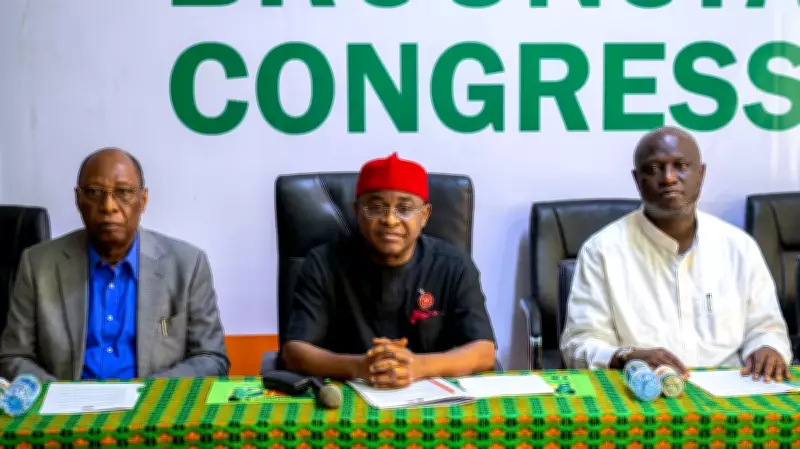
The African Democratic Congress (ADC) has launched a fierce rebuke against the Independent National Electoral Commission (INEC), labeling its suspension of the David Mark-led national leadership as a direct assault on democracy that must be resisted. This move follows INEC's announcement, purportedly based on a Court of Appeal judgment, to halt recognition of Mark's faction, igniting a political firestorm in Abuja.
ADC Demands Resignation and Calls for International Intervention
At a world media briefing in Abuja, the ADC insisted it will proceed with its planned national convention despite INEC's stance. The party demanded the immediate resignation of INEC Chairman Prof. Joash Amupitan and his entire executive, expressing no confidence in their leadership. ADC urged the international community to note INEC's actions of April 1, 2026, highlighting the threat to Nigeria's democracy and stability, and called for accountability for those undermining electoral integrity.
The opposition party emphasized that democracy thrives on freedoms such as choice, participation, and association. It warned Nigerians to resist any attempts to impose a one-party state, stating that a defining moment has arrived to stand firm and defend democratic principles.
INEC Defends Voter Revalidation and Rejects Calls for Removal
INEC dismissed calls for Amupitan's removal, describing them as politically motivated distractions and an assault on its independence. The commission clarified that the decision to revalidate the voters' register predates Amupitan's appointment and is governed by Section 157 of the 1999 Constitution.
Chief Press Secretary Adedayo Oketola explained that the nationwide voter revalidation exercise aims to sanitize the register, which contains data from 2011 to 2024. This phased process will address issues like transfers, multiple registrations, and deceased persons, enhancing voter data reliability. INEC assured it is an administrative audit, not targeted at any group, and will be conducted transparently across all Local Government Areas with digital options for accessibility.
PDP Raises Alarms Over Democratic Erosion
The Kabiru Turaki-led Peoples Democratic Party (PDP) echoed concerns, warning INEC and other institutions against actions that could destabilize Nigeria's political landscape. In a statement by National Publicity Secretary Ini Ememobong, the PDP alleged recent developments show orchestrated manipulations to weaken opposition parties ahead of elections.
The party accused the ruling All Progressives Congress (APC) of pursuing victory at all costs, risking democratic norms. It called on INEC to resist partisan pressures and act in the national interest, cautioning that sustained political pressure could lead to societal breakdown.
Internal ADC Factions and APC Counterclaims
A faction led by Nafiu Bala Gombe urged INEC to respect court orders and allow him to lead ADC per its constitution, following INEC's refusal to grant his request for control pending trial. However, ADC Publicity Secretary Bolaji Abdullahi stated Gombe resigned on May 17 and is not an official, interpreting court rulings to maintain the status quo ante bellum.
Meanwhile, Dumebi Kachikwu, ADC's 2023 presidential candidate, accused David Mark and his committee of being APC-sponsored to destabilize the party for President Bola Ahmed Tinubu's re-election in 2027. He alleged former chairman Ralph Nwosu sold ADC to veteran politicians, describing Mark's faction as ideologically vacuous.
The APC retaliated, with National Publicity Secretary Felix Morka dismissing ADC's claims as self-inflicted crises. APC labeled ADC as confused and desperate, promoting conspiracy theories instead of addressing internal issues.
Conclusion: A Nation at Political Crossroads
As Nigeria approaches future elections, this dispute underscores deepening political divisions. With opposition parties rallying against INEC's moves and internal conflicts simmering, the integrity of electoral processes remains under scrutiny, posing significant challenges to democratic stability.