Anioma State Proposal Gains Momentum with Nine LGAs Named in New Bill
A fresh Bill submitted to Nigeria's National Assembly has outlined the proposed Anioma State, which will be carved out of Delta North. According to reports, the new state will comprise nine local government areas, marking a significant step in the ongoing push for state creation in Nigeria's southeast region.
Details of the Proposed Anioma State
The proposed Anioma State will include the following nine local government areas from Delta North:
- Aniocha North
- Aniocha South
- Ika North-East
- Ika South
- Ndokwa East
- Ndokwa West
- Oshimili North
- Oshimili South
- Ukwuani
Asaba has been designated as the capital of the proposed Anioma State in the Bill. This development follows months of political discussions and legislative groundwork aimed at creating a new administrative entity in the region.
Akpabio Reaffirms Legislative Support
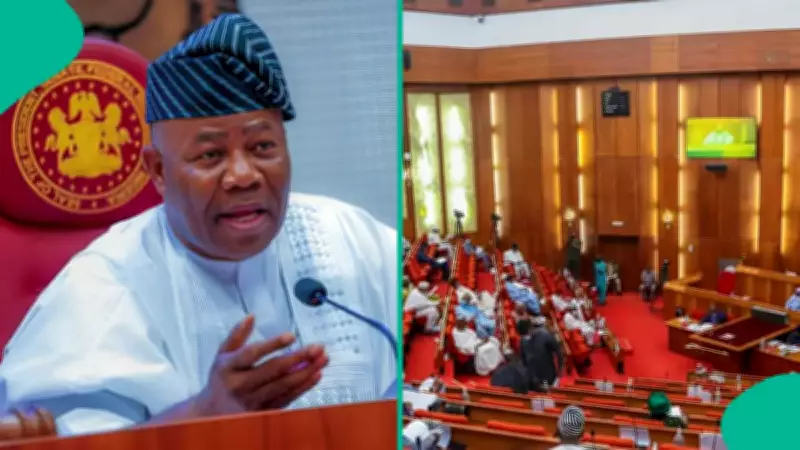
On March 25, Senate President Godswill Akpabio reaffirmed strong legislative and political support for the creation of Anioma State. Speaking at the south-south zonal congress of the All Progressives Congress in Asaba, Delta State, Akpabio made a definitive statement about the initiative.
"Anioma state will be created, with Asaba as its capital. The senate fully supports the initiative spearheaded by Senator Ned Nwoko. This step will usher in a new era of development and shared prosperity for all constituent communities," Akpabio declared.
He further explained that if Anioma State is successfully created, Warri would serve as the capital of the new Delta State. According to his remarks, Warri already possesses vital infrastructure including an airport, government offices, major oil companies, a seaport, and a stadium, making it a suitable administrative center.
Political Backing and Stakeholder Support
The political momentum behind the Anioma State creation has been building steadily. The congress was attended by governors from Delta, Edo, Bayelsa, Akwa Ibom, Rivers, and Cross River states. Akpabio urged stakeholders to support the Renewed Hope Agenda of the Tinubu administration, emphasizing that such backing would encourage sustainable growth and national integration.
In November 2025, Senator Ned Nwoko announced that the bid to create Anioma State had gained significant momentum. He revealed that constitutional amendment committees and President Bola Tinubu were backing the effort. Nwoko also noted that 97 senators had signed a document endorsing the move, describing the level of support as "unprecedented" in recent legislative history.
Background on Delta State
Delta State, known as "The Big Heart of the Nation," is one of Nigeria's most vibrant and diverse states. Created on August 27, 1991, with Asaba as its capital, it plays a key role in the country's economy due to its oil-rich resources. The state is also renowned for its cultural heritage, natural beauty, and bustling urban centers.
Delta State lies in southern Nigeria and covers approximately 17,698 square kilometers. It is bordered by Edo to the north, Anambra to the east, and Rivers and Bayelsa to the south. With an estimated population of 7.8 million in 2024, Delta ranks among Nigeria's most populous states. Its economy is driven by oil and gas, agriculture, and trade, contributing a GDP of $40.05 billion in 2021, making it one of the top five states economically.
Broader Context of State Creation Proposals
This development occurs within a broader context of constitutional amendments aimed at restructuring Nigeria's geopolitical landscape. Several bills proposing the creation of new states in Nigeria have successfully passed the second reading at the House of Representatives, signaling growing momentum for administrative reorganization across the country.
The Anioma State proposal represents one of the most advanced initiatives in this ongoing process, with substantial legislative backing and political support from key figures in Nigeria's government. As the Bill progresses through legislative channels, stakeholders will be watching closely to see how this proposed state creation unfolds and what implications it may have for regional development and national integration.