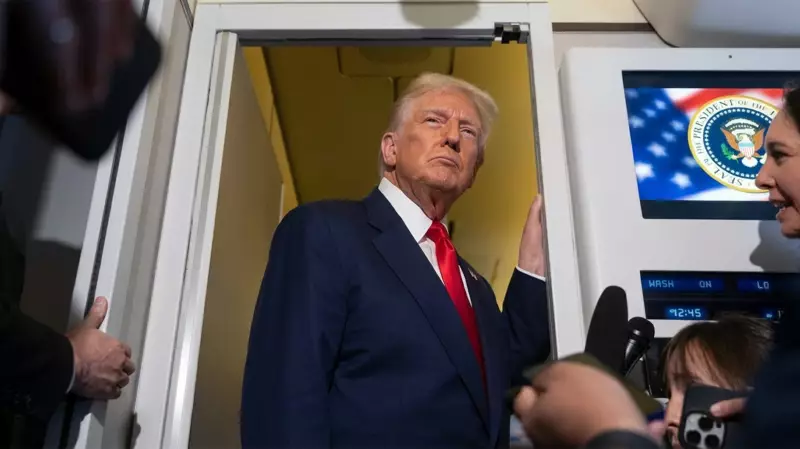
The British Broadcasting Corporation (BBC) has formally asked a United States federal court to throw out a massive $10 billion lawsuit filed against it by former and current U.S. President Donald Trump. The legal action stems from a documentary that edited Trump's speech on the day of the January 6, 2021 Capitol riot.
The Core of the Legal Dispute
President Trump's lawsuit, initiated last year, targets a specific BBC programme. The documentary focused on the certification of Joe Biden's election victory and Trump's speech that day. The central allegation is that the broadcaster spliced together two segments of the speech. Trump claims this editing created a false impression that he directly urged his supporters to storm the U.S. Capitol building.
In the court documents, Trump's legal team is pursuing damages on two primary grounds. They are alleging defamation and a breach of the Florida Deceptive and Unfair Trade Practices Act. The suit demands a minimum of $5 billion for each count, totalling the staggering $10 billion figure.
BBC's Defence and Motion to Dismiss
On Monday, 13 January 2026, BBC lawyers submitted their response in the federal court located in Miami, Florida. Their filing presents several key arguments for dismissal. Firstly, they contend the court lacks "personal jurisdiction" over the British broadcaster in this matter.
Secondly, and crucially, the BBC argues that President Trump has failed to demonstrate any measurable harm caused by the documentary. The legal papers point out that Trump's description of the damage is vague, citing only general phrases like "harm to his professional and occupational interests." The BBC's filing highlights a significant counterpoint: Trump's political success following the broadcast. It notes he was re-elected on 5 November 2024 and won the state of Florida by a substantial 13-point margin.
The broadcaster also plans to leverage the fact that while the documentary aired before the 2024 election, it was not broadcast within the United States. This detail is expected to be a cornerstone of their motion to dismiss the case entirely.
Fallout and Broader Implications
Trump's lawsuit accuses the BBC of "fabricating" the edited speech and attempting to sway the 2024 election against him. The BBC has consistently denied these allegations. However, the controversy has already had serious internal consequences. BBC chairman Samir Shah sent a personal letter of apology to Trump last year. Furthermore, in November, Shah told a UK parliamentary committee that the corporation should have acted faster to acknowledge the editorial mistake.
The fallout from the documentary was severe, leading to the resignation of two top BBC executives: Director General Tim Davie and top news executive Deborah Turness. A BBC spokesperson reiterated the corporation's stance on Tuesday, stating, "As we have made clear previously, we will be defending this case. We are not going to make further comment on ongoing legal proceedings."
This high-stakes legal battle between a global media giant and a formidable political figure is being closely watched. It raises profound questions about media editing practices, the boundaries of defamation law across jurisdictions, and the tangible impact of broadcast content on political fortunes.