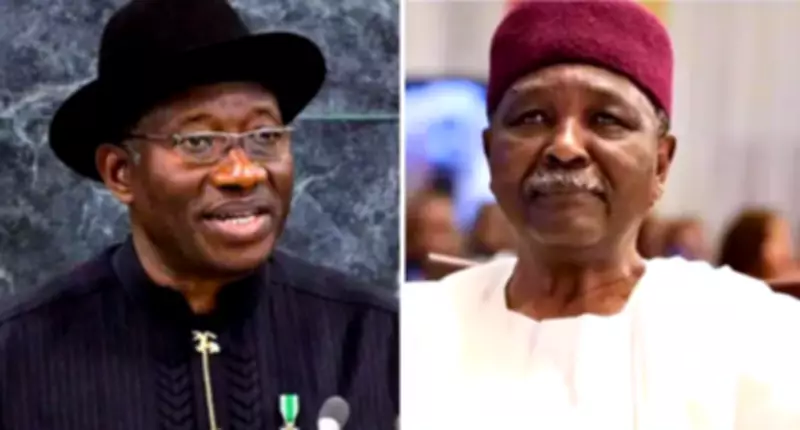
Former President Goodluck Jonathan has praised former Head of State Yakubu Gowon for his historic “no victor, no vanquished” declaration at the end of the Nigerian Civil War, stating that it laid the foundation for national healing and reconciliation. Jonathan made the remarks on Tuesday, May 19, in Abuja during the unveiling of Gowon’s autobiography.
Speaking at the event, the former president described the autobiography as “a living testimony” of leadership during one of Nigeria’s most defining historical periods. “Today’s event is not merely the unveiling of a book. It is the presentation of a living testimony,” Jonathan said. “It reflects a leader who stood at the centre of some of the defining moments in our national journey.”
According to Jonathan, the book offers important insights into nation-building, reconciliation, peacebuilding and leadership during and after the Nigerian Civil War between 1967 and 1970. He praised Gowon’s post-war declaration of “no victor, no vanquished,” saying it created the basis for national healing and reintegration after the conflict.
Jonathan also commended Gowon for introducing policies aimed at strengthening national unity, particularly the establishment of the National Youth Service Corps (NYSC). He said the NYSC scheme was designed to unite young Nigerians and bridge ethnic divisions across the country. Recalling his own experience, Jonathan said corps members posted to his secondary school in 1973 played a major role in his education during a period when graduate teachers were scarce in many rural communities.
“The vision of the NYSC was great and it will continue to remain great. The youth corps scheme was meant to unite our nation and help us live as one Nigeria,” he stated. Jonathan also praised the late former Vice President Alex Ekwueme for his role in supporting reforms that shaped the country alongside Gowon.
The former president stressed the importance of preserving historical accounts through autobiographies and memoirs, arguing that younger generations should learn directly from leaders who experienced critical moments in Nigeria’s history. According to Jonathan, Gowon has continued to distinguish himself through peace-building efforts and advocacy for national unity long after leaving office.
He added that the former military leader’s contributions demonstrated that leadership extended beyond political power into service to humanity. Jonathan described the autobiography as timely, particularly at a period when many countries around the world were facing insecurity, political division and social polarisation.
He urged younger Nigerians and current leaders to embrace the values of courage, reconciliation, patriotism and visionary leadership reflected in the book. Jonathan also commended Gowon for documenting his experiences and preserving an important part of Nigeria’s historical record for future generations.