House of Representatives Sees Major Party Realignment as 28 Lawmakers Defect Ahead of 2027 Elections
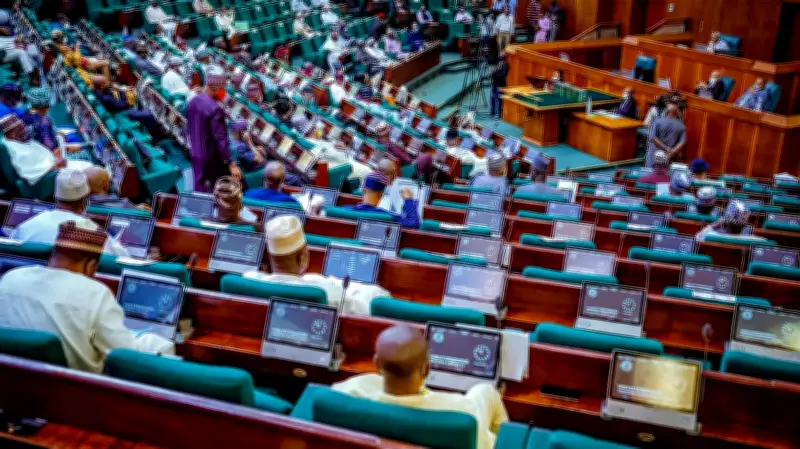
The Nigerian House of Representatives experienced a substantial political shakeup on Tuesday as twenty-eight lawmakers officially switched their party affiliations. This mass defection comes as the nation gears up for the 2027 general elections, with members citing internal party crises, factional disputes, and electoral uncertainties as primary reasons for their decisions.
Defections Span Multiple States and Parties
The movement of lawmakers cut across various political parties and geographical regions, indicating a broader realignment within the Nigerian political landscape. Speaker Tajudeen Abbas formally announced the defections during plenary after reading letters from the affected members notifying the chamber of their decisions.
Significant shifts occurred in Kano State, where eight lawmakers officially defected from the New Nigeria Peoples Party (NNPP) to the All Progressives Congress (APC). Their defection was witnessed by prominent figures including Governor Abba Yusuf of Kano, Deputy Senate President Barau Jibrin, and former governor Abdullahi Ganduje.
Leading the Kano defectors was Deputy Minority Leader Aliyu Madaki, who expressed growing concerns about the direction of the Kwankwasiyya Movement. Other NNPP lawmakers joining the APC included Mustapha Tijani, Mohammed Shehu, Idris Dankawu, Hassan Shehu, Rabiu Yusuf, Mohammed Chiroma, Garba Mohammed, and Tijani Jobe.
Cross-Party Movements Signal Political Realignment
The defections revealed a complex pattern of political migration across party lines. From Benue State, Philip Agbese left the APC for the Labour Party (LP), citing state-level crises. Kaduna's Aliyu Abdullahi moved from the APC to the African Democratic Congress (ADC).
Imo State witnessed significant changes with Ikenga Ugochinyere switching from the Peoples Democratic Party (PDP) to the All Progressives Party (APP), while Matthew Nwogu left LP for APP. In Anambra, Deputy Minority Whip George Ozodinobi and Uchenna Okonkwo both moved from LP to ADC, indicating substantial realignment within the southeastern region.
Sokoto and Gombe states also saw political shifts, with Mani Maishinko, Abdulsahmad Dasuki, and Umaru Yusuf joining the ADC, alongside Yahaya Tungo of Gombe and Seyi Sowunmi of Lagos. Adamawa's Mohammed Bassi left PDP for APC, while Osun's Clement Akanni moved from PDP to the Accord Party (AP).
The PDP suffered further losses in Taraba, Kebbi, and Zamfara as Jafaru Yakubu, Sadiq Tafida, Ibrahim Mohammed, and Bello Shinkafi all defected to the APC.
ADC Accuses APC of Attempting to Destabilize Opposition
Amid these political movements, the African Democratic Congress (ADC) leveled serious allegations against the ruling All Progressives Congress (APC). The ADC claimed the APC-led Federal Government was attempting to pressure the Independent National Electoral Commission (INEC) Chairman, Prof. Joash Amupitan (SAN), to interfere in ADC's internal leadership matters.
In a statement signed by National Publicity Secretary Bolaji Abdullahi, the ADC asserted that a March 28 letter by some Senior Advocates of Nigeria was being used to push INEC to invalidate party actions and alter its structure before court rulings. The party described this as part of a grand plan to destabilize what it called "the only viable opposition party left in the country" and promised to resist using all constitutional means.
The ADC specifically referenced Senator Rabiu Kwankwaso's decision to join their party, suggesting this had "understandably sent jitters through the ruling party." According to the ADC, top officials within the Federal Government had renewed their onslaught against the party to discourage other high-profile figures from joining.
Internal Party Disputes and Constitutional Concerns
The ADC addressed allegations regarding its leadership structure, stating that Nafiu Gombe, who claims to be aggrieved over ADC leadership, was never the party's Chairman. The party clarified that Gombe had resigned his position alongside other members of the National Working Committee (NWC) and had since been expelled from the party.
Meanwhile, a faction of the ADC in Cross River State, led by Dr. MacFarlane Ejah, petitioned INEC against the party's planned congresses scheduled for April 7 to 14, 2026. The faction called on INEC to ensure any leadership transition in the ADC follows the strict prescriptions of the party's 2018 Constitution and the Electoral Act.
Ejah, serving as Vice Chairman (Central)/Director Policy and Strategy of the faction, emphasized that the ADC's 2018 Constitution does not recognize "Interim" or "Caretaker" structures. He cited specific constitutional articles requiring officers at all levels to be elected through elective congresses and noted that the 2026 Electoral Act reinforces this by mandating that political parties must operate through democratically elected organs.
The political developments in the House of Representatives and the accompanying allegations highlight the intense maneuvering occurring within Nigerian politics as parties position themselves for the 2027 general elections. The mass defections represent one of the most significant realignments in recent legislative history, potentially reshaping the balance of power in the lower chamber.