Political Tensions Escalate as Opposition and Government Cross the Red Line
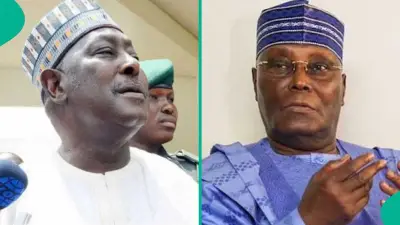
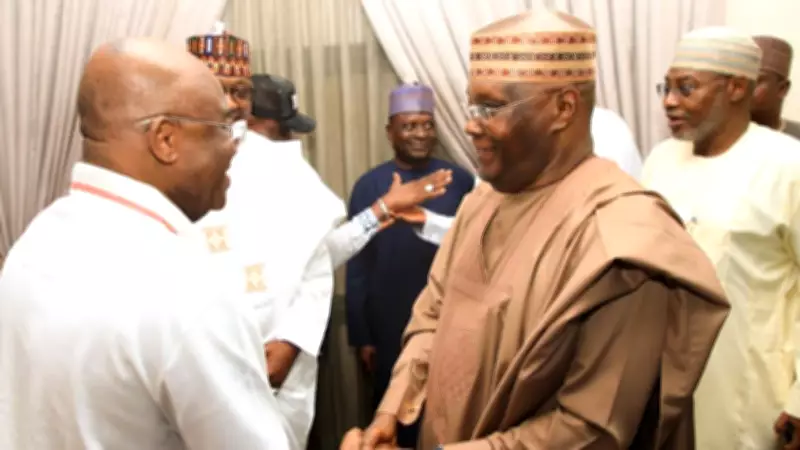
In a stark reflection of Nigeria's political landscape, historical events from the 1959 elections are being juxtaposed with the current surge in violence and instability. The recent courtesy visit by former Vice President Atiku Abubakar to National Chairman ADC David Mark in Abuja underscores ongoing political maneuvers, but beneath the surface, tensions are reaching a boiling point.
Historical Context of Coalition Governments
Following the 1959 elections, Nigeria witnessed the formation of a coalition government between the NPC and NCNC on December 20, 1959. This government, led by Prime Minister Alhaji Abubakar Tafawa Balewa, included key figures such as Alhaji Muhammadu Ribadu, Chief Festus Okotie-Eboh, and Mr. Raymond Njoku, among others. The coalition comprised ten ministers from the North, three from the East, three from the West, and one from Lagos, with most former ministers reappointed to their portfolios.
Notably, Chief Samuel Ladoke Akintola was appointed Premier of the Western Region, succeeding Chief Obafemi Awolowo, who became the opposition leader. The first meeting of the new Federal House of Representatives on January 12, 1960, set the stage for Nigeria's independence motion on January 14, 1960, culminating in Prime Minister Abubakar's trip to London on April 22 to finalize power transfer by October 1, 1960.
Awolowo's Vision and Educational Disparities
In his post-election remarks, Chief Obafemi Awolowo highlighted his 1959 campaign efforts in the North, focusing on free education and development. He expressed regret over the North's educational gap, stating, "If I had won the election, I would have put a lot of money educating the North in order to bridge the educational gap between that region and the Western and Eastern Regions." Awolowo warned that Northern leaders might face repercussions for their neglect of education, potentially leading to future questions from the youth about development disparities with Southern Nigeria.
Current Escalation of Violence and Political Strife
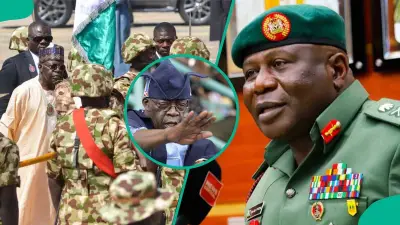
Unlike the relatively peaceful 1959 elections, Nigeria is now grappling with heightened violence, including bombings, kidnappings, and other incidents that have rendered some states no-go areas. These events are not isolated; they are closely linked to forthcoming elections and appear coordinated by the opposition to discredit the ruling party as inoperative and a failure. This tactic mirrors strategies used by current government officials when they were in opposition years ago.
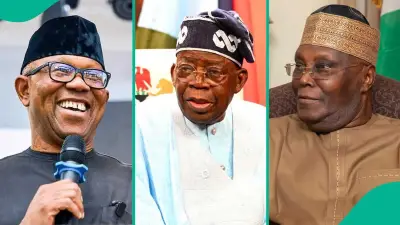
Both the opposition and the government have crossed the red line, with no ceasefire in sight, leading to innocent civilians becoming victims in a senseless war for power and treasury looting. The winner-takes-all approach of the Presidential System, adopted with hopes of participation, has instead fostered chaos, marginalizing the opposition and creating greedy executives unwilling to share power.
Call for Ceasefire and Systemic Reform
There is an urgent need for a ceasefire between both sides to prevent further deterioration. Politicians must not be allowed to destroy the country, and systemic reforms are essential to move away from the winner-takes-all model that excludes the opposition. Without such changes, tensions will continue to worsen, threatening Nigeria's stability and future.
Concluded by Eric Teniola, a former Director in the Presidency, from Lagos, this analysis serves as a critical reminder of the dangers of unchecked political ambition and the importance of inclusive governance.