Senate Mandates INEC to Reinstate Three Benue State Constituencies Ahead of 2027 General Elections
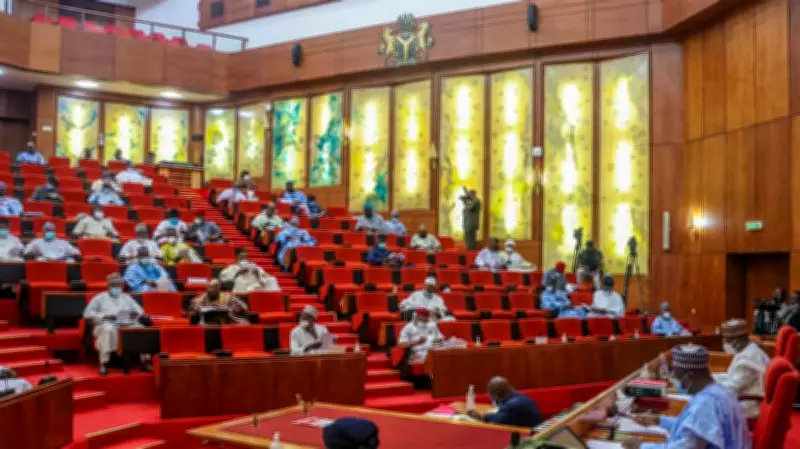
In a decisive move to uphold constitutional rights and electoral integrity, the Nigerian Senate has issued a directive to the Independent National Electoral Commission (INEC), compelling the immediate restoration of three state constituencies in Benue State. This action is in strict compliance with a recent Court of Appeal judgment and aims to rectify long-standing democratic anomalies before the 2027 general elections.
Court Ruling and Senate Resolution
The Senate's resolution follows a motion presented by Senator Emmanuel Udende, Chairman of the Committee on Anti-Corruption and Financial Crimes. He highlighted that the Court of Appeal, sitting in Makurdi, Benue State, delivered a judgment on December 5, 2025, ordering INEC to restore Ukum II (Afia) and Konshisha II (Shangev-Tiev) state constituencies. Additionally, Gboko I is to be reinstated as part of this directive. Despite the court's ruling, INEC has yet to implement these changes, prompting the Senate's intervention.
Senator Udende emphasized that the Court of Appeal granted all reliefs sought, including a specific order for INEC to conduct elections in these constituencies during the 2027 general elections. He argued that this delay undermines constitutional order and public confidence in democratic institutions.
Constitutional and Legal Framework
The Senate underscored INEC's constitutional responsibilities under Section 153(f) of the 1999 Constitution of the Federal Republic of Nigeria, as amended, which mandates the commission to organize, undertake, and supervise all elections. Furthermore, Sections 91 and 112 of the constitution prescribe the minimum and maximum number of seats in state Houses of Assembly and require INEC to divide states into constituencies accordingly.
Senator Udende elaborated that Section 113 obligates INEC to review constituency divisions at least every ten years, while Section 144 empowers the commission to revise boundaries in line with constitutional guidelines. The Electoral Act 2022, as amended, reinforces these mandates, providing procedural guidance for electoral administration, including constituency delineation.
Historical Context and Democratic Implications
Historically, these constituencies functioned during the Second and Third Republics, offering direct legislative representation to the people. Their removal in the Fourth Republic, without sufficient constitutional justification, has led to democratic exclusion, population imbalance, and under-representation of distinct communities in Benue State.
The Afia and Ishangev-Tiev communities possess unique demographic, cultural, and economic identities and have significantly contributed to Benue State's socio-economic development. The Senate views the Court of Appeal's judgment as a reaffirmation of constitutional supremacy and judicial authority, essential for protecting the democratic rights of affected populations.
Senate's Directives and Calls for Action
To ensure prompt compliance, the Senate has resolved that the restoration of these constituencies is critical for guaranteeing peace, political stability, and credible elections in Benue State. It has urged INEC to urgently update electoral boundaries, voter registers, administrative structures, and election planning frameworks to reflect the restored constituencies ahead of the 2027 polls.
Moreover, the Senate has mandated its Standing Committee on INEC and Electoral Matters to engage with the commission, demand a clear implementation timeline, and report on compliance. It also called on the National Assembly and the executive to provide INEC with necessary funding and technical support to facilitate the restoration and conduct of elections. The Senate has requested concurrence from the House of Representatives to solidify this directive.
This proactive stance by the Senate aims to correct a long-standing anomaly, ensuring that the constitutional right to fair representation is upheld and that electoral processes in Benue State are transparent and equitable.