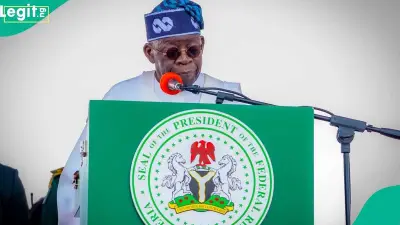
President Tinubu at 74: A Statesman Redefining Nigeria's Global Identity and Strategic Direction
At 74 years old, President Bola Ahmed Tinubu stands as a pivotal figure in Nigeria's modern history, steering the nation toward a transformative era. His presidency is increasingly viewed not merely as a period of governance but as a strategic initiative aimed at repositioning Nigeria within the evolving global landscape of power, trade, and diplomacy. This milestone transcends a simple birthday celebration, reflecting instead a tenure marked by difficult decisions, structural reforms, and a deliberate effort to recalibrate Nigeria's international standing.
A Vision for Long-Term National Transformation
From a governance perspective, President Tinubu has prioritized long-term national transformation over short-term political gains, opting for systemic corrections rather than populist measures. Central to this transformation is an evolving foreign policy doctrine that shifts from ceremonial diplomacy to economic diplomacy with strategic intent. This approach aligns Nigeria's external engagements directly with domestic priorities such as attracting investment, expanding infrastructure, enhancing financial credibility, and reforming institutions.
Symbolic and Substantive Global Engagements
The impact of this doctrine was vividly demonstrated during President Tinubu's recent visit to the United Kingdom, where he was received by King Charles III. This encounter symbolized Nigeria's renewed relevance on the global stage, serving as a visual affirmation of respect and restored stature. For many Nigerians, it sparked national pride, underscoring the country's reemergence as a serious partner in global affairs and reflecting growing confidence from major world powers in Nigeria's leadership.
Beyond symbolism, the UK engagement yielded tangible outcomes, including over $1.5 billion in investment commitments and expanded cooperation in areas like port modernization, trade systems, immigration coordination, and security collaboration. These developments are crucial for Nigeria's maritime economy and overall economic growth.
Expanding Strategic Diplomacy in Europe and Beyond
President Tinubu's state visit to France further consolidated this momentum, marking the first official state visit by a Nigerian leader to France in over two decades. Welcomed by President Emmanuel Macron, the visit positioned Nigeria at the center of France's strategic outreach to Anglophone Africa. Discussions focused on key sectors such as agriculture, security, education, health, and energy transition, aligning with Nigeria's domestic transformation agenda. This engagement reinforced Nigeria's role as France's leading trading partner in sub-Saharan Africa and emphasized a "partnership of equals," shifting from asymmetrical relationships to one based on mutual respect and shared interests.
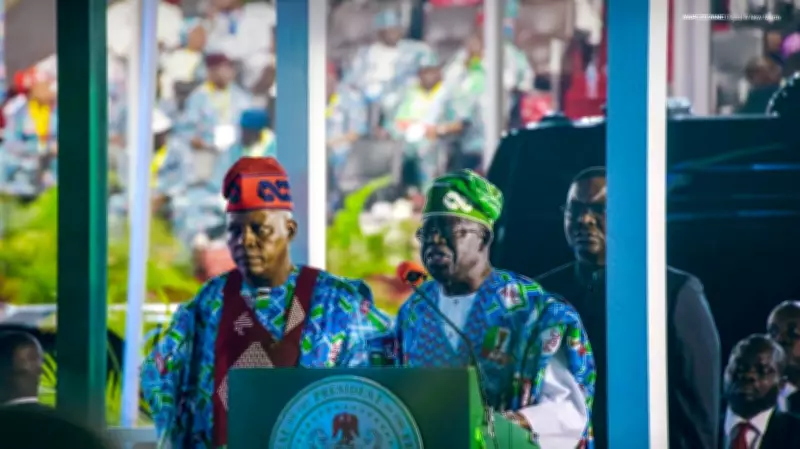
Extending beyond Europe, President Tinubu's participation in the Abu Dhabi Sustainability Week 2026 in the United Arab Emirates expanded Nigeria's diplomatic reach into the Gulf region, a hub for sovereign wealth and energy transition financing. His national statement positioned Nigeria as an active architect of a development-oriented sustainability model, integrating climate action with job creation and industrial growth. Key initiatives include the National Carbon Market Activation Policy and a $25–30 billion annual target for climate finance, alongside a Comprehensive Economic Partnership Agreement with the UAE covering renewable energy, aviation, and digital trade.
Strengthening Diplomatic Infrastructure and Domestic Reforms
Complementing these high-level engagements, Nigeria has deployed a new cadre of ambassadors and high commissioners to key global capitals, strategically rebuilding its diplomatic infrastructure. This move enhances Nigeria's presence in critical economic and geopolitical arenas, supports foreign direct investment attraction, improves diaspora services, and strengthens the country's voice in multilateral institutions.
Domestically, reforms such as the removal of fuel subsidies and unification of exchange rates have addressed structural inefficiencies, while Nigeria's exit from the Financial Action Task Force grey list has bolstered its standing in global finance. These measures have already attracted over eight billion dollars into oil and gas projects within two years. Additionally, initiatives like the Customs Single Window aim to modernize trade processes and enhance competitiveness.
A Coherent Foreign Policy Strategy for Global Influence
President Tinubu's engagements in Turkey, which yielded nine key agreements, and innovations like E-gates and the E-visa system for seamless immigration, further illustrate a coherent foreign policy strategy. The Ministry of Interior has transitioned to a model driven by efficiency and innovation, with agencies like the Nigeria Immigration Service and National Identity Management Commission enhancing border security and national registration.
As President Tinubu marks his 74th year, his leadership reflects a broader institutional shift, redefining Nigeria's global identity. He is advancing a vision that positions Nigeria as a confident, credible, and competitive actor on the world stage, ensuring the nation is not only seen but heard and taken seriously in global councils. In the words of King Charles III, Nigeria is "an economic powerhouse, a cultural force, and an influential diplomatic voice," embodying the spirit of "Naija No Dey Carry Last."