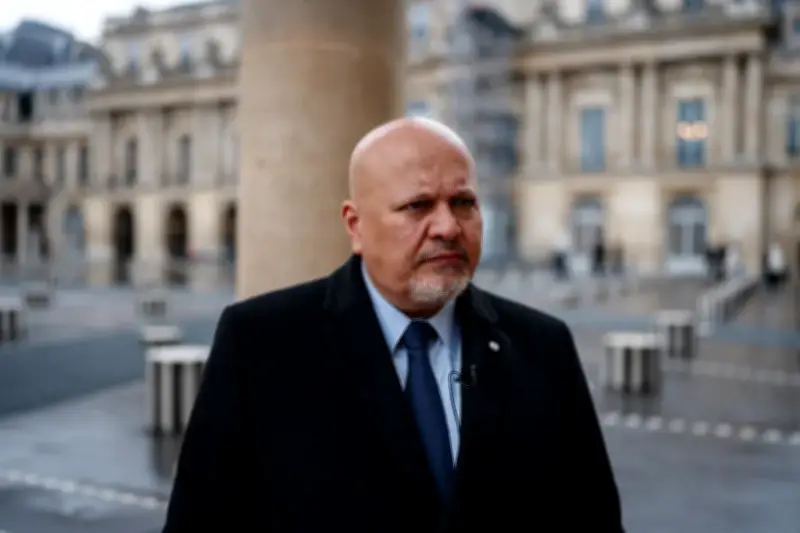
The International Criminal Court (ICC) is under intense scrutiny as its 125 member states prepare to vote on July 24 on whether to remove Chief Prosecutor Karim Khan following allegations of sexual misconduct. The vote comes after an investigation into claims brought forward by a former intern, Sarah, a Malaysian lawyer who has worked at the court since 2017 and served as Khan's direct assistant starting in February 2023.
Former Intern Speaks Publicly
In a CNN world-exclusive interview, Sarah detailed her experiences for the first time. She described an escalation of unwanted advances, stating, "I have no other way to describe it but an escalation of attempts." She added, "(There was) the pawing, the physical nature of it – but it didn't start that way. Because it was kind of like encroachments on the boundaries slowly – not just physically but emotionally as well."
Sarah emphasized the extreme power imbalance, saying, "There is no way for something to be consensual when you have such a power disparity. What I think many people don't understand is that Mr. Khan was not just my boss, he was everyone's boss." She concluded, "And it cannot be consensual."
Khan's Denial and Defense
Khan and his supporters have suggested the accusations are part of an orchestrated campaign to undermine his credibility, pointing to his push for arrest warrants against high-profile Israeli officials. His lead counsel, Sareta Ashraph, stated, "These are serious allegations and they needed to be taken seriously, investigated seriously and undergo a serious judicial review. And that is what has happened." She emphasized that the allegations are "part of a much larger body of evidence. Mr. Khan has denied and continues to deny them in their entirety – any form of sexual content, relationship, consensual or nonconsensual, with the complainant."
Conflicting Reports
A confidential United Nations Office of Internal Oversight Services (OIOS) report concluded there was a "factual basis" to the claims. However, a separate ICC panel of judicial experts ruled in March that there was "insufficient evidence to support a finding of misconduct measured against the standard of proof of beyond reasonable doubt." Khan previously told UN investigators that his tight security detail during travel made it virtually impossible to leave his quarters unnoticed. He maintained that he "completely denied engaging in any harassment, abuse of authority, inappropriate behavior whatsoever" and cooperated fully with investigators.
Second Accuser Comes Forward
The controversy has widened with a second accuser, "Patricia," who worked as an intern under Khan in 2009. She came forward to investigators after reading media reports about Sarah's experiences. Patricia recalled feeling deeply uncomfortable during work sessions, stating, "without fail, every time I was there, it was a constant onslaught of him coming onto me, groping me, grabbing me, kissing my face, touching my hair … trying to get me to engage in intimate activity with him, which I constantly had to bat off." She described an incident where she felt completely paralyzed while being groped at her desk: "On that occasion, I felt that I was frozen and was unable to protest or stop him." Patricia explained that she wanted to ensure others knew they were not alone: "At the time it happened to me, I felt very isolated, and as many people do under these circumstances, I felt that perhaps I was the only person who had experienced these behaviors."
Allegations of a Smear Campaign
Sarah strongly rejected any insinuations that she was working as a state-sponsored agent to damage the prosecutor's standing, a theory that colleagues and investigators also dismissed. Regarding the connection drawn between her case and the court's international investigations, she noted, "I think many parties have for their own agenda conflated the two things. That conflation has only helped to distract and deflect from the validity of that complaint." She added, "I fully and entirely support the court's investigations."