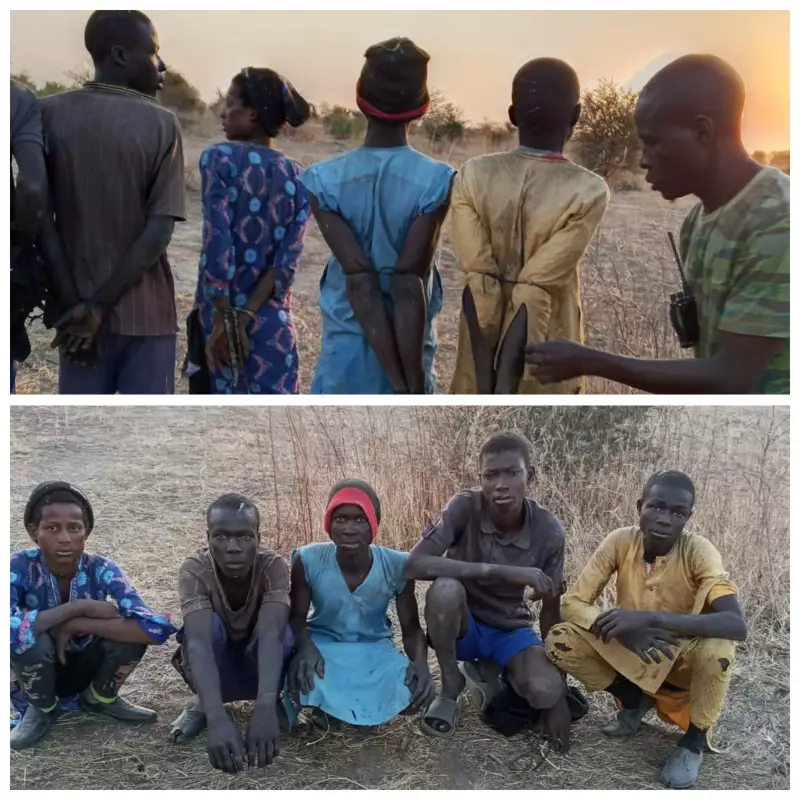
Joint Security Operation Frees Seven Abducted Persons from ISWAP Terrorists in Borno
In a significant counter-terrorism success, operatives of the Department of State Services (DSS), working in close collaboration with trained forest guards, have successfully rescued seven individuals who were abducted by suspected Islamic State West Africa Province (ISWAP) terrorists in Borno State. The dramatic rescue followed a heavy and intense gun battle that took place deep within a forest enclave, showcasing the effectiveness of coordinated security efforts in the region.
Details of the Abduction and Rescue Mission
The victims were originally seized on January 19, 2026, while they had ventured into the bush to gather firewood near the Ajiri Camp area, located on the outskirts of Maiduguri, the state capital. During this scavenging exercise, the group was intercepted by the terrorists and forcibly taken into the dense forest. In a fortunate turn of events, two of the abducted persons managed to escape from their captors and returned to Ajiri Camp to alert the local community about the dire situation.
According to information provided by security analyst Zagazola Makama, the abductors had sent one of the boys on a bicycle back to his home with a ransom demand of N20 million. This move was intended to pressure the families and community for payment. However, upon receiving the critical intelligence from the escapees, the forest guards, who operate under the strategic guidance of the DSS, immediately mobilized and stormed the terrorists' hideout.
Strategic Tactics and Fierce Engagement
The rescue operation was marked by careful planning and stealth. The operatives switched off their motorcycles and proceeded on foot, trekking for almost an hour to avoid detection by the terrorists. This tactical approach allowed them to close in on the enclave undetected before engaging the ISWAP elements in a fierce and sustained gun battle. The intensity of the confrontation forced the terrorists to flee, abandoning their captives in the process.
All seven victims were freed unhurt and are currently receiving necessary support and undergoing profiling by the relevant authorities to ensure their well-being and integration back into the community.
Leadership and Coordination Praised
The Commander of the Forest Guards, Hassan Modu, who coordinated the operation with the DSS, attributed the success to timely intelligence and effective joint action. "We moved quietly, on foot, and engaged them. The terrorists fled when they realised we had closed in on their enclave," Modu stated. He further commended the DSS for their unwavering support and urged residents to continue providing credible information to security agencies to help curb criminal activities in the state.
Enhanced Training and Operational Structure
According to Zagazola Makama, the forest guards have been specifically trained, equipped, and are continuously supervised by the DSS to function as an auxiliary community-based security outfit. The DSS provides them with essential skills in basic intelligence, surveillance, and reconnaissance. Regular drills on tracking and bush operations are conducted, and DSS officers are embedded within their teams to guide activities and ensure professionalism.
Through this structured framework, the forest guards operate under the strategic control of the DSS, which ensures a high level of discipline, effective coordination, and operational efficiency in joint missions against terrorists and other criminal elements threatening the peace and security of Borno State.