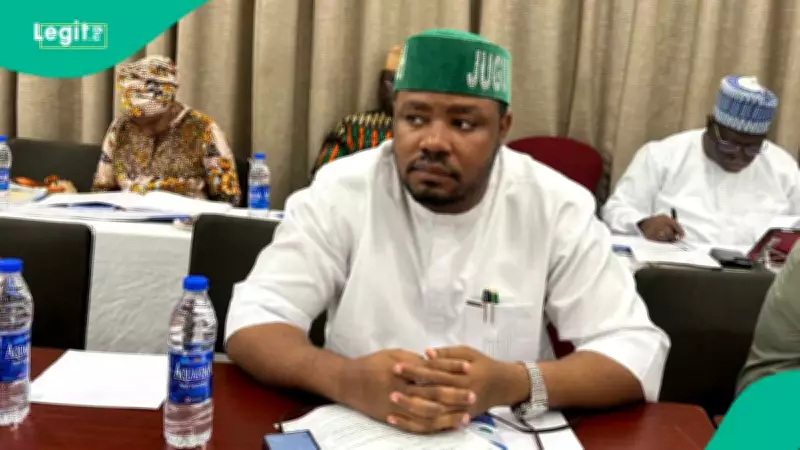
Philip Agbese Issues Warning on Niger-Delta Pipeline Surveillance Fragmentation
Deputy spokesperson of the House of Representatives, Philip Agbese, has issued a stern warning against calls to fragment pipeline surveillance contracts in the Niger Delta region. He emphasized that such moves could severely weaken coordination and jeopardize recent security improvements in protecting Nigeria's critical oil infrastructure.
National Security Over Political Patronage
In a statement delivered in Abuja, Agbese stressed that pipeline protection is a strategic national security task and should not be treated as political patronage. He acknowledged ongoing concerns about inclusion in the Niger Delta but cautioned against decentralizing surveillance operations, which are currently managed by private firms like Tantita Security Services Nigeria Limited. Agbese argued that this could expose oil infrastructure to increased risks of sabotage and significant revenue losses.
He stated, "Pipeline surveillance is not a contract that can be shared like political patronage. It is a strategic national security function aimed at safeguarding Nigeria's economic lifeline. We must be careful not to reduce it to a tool for appeasing every interest group." Agbese highlighted that the current centralized framework has coincided with higher crude oil output and fewer incidents of vandalism, attributing these gains to clear oversight and coordinated responses.
Risks of Decentralized Operations
Agbese warned that dividing surveillance responsibilities among multiple actors across states or groups could create confusion, weaken accountability, and introduce vulnerabilities. He explained that fragmentation might lead to gaps that criminals could exploit, compromise sensitive intelligence, and allow unvetted participants to disrupt coordination, potentially emboldening oil thieves.
He added, "When you proliferate such a sensitive responsibility among too many actors, you inevitably create gaps. Those gaps can be exploited. You risk introducing moles into a system that requires the highest level of confidentiality and integrity." The consequences, according to Agbese, would extend beyond the Niger Delta, affecting national revenue and public spending due to disruptions in oil production.
Urging National Interest and Dialogue
Agbese emphasized that Nigeria's oil assets are national resources, not regional entitlements, and framing the issue as a struggle for access could inflame tensions in an already fragile environment. He urged protesting groups to pursue dialogue with relevant institutions rather than public agitation, advocating for reforms based on evidence and national interest rather than pressure.
He concluded, "Not every responsibility can be democratised. Some require precision, trust, and a clear chain of command. Pipeline surveillance is one of them." Agbese also called for continued oversight to ensure transparency within existing surveillance arrangements, reinforcing the need for a disciplined and coordinated approach to safeguard the country's economic stability.