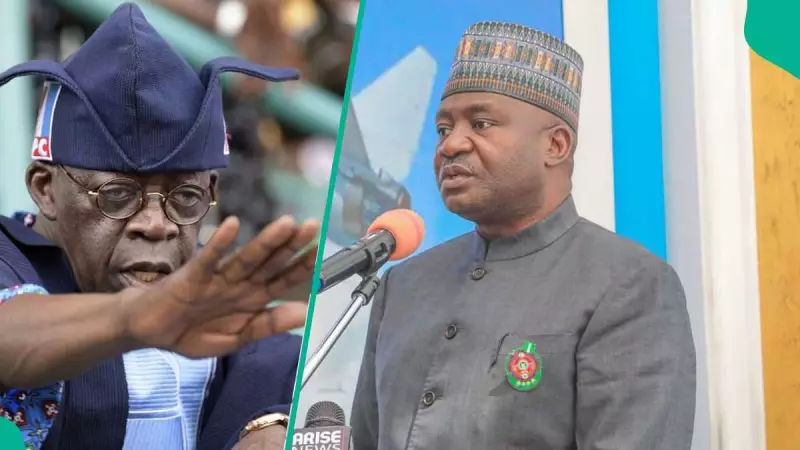
The Federal Government of Nigeria has once again firmly denied allegations that it makes ransom payments to secure the release of citizens abducted by kidnappers and terrorists. The Minister of Defence, General Christopher Musa (retd), broke the government's silence on the matter during a recent interview.
Government's Stance on Ransom Payments
In an interview with BBC Hausa monitored in Kaduna on January 15, 2026, General Musa categorically stated the government's position. He addressed persistent public speculation, particularly surrounding cases involving abducted schoolchildren, where many believe ransoms are secretly paid.
"The Federal Government does not pay ransom. Even if others do, the Federal Government does not. We do not pay ransom," the Defence Minister declared emphatically.
Military Pressure as the Primary Strategy
Minister Musa explained that the freedom of rescued victims is achieved through sustained, intelligence-led military operations, not financial negotiations. He detailed that security forces often intensify pressure on criminal hideouts in forests, forcing kidnappers to flee and abandon their captives.
"People only assume that ransom is paid. Whenever children are kidnapped from schools, soldiers go into the forest to apply pressure on the bandits so they will flee and abandon the children, and then we recover them. There is no issue of paying ransom," he clarified.
He maintained that this approach, centred on robust intelligence gathering and coordinated military action, remains the cornerstone of the government's response to the kidnapping crisis across Nigeria.
Why Paying Ransom is Dangerous
General Musa issued a strong warning about the consequences of ransom payments, stating that they directly fuel the cycle of violence and criminality. He argued that providing money to kidnappers only serves to empower and encourage their networks.
"We also oppose it because if it continues, it will encourage people to kidnap for money. That is why we say people should stop paying ransom," he cautioned.
The minister appealed to families and communities affected by kidnappings to involve security agencies immediately instead of negotiating directly with criminals. "If a person is kidnapped, they should come forward to the security agencies so that appropriate measures are taken," he advised.
Communities Warned Against Aiding Bandits
In a direct message to local communities, the Defence Minister warned against any form of collaboration with bandits. He specifically mentioned the provision of food, drinks, or other supplies, stating that such actions indirectly support terrorism.
"We always tell people not to have anything to do with the bandits and not to sell them food or drinks," Musa said. He emphasized the moral implication, adding, "What people must understand is that when you sell them food and they give you money, you’re eating blood money, and that’s not good."
He stressed that local intelligence and public cooperation are vital for dismantling criminal networks and restoring peace.
Warning Against Peace Deals with Armed Groups
Reaffirming the Federal Government's commitment to nationwide peace, General Musa cautioned state governments against entering into independent peace negotiations with armed bands. He described such agreements as often deceptive and counterproductive to broader national security objectives.
Citing the example of Katsina State, he noted that the Federal Government had previously advised against peace initiatives with bandits in the region. "The goal of the Federal Government every day is to ensure peace in the country," he stated, asserting that sustained military action combined with public support is the most effective path to ending banditry.
The minister's comments come amid ongoing security challenges. In a related incident, a newly-wedded bride and four bridesmaids were reportedly abducted in Sabon Birni Local Government Area of Sokoto State on Saturday, December 7, 2024, by bandits loyal to notorious terrorist kingpin Bello Turji.