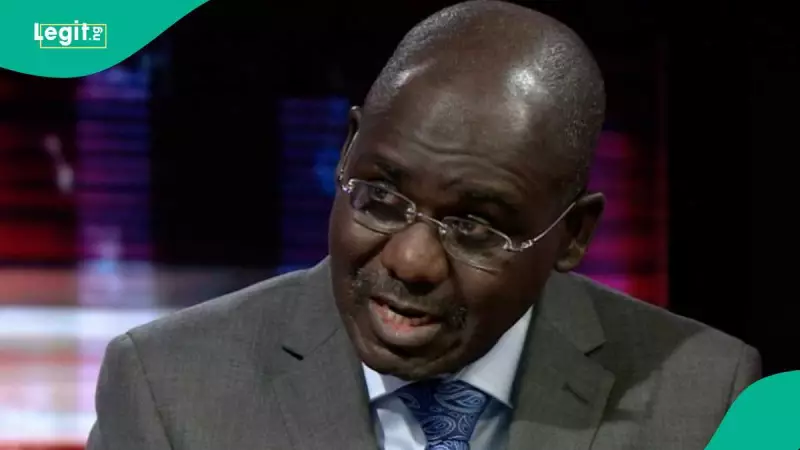
Former Chief of Army Staff, Lieutenant General Tukur Buratai (retired), has issued a stark warning that the growing reliance on the military for internal security operations is critically weakening the Nigeria Police Force and other civilian security agencies.
Dependency Cycle Erodes Police Capacity
Buratai stated that the widespread deployment of the Armed Forces across all 36 states and the Federal Capital Territory, while aimed at restoring stability, has inadvertently created a damaging cycle of dependency. He delivered this assessment on Monday, January 13, 2026, during his keynote address at the Armed Forces Celebrations and Remembrance Day lecture held at the National Defence College in Abuja.
The retired general explained that this trend diverts the military from its primary constitutional mandate of defending the nation against external threats and suppresses the development of robust civil institutions. Defence budgets, he cautioned, are increasingly being funneled into policing functions, leaving the armed forces less prepared for conventional warfare.
Constitutional Roles and a Call for Clear Strategy
Buratai emphasised that the Nigerian constitution clearly outlines the roles of the military, which include defending territorial integrity and suppressing insurrection. However, he stressed that routine internal security should be civil-driven and intelligence-led, with the police and the Department of State Services (DSS) at the forefront.
"The continued blurring of roles between the military and civilian agencies poses long-term risks to Nigeria’s security architecture and democratic stability," Buratai warned. To rectify this, he proposed a definitive, time-bound and conditions-based exit strategy to gradually hand internal security responsibilities back to the police and intelligence services.
Broader Security Context and Government Stance
The event also featured remarks from the Minister of Defence, General Christopher Musa (retired), who highlighted broader security challenges. He called for a coordinated national effort to disrupt criminal networks that exploit local transportation to move weapons and illicit materials, urging involvement from local governments and community leaders.
This discussion on security architecture comes amidst ongoing government actions against threats. In a related development, the Federal Government recently disclosed that security forces under President Bola Ahmed Tinubu's administration killed 8,000 terrorists and arrested 11,600 others in 2024, rescuing about 8,000 kidnap victims.
Buratai concluded that Nigeria's sustainable peace hinges on building a strong, well-equipped, and professional police force, with the military deployed only in exceptional circumstances as a last resort.