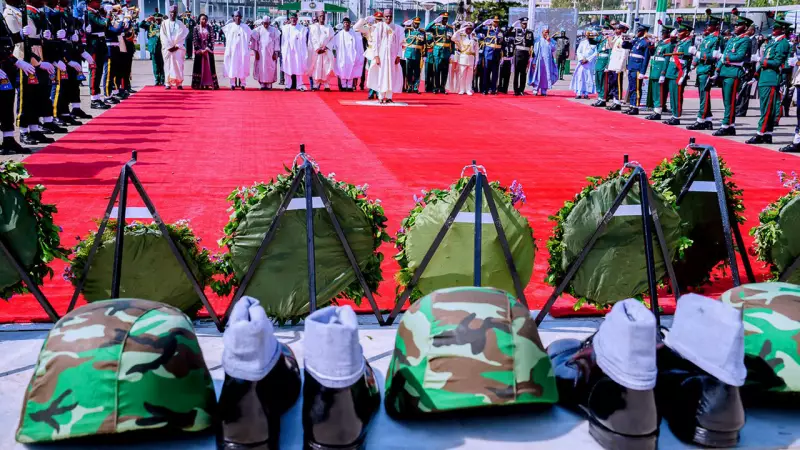
Every year on January 15, Nigeria observes the Armed Forces Remembrance and Celebration Day (AFRD). This solemn day is dedicated to honouring the ultimate sacrifice made by the nation's fallen military heroes. It also recognises the immense contributions of serving personnel and veterans who have endured extreme psychological, social, and physical hardships to defend Nigeria's territorial integrity.
The Historical Significance and Current Observance
The date of January 15 holds deep historical weight, marking the official end of the Nigerian Civil War following the surrender of the secessionist Republic of Biafra in 1970. While the day is symbolically recognised by the military community and some members of the public, its activities remain largely confined to military circles. These include ceremonial parades, official wreath-laying events, and barracks-based programmes.
For the average Nigerian citizen, however, the AFRD often passes as just another date on the calendar, lacking the profound national reflection and appreciation it warrants. This gap between military commemoration and civilian engagement forms the core argument for redesignating the day as a national public holiday.
Building National Unity and Healing Civil-Military Rifts
Elevating the AFRD to a public holiday could serve as a powerful tool for enhancing national unity at a time of significant social division and insecurity. It presents a unique opportunity to improve often-strained civilian-military relations. Historical tensions, including human rights abuses dating back to military rule and persisting in the democratic era, have created mistrust.
A nationally observed holiday would humanise military personnel in the eyes of civilians. It would publicly honour not just fallen soldiers, but also the families who bear the lasting burden: the widows, the children of serving officers, and the caregivers of wounded veterans. Many veterans return to a society that offers little recognition, facing unemployment, trauma, and neglect. A public holiday would spotlight their needs and inspire policy discussions on veteran welfare and rehabilitation.
A Global Tradition and Nigerian Examples
Nigeria would be joining a respected global tradition by establishing a dedicated public holiday for its armed forces. Nations like the United States (Veterans Day and Memorial Day), the United Kingdom (Remembrance Sunday), and Ghana (Veterans Day) all set aside national days of observance. Given Nigeria's history of civil war, extensive peacekeeping record, and ongoing internal security challenges, the argument for such a holiday is even more compelling.
There are already positive examples of civil-military engagement that a national holiday could amplify. The Nigerian Army has conducted medical outreach and community projects in the Southeast. Furthermore, initiatives like the Nigerian Air Force's "Come See Your Air Force" and the Nigerian Navy's ship tours, which opened military gates to civilians, have successfully rebuilt trust and national pride.
Towards a Shared National Commemoration
The vision is for the AFRD to move beyond social media hashtags and military barracks into the heart of national life. As a public holiday, it would be observed in schools, government offices, religious institutions, and businesses. This would instil a shared sense of responsibility to honour the armed forces.
It would also encourage civil society and private groups to partner with military charities like the Nigerian Legion, the Retired Army, Navy and Air Force Officers Association (RANAO), and the Military Wives Association (MIWA) to organise commemorative and fundraising events.
In conclusion, the Nigerian government is urged to declare January 15 a national public holiday. This act would publicly celebrate the occasion, promote national appreciation for active and retired soldiers, and duly honour the supreme sacrifices made for the nation's sovereignty and unity.
Fisayo Ajala, the author of this argument, is a researcher specialising in military sociology, death studies, conflict, peace, and security. He holds a PhD in Sociology from Stellenbosch University in South Africa and is currently a Visiting Research Fellow at the Centre for Death and Society at the University of Bath, England.