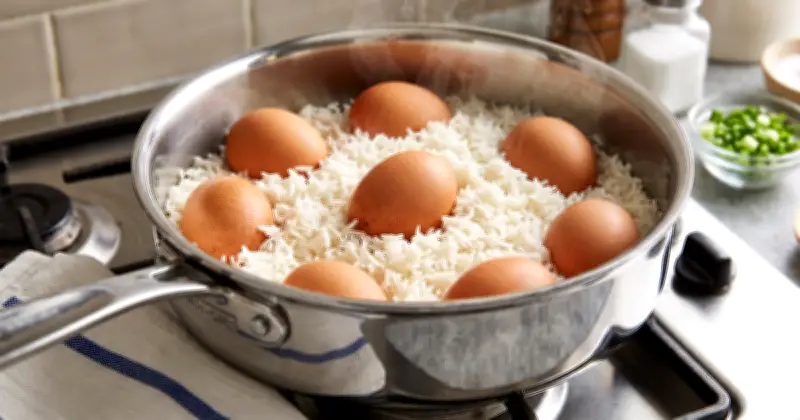
Boiling eggs in the same pot as rice is a widespread practice in many Nigerian homes, valued for its convenience in saving time, reducing dishwashing, and conserving cooking gas. However, food safety experts caution that this method carries hidden risks that every cook should understand to prevent foodborne illnesses.
Eggshells Can Carry Harmful Bacteria
Even when eggs appear clean, their shells can harbor dangerous bacteria such as Salmonella and E. coli. These pathogens often contaminate shells during handling, transportation, or storage. The bacteria reside on the shell surface, not inside the egg, but they can easily transfer to other foods—including rice—if proper precautions are not taken.
Washing Eggs May Not Remove All Germs
Many people rinse eggs before cooking, believing this makes them safe. However, washing removes visible dirt but does not eliminate all microscopic bacteria. According to food safety experts, some germs can remain on the shell even after thorough rinsing.
The Real Concern: Cross-Contamination
Experts emphasize that the eggshell itself is not poisonous. The primary risk is cross-contamination: bacteria from the shell can contaminate the rice water during cooking, especially if the eggs are dirty or cracked. A report by The Nation noted that researchers found bacterial contamination in rice cooked alongside unwashed eggs, whereas rice cooked with properly washed eggs showed no such evidence. This indicates that poor hygiene, not the act of boiling eggs itself, is the major danger.
Cracked Eggs Pose Higher Risk
If an egg is cracked before cooking, bacteria on the shell can more easily enter the egg and contaminate its contents. Food safety specialists recommend discarding cracked eggs entirely rather than cooking them with other foods.
Thorough Cooking Reduces Risk
Boiling food at high temperatures destroys many harmful bacteria. However, experts advise that eggs should be cooked thoroughly and handled hygienically from purchase to consumption to ensure safety.
Experts Recommend Boiling Eggs Separately
Although many Nigerians have boiled eggs with rice for years without obvious problems, food safety experts state that using a separate pot remains the safer option. This practice reduces the possibility of cross-contamination and aligns with better kitchen hygiene. An alternative is to steam eggs above the rice using a steaming rack or heatproof container instead of placing them directly in the rice water.
Safe Food Handling Continues After Cooking
Even properly cooked food can become unsafe if stored incorrectly. Cooked rice should not be left at room temperature for extended periods, as bacteria multiply rapidly. Similarly, boiled eggs should be refrigerated if not eaten soon after cooking.
Should You Stop Boiling Eggs with Rice?
Not necessarily. There is no universally accepted scientific guidance stating that boiling eggs with rice is inherently dangerous. However, food safety experts recommend ensuring eggs are clean, avoiding cracked eggs, and boiling them separately when possible to minimize cross-contamination risk. Ultimately, maintaining good kitchen hygiene, cooking food thoroughly, and storing it properly remain the most effective ways to prevent foodborne illnesses—whether you cook your eggs in the same pot as your rice or not.