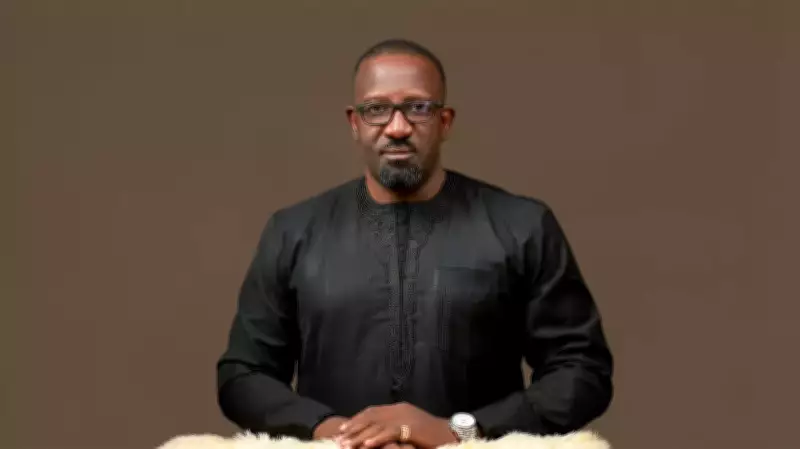
Denge Josef Onoh, a former member of the Enugu State House of Assembly and ex-South-East spokesman for Bola Tinubu, has strongly criticized recent comments by former Head of State Yakubu Gowon regarding civilian casualties during the Nigerian Civil War. Onoh argued that Gowon's remarks significantly downplay the immense suffering experienced in the South-East region.
Onoh's Response to Gowon's Interview
In a statement issued on Sunday, Onoh responded to Gowon's interview on Arise TV, where the retired general recounted visiting former Biafran territories after the war and noticing black spots on palm trees, which he claimed were bullet marks. Gowon concluded from this observation that “most of the bullets fired by the Nigerian army hit palm trees, not people.”
Onoh described this account as one that “strains credulity” and directly contradicts historical records, eyewitness accounts, and international reports on the conflict that lasted from 1967 to 1970. He emphasized that the war resulted in an estimated three million deaths, with many caused by starvation and disease linked to the federal blockade, in addition to civilian casualties from combat operations, bombings, and reprisals.
Rejection of the Palm Tree Narrative
“Reducing these horrors to bullets harmlessly striking palm trees does not withstand basic scrutiny,” Onoh stated. “It ignores the well-documented humanitarian crisis, including widespread kwashiorkor among children, mass displacement, and the human cost of prolonged fighting across the Southeast.”
Onoh also questioned the credibility of Gowon's autobiography, My Life of Duty and Allegiance, arguing that it reflects a defensive interpretation of the war. He noted that Gowon's description of the conflict as a reluctant “police action” aimed at preserving national unity, while placing most of the blame on Biafran leaders and downplaying the impact of pre-war killings and the blockade, appears more like an attempt at self-justification than a balanced historical account.
Call for Apology and Reconciliation
The former lawmaker acknowledged Gowon's post-war “No Victor, No Vanquished” policy and the programme of Reconciliation, Rehabilitation and Reconstruction, but maintained that genuine healing requires open acknowledgement of the suffering caused by the war. “Excusing or deflecting core atrocities through anecdotes like the palm trees story undermines trust in the entire account,” he said.
Onoh urged Nigerians, particularly those in the South-East, to approach Gowon's memoir critically, insisting that national reconciliation depends on confronting the full human cost of the conflict. Drawing comparisons with expressions of remorse by former United States Defence Secretary Robert McNamara and former US Army officer William Calley over the Vietnam War, as well as apologies by German leaders for atrocities committed during the Second World War, Onoh said Gowon should apologize to the Igbo people.
“In light of this, General Gowon owes the Igbo people a simple, sincere apology for the suffering endured during the war. Not that this simple act means anything, but it means everything. Your apology will be remembered as a true general and statesman’s act of healing that shall be the prelude to a lasting victory,” he concluded.