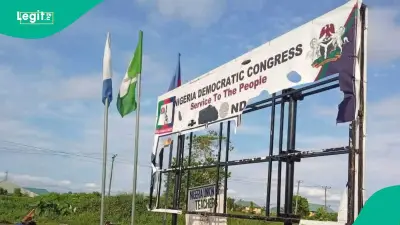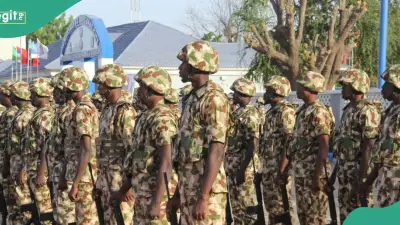
Nigeria is drifting into dangerous territory where politics increasingly overshadows governance, as insecurity, poverty, and social despair consume the state's foundations. Despite constitutional mandates prioritizing security and welfare, the political class appears preoccupied with 2027 elections, coalition-building, and defections, while criminals expand their reach.
School Abductions: A Painful Symbol of Crisis
The kidnapping of pupils, teachers, and school workers in Oriire Local Government Area of Oyo State has become a painful symbol of Nigeria's deepening security crisis. Armed terrorists invaded three schools in Ahoro-Esinle and Yawota communities, abducting dozens including toddlers. Among the victims were two-year-old Christianah Akanbi and three-year-old Sikiru Salami. The horror intensified with the gruesome murder of mathematics teacher Michael Oyedokun, who was beheaded in captivity. His death is an indictment of a nation unable to guarantee citizen safety.
Pattern of Attacks Across Nigeria
This is not an isolated incident. Days after the Oyo abductions, gunmen attacked Yashikira in Kwara State, setting the Emir's palace ablaze and abducting ten residents. Worshippers were killed at a prayer ground. Similar nightmares plague Benue, Plateau, Katsina, Zamfara, Borno, Niger, and other states. Schools become targets, highways theatres of terror, farms killing fields, and communities refugee camps. Nigeria is normalizing the abnormal.
Governance Subordinated to Politics
Public attention at highest government levels appears focused on 2027 political calculations rather than responding to crises. After the Oyo abductions, grieving parents cried on television, and abducted teachers pleaded for help. Many citizens felt insufficient urgency from federal authorities. Section 14(2)(b) of the Constitution states security and welfare are the primary purpose of government—not politics, elections, or coalitions. Yet many believe priorities no longer reflect this obligation.
Educational Sector Under Attack
The security collapse hits education hard. Parents who once worried about exam results now fear whether children will return home alive. Teachers focused on learning outcomes now think about survival. School enrolment in vulnerable communities declines as parents choose safety over education. Every child denied education becomes a future economic liability; every abandoned school creates another generation vulnerable to poverty and extremism. Every lost teacher weakens Nigeria's human capital.
Psychological Damage on Children
When rescued, many victims may never fully recover from trauma—screams, gunshots, confusion, separation from parents, and terror of captivity. Children learning multiplication tables instead learn fear. A nation that cannot protect its children cannot confidently speak about its future.
Socio-Economic Epidemic
Insecurity fuels a broader crisis. Nigeria grapples with an affordability crisis due to fuel subsidy removal and exchange rate liberalization. Inflation erodes purchasing power; food prices, transportation, rents, and cooking gas soar. Farmers cannot access land; harvests are disrupted; rural economies collapse. Food production declines, supply chains vulnerable, leading to higher prices, worsening hunger, and deeper poverty. In northern farming communities, bandits function as parallel authorities, imposing levies on farming. Insecurity is now an economic, developmental, educational, humanitarian, and governance problem.
Institutional Capacity and Accountability
As commentator Leonard Umunna noted, weak institutions produce weak outcomes. Corruption, poor accountability, and ineffective governance undermine the state's ability to deliver security. When institutions become compromised, citizens lose confidence; when accountability disappears, impunity flourishes; when governance fails, criminality fills the vacuum. This vacuum is increasingly visible across Nigeria.
Democracy at Risk
While political actors prepare for 2027, foundations for democratic stability erode. Democracy cannot thrive in widespread fear. Citizens who cannot travel, farm, worship, or send children to school safely are unlikely to have confidence in democratic institutions. Security is the foundation for every national aspiration. Without security, economic reforms fail, educational investments become vulnerable, foreign investment declines, national unity weakens, and democracy becomes fragile.
The Path Forward
Nigeria's challenges are not insurmountable. The country possesses manpower, resources, and institutional structures to reverse the tide. What is lacking is political will, urgency, and strategic focus. This moment demands intelligence-driven operations, stronger inter-agency coordination, improved local intelligence, accountability, institutional reforms, and leadership that places governance above politics. As Nigeria inches toward another election cycle, leaders must recognize that winning elections in a nation overwhelmed by insecurity, poverty, and social fragmentation holds little value. The pursuit of political power cannot become more important than the survival of the republic.
The death of Michael Oyedokun should haunt the nation's conscience, as should the tears of Christianah Akanbi and every parent afraid to send a child to school. Nigeria is at an intersection requiring critical decisions. One path leads to deeper insecurity, educational decline, economic hardship, and national instability. The other requires courage, responsibility, and renewed commitment to governance. If politics continues to take precedence, the greatest casualty may be Nigeria itself. The country is redeemable; there is still hope.