This year, Children's Day and Eid al-Adha fell on the same day. While Children's Day promotes child welfare, Eid al-Adha commemorates Prophet Ibrahim's willingness to sacrifice his son in obedience to God. However, God spared the child, substituting an animal instead. This underscores the value of children's lives. But do we truly protect our children?
The Ahoro-Esiele Abduction
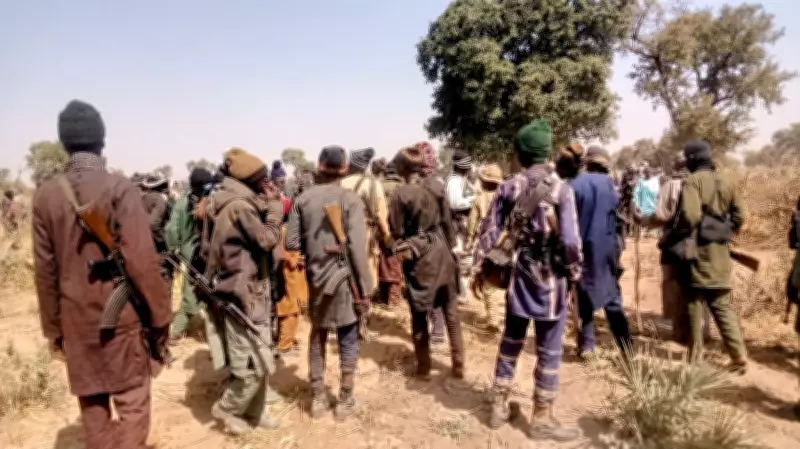
On May 16, 2026, 46 children and seven teachers from Ahoro-Esiele/Yawota in Oriire Local Government Area, Oyo State, were abducted. They had planned a day of learning but were captured and taken into the forests. The agrarian community was thrown into chaos as gunfire erupted. A teacher attempting escape was shot dead, and an 'Okada' rider who resisted the terrorists was also killed. The attackers were well-prepared and had likely been lurking for some time.
As security forces pursued the marauders, the terrorists killed mathematics teacher Michael Oyedokun in a gruesome manner to halt the chase. Captives were forced to make videos pleading with the government to abandon kinetic approaches and negotiate for their release.
Global Terrorism Index 2026
The 2026 Global Terrorism Index highlights the severity of the threat. The Islamic State (IS) and its affiliates were the deadliest terrorist organizations in 2025. The four deadliest groups—IS, Jamaat Nusrat Al-Islam wal Muslimeen (JNIM), Tehrik-e-Taliban Pakistan (TTP), and al-Shabaab—accounted for 70% (3,869) of terrorism fatalities. Over 70% of deaths occurred in just five countries: Pakistan, Burkina Faso, Nigeria, Niger, and the Democratic Republic of Congo. Sub-Saharan Africa is now the epicenter of terrorism, with Nigeria recording the largest increase in 2025. Islamic State West Africa Province (ISWAP) and Boko Haram were responsible for 80% of terrorism deaths in Nigeria.
Test Transmission in the South-West
The Defence Headquarters linked the attackers to Boko Haram JAS. They are not ordinary criminals. The mobility of terror to the South-West is a test transmission. The first major attack was the Owo massacre on June 5, 2022, at St. Francis Catholic Church, Ondo State, during Pentecost, killing at least 40 people. Those arrested are still awaiting judgment five years later.
Ondo State, under late Governor Rotimi Akeredolu, responded with Amotekun and other forces, clearing forests and expelling illegal occupants. However, criminals only retreated and later relaunched, creating terror routes through the North Central axis, killing and abducting in Kwara State. As communities are abandoned, terrorists occupy them and expand their agenda. The border community of Oriire Local Government, Ogbomoso, is now vulnerable.
Leadership and Insecurity
President Bola Tinubu's government faces criticism. Corrupt leaders 'kidnap' collective resources meant for health, education, and power. Billions of naira are stolen while youth remain unemployed. Poverty and disillusionment prevail. Rural areas are neglected, making them easy targets for terrorists.
Governor Seyi Makinde deserves commendation for mobilizing inter-agency forces. Security forces have encircled the terrorists, but captives are used as human shields, slowing rescue operations. Communication with the government for negotiation has begun.
Prevention and Containment Strategies
Studies show that terrorist attacks often occur early morning or late night in remote areas. President Tinubu must demonstrate political will to eliminate jihadists and halt their expansion. The armed forces claim capacity to end terrorism and should be allowed to work. No economy grows under insecurity, and tourists will not visit a country where citizens are captured, tortured, or forced to pay ransom.
At the regional level, the threat requires strategy review. South-West governors must coordinate security operations due to geographical contiguity. They should fund sustained forest clearance operations to destroy criminal hideouts and collaborators. Communities must be trained to detect and report intelligence. Traditional rulers should activate community watch and monitor suspicious movements. Market vendors should report unusually large food purchases.
We must not allow terrorists to work with local criminals. Breaking supply routes is crucial. Fear alone will not solve problems. Citizens should avoid attending church or mosque in remote locations, stop vigils, and avoid unnecessary gatherings. Commuters should avoid late-night travel. Hiring individuals fleeing terror zones without security screening is dangerous.
Governors must coordinate informal security organizations—hunters, vigilantes, Oodua People's Congress, Agbekoya. Investment in security technology is essential. Estate activities should be regulated to prevent land sales to criminal groups. Due diligence is needed for new tenants, especially in rural areas. Mining sites, often security breaches, must be under surveillance.
We must prevent terror groups from displacing populations and establishing extortion economies in the South-West. Security is collective: safe individuals lead to safe communities, safe states, and a secure region. A stitch in time saves nine.
Prof. Oludayo Tade is a criminologist.